Cobot Welding & Cutting for Aluminum Fabrication
Cobot Welding & Cutting for Aluminum Fabrication
Precision Aluminum Welding
Doesn’t Have to Be a Bottleneck
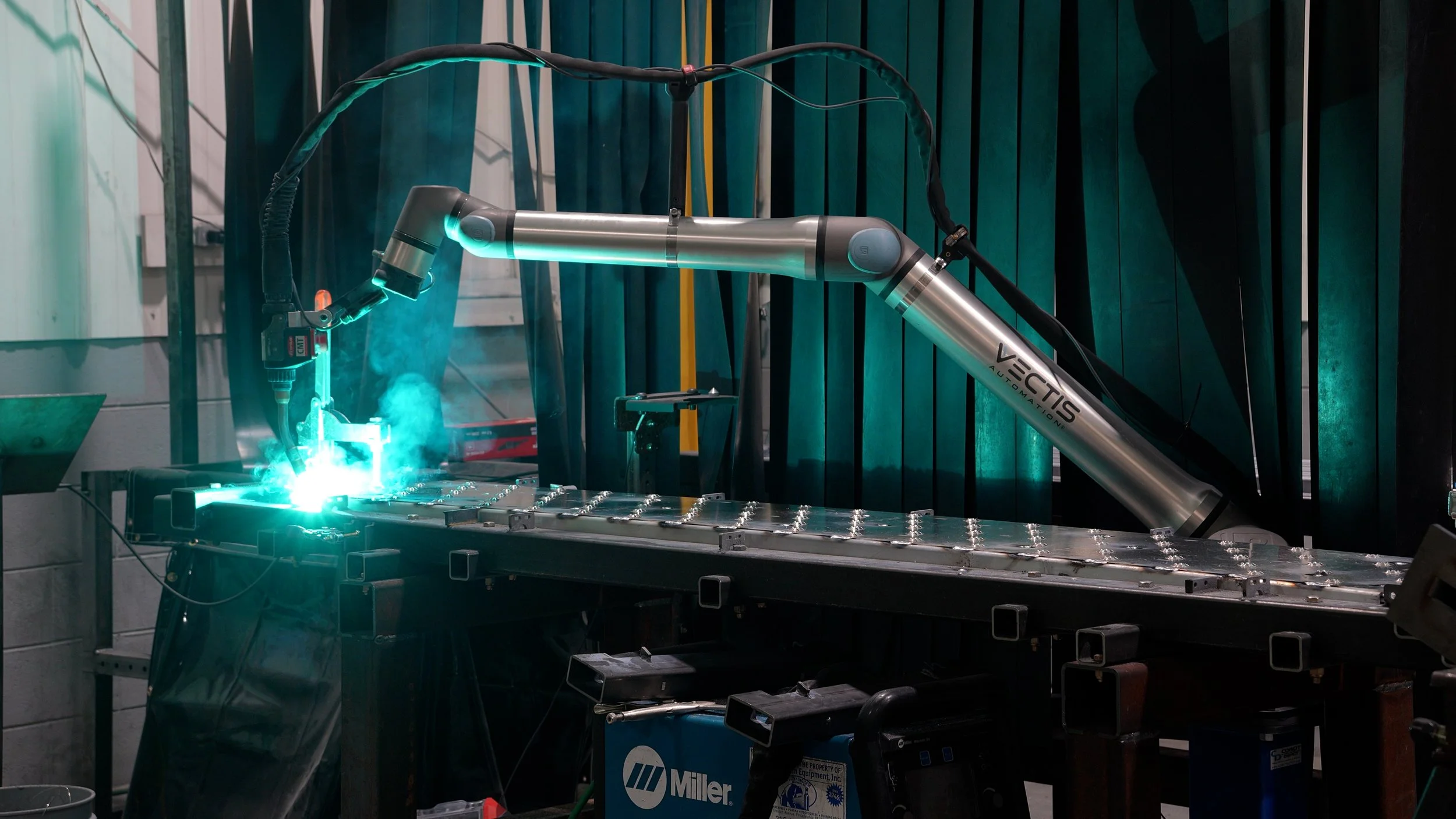
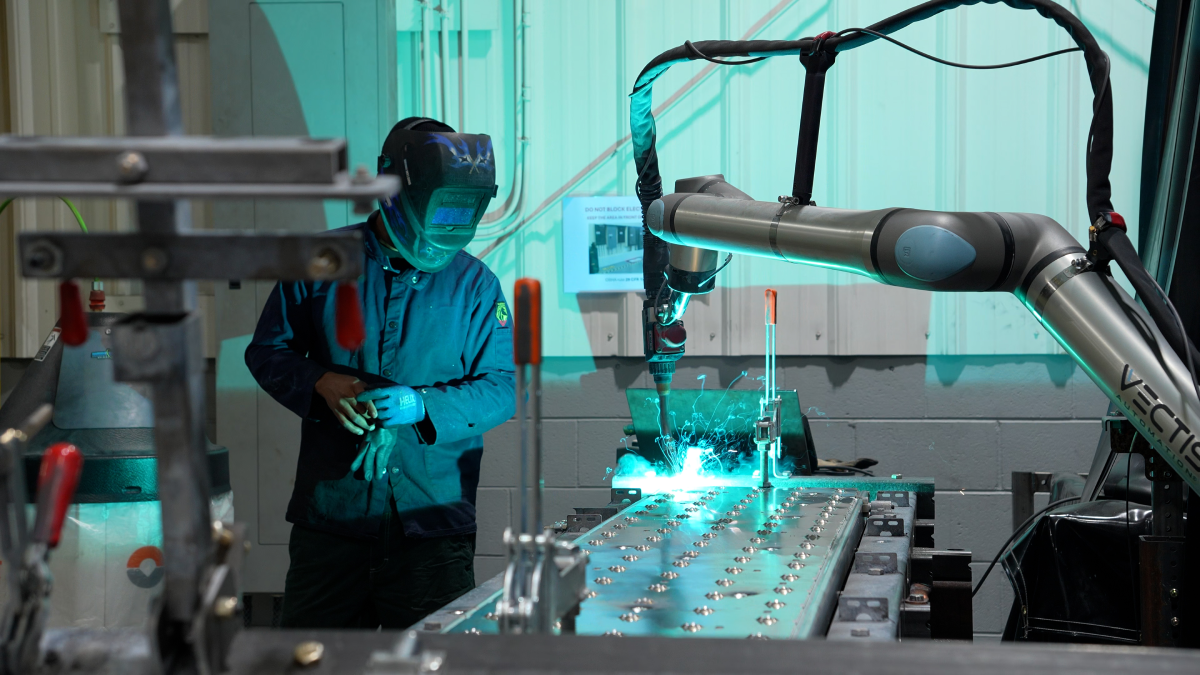
Fabricators are reliably automating their critical aluminum welds with field-proven Vectis cobot tools - freeing up skilled welders to focus on the highest-value tasks while boosting per-part productivity by 3-4x on average.
Dime-stack "pulse-on-pulse" and other advanced capabilities are included in Vectis standard software - particularly helpful for cosmetic applications, and even enabling some shops to shift their most time-consuming manual TIG welds to cobot MIG.
Proven in Real Shops
“We’ve been running 18-20 hours a day, 6 days a week since we got our system [four years ago].”
— Aluminum & Steel Fabricator, Ontario
“Vectis has helped us take welding capacity from a constraint to a strength, while allowing our skilled welders to focus on the work that truly needs their expertise.”
— Tyler C. (Director of Operations, Caltech Mfg)
Better Aluminum Welds
With Cobot Automation

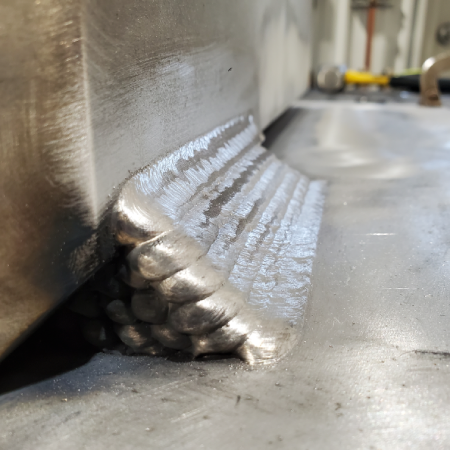
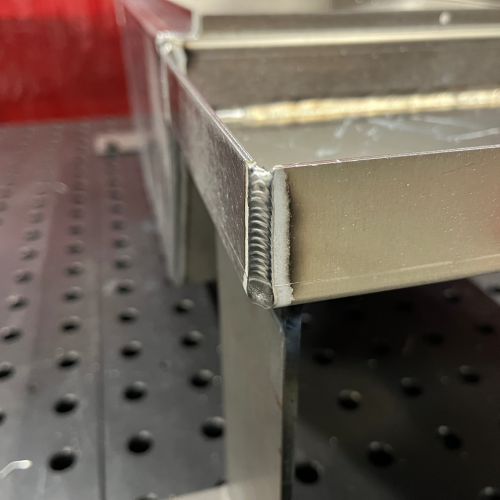
Accuracy Where it Matters
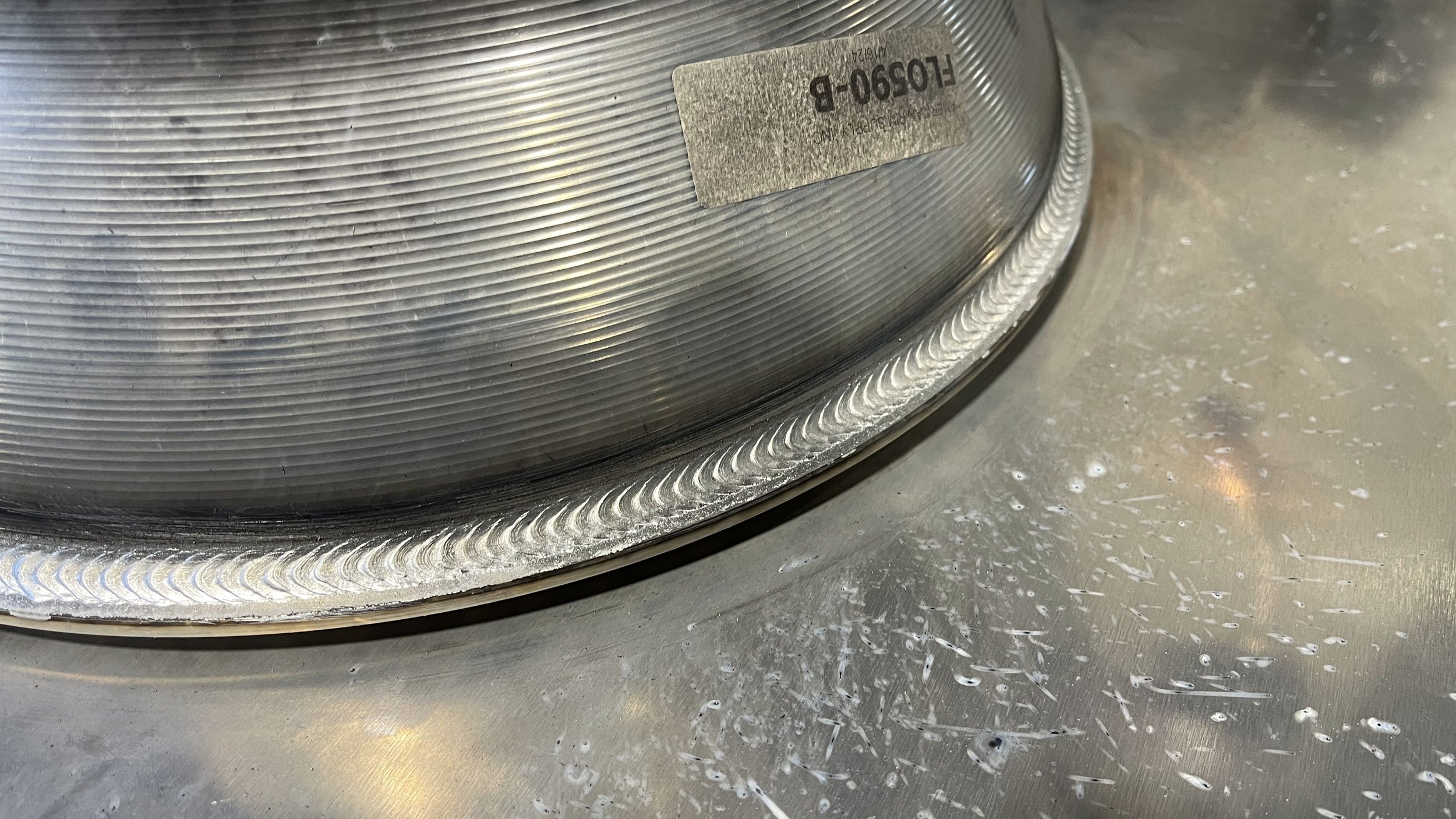
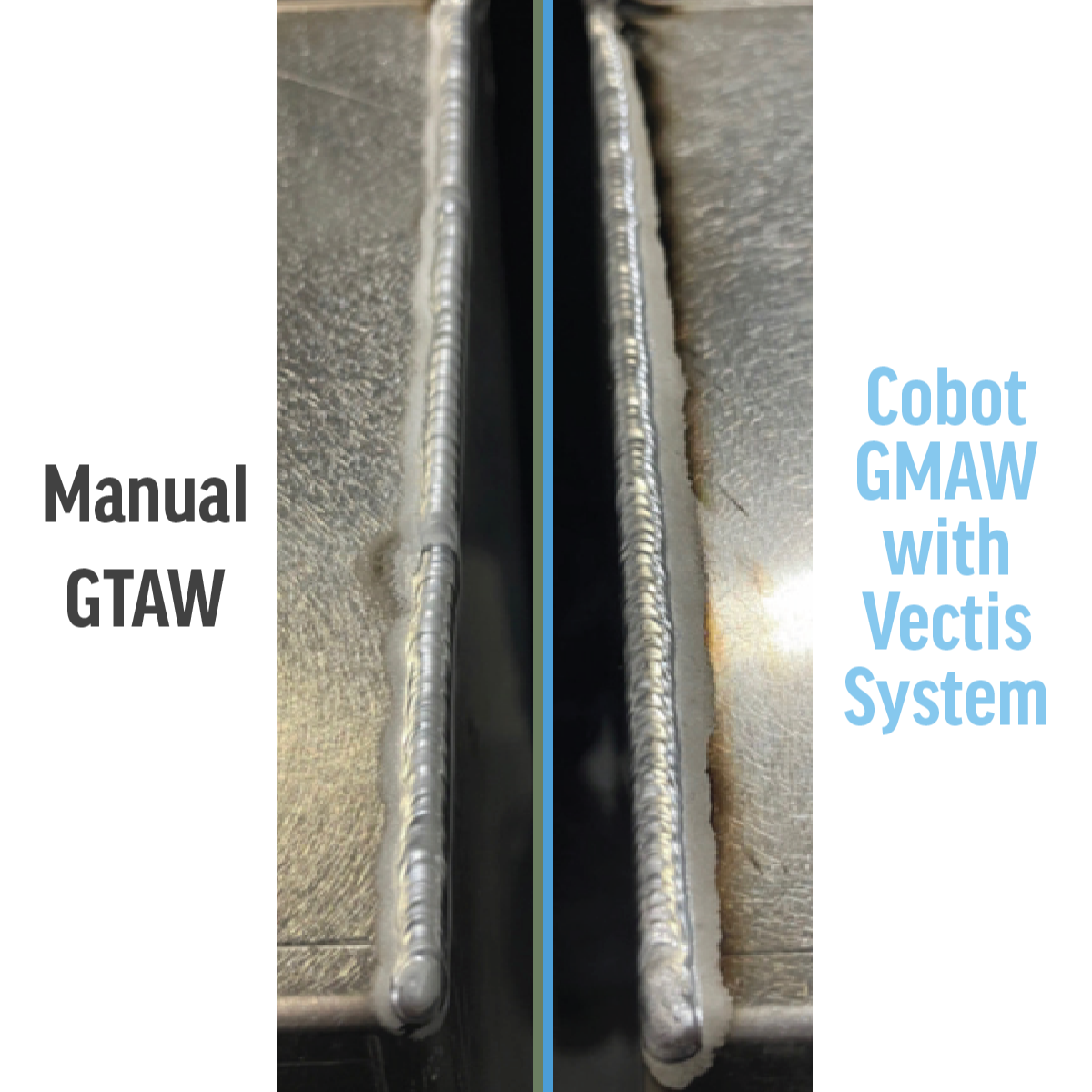
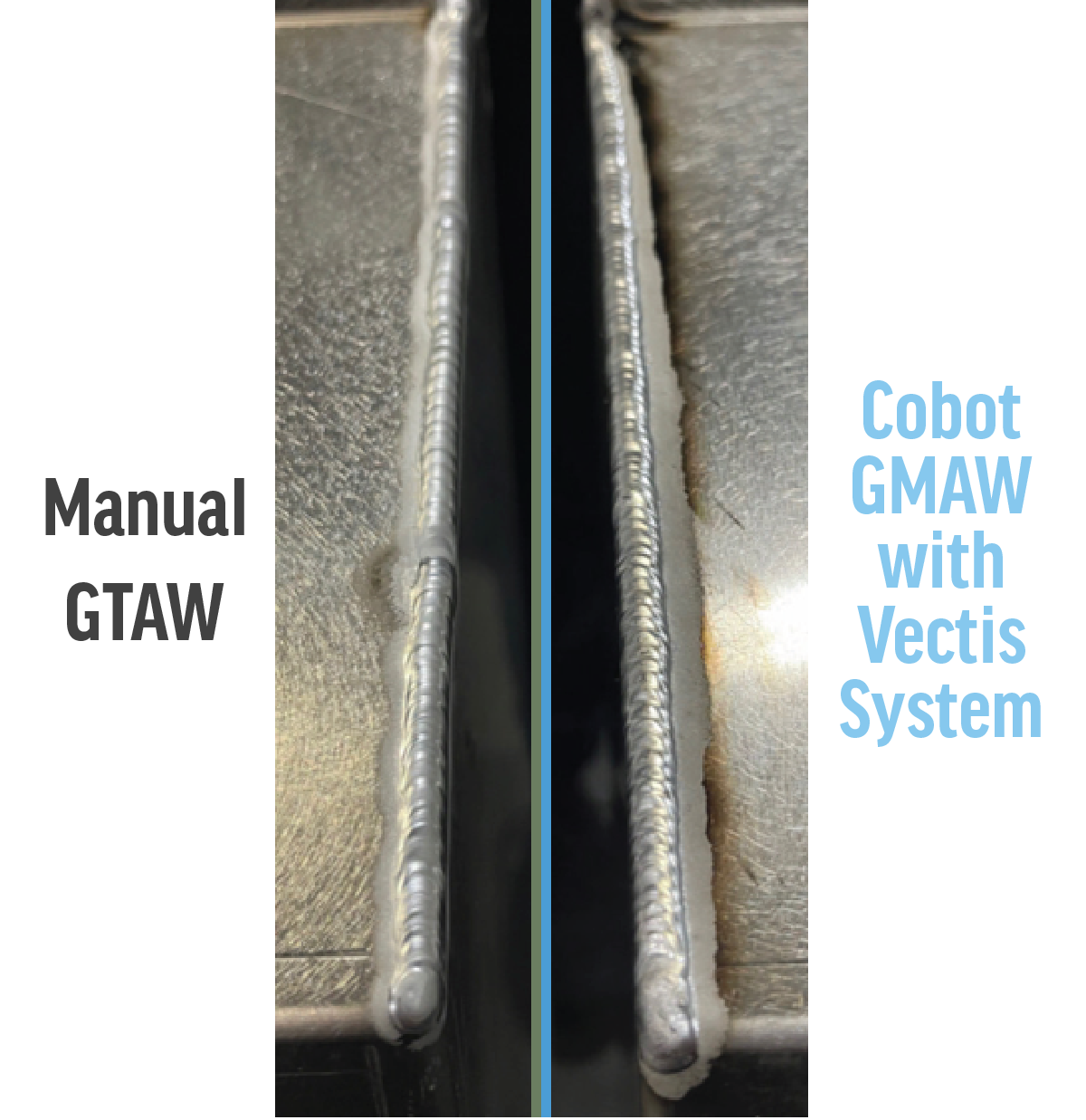
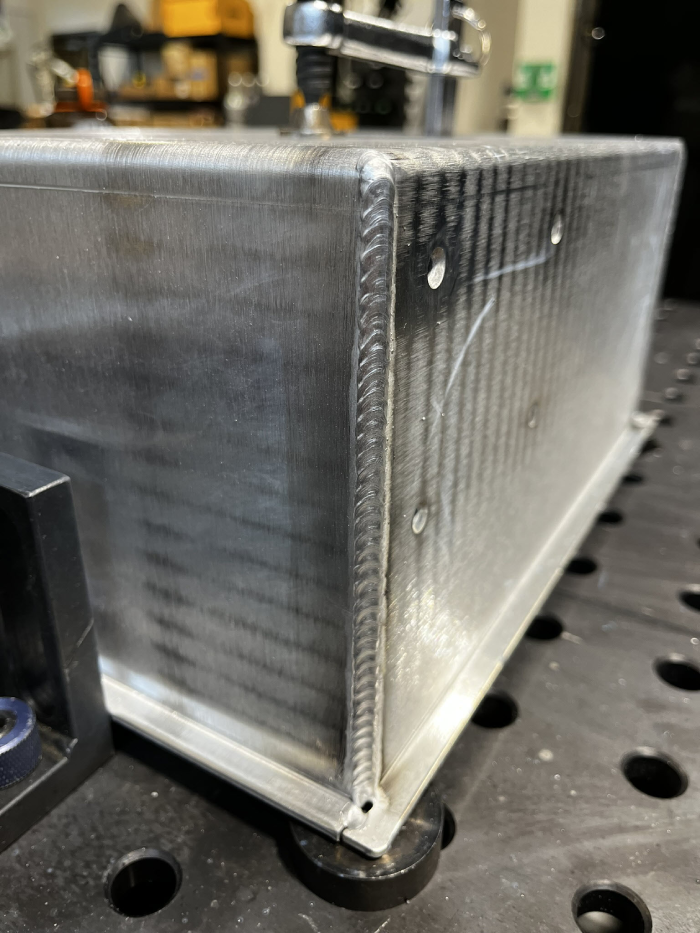
Clean corners and consistent bead profile for precise applications such as outside corners.

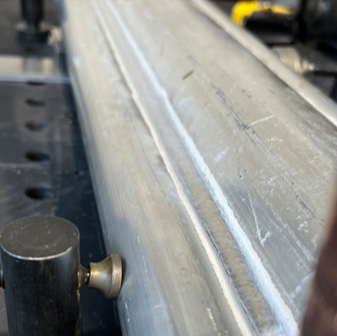
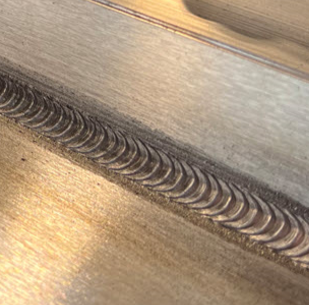
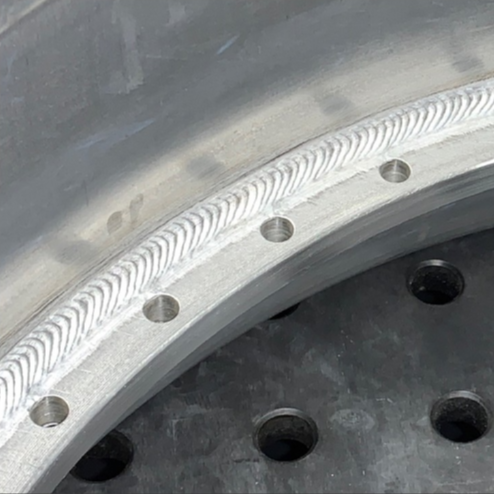
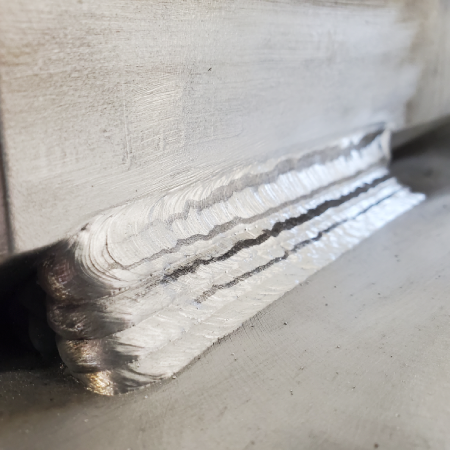
Controlled Arc, Clean Results
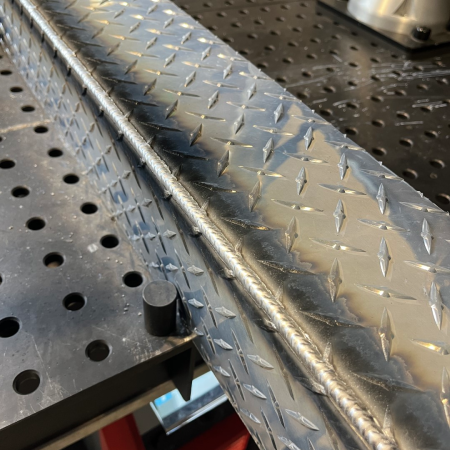
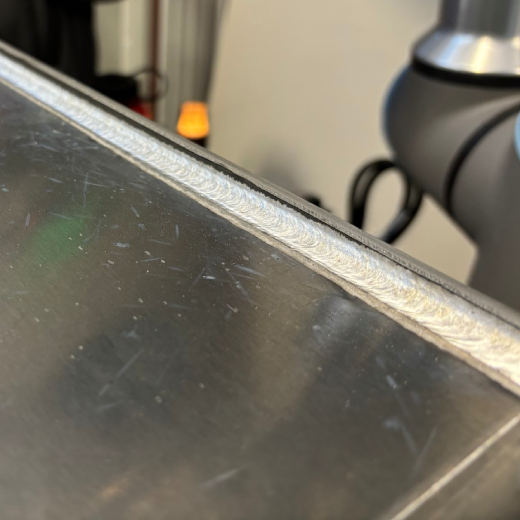
Uniform weld appearance with strong fusion and clean edges.
Manual vs. Cobot Welding
Side-by-side comparison.
Available through the Vectis Synchro™ integration package, Fronius push-pull weld equipment delivers advanced waveforms for precise arc control and robust wire feeding to prevent bird-nesting. With a consumables changeover, the same system is capable of welding stainless and steel - ideal for multi-material shops.
Controlled Arc, Clean Results
Accuracy Where it Matters
Manual vs. Cobot Welding
Uniform weld appearance with strong fusion and clean edges.
Clean corners and consistent bead profile for precise applications such as outside corners.
Side-by-side comparison.
What Aluminum Fabricators are Seeing

Boosting per-part productivity by 3-4x on average
Freeing skilled welders for higher-value work
Improved consistency on aluminum welds
Often shifting time consuming TIG welds to cobot MIG
Aluminum Fabricators are using Vectis tools for:
Automotive Aftermarket Components

Brackets
Circular Components (handrail, light poles, frames, etc.)
Structural Aluminum Code Work
Marine Components
Aerospace Frame Assemblies
Box Structures (tool, safe, electrical, etc.)
Much more!

Discover How Caltech Manufacturing Tackles High-Mix, High-Volume Aluminum Production

Flexible Deployment
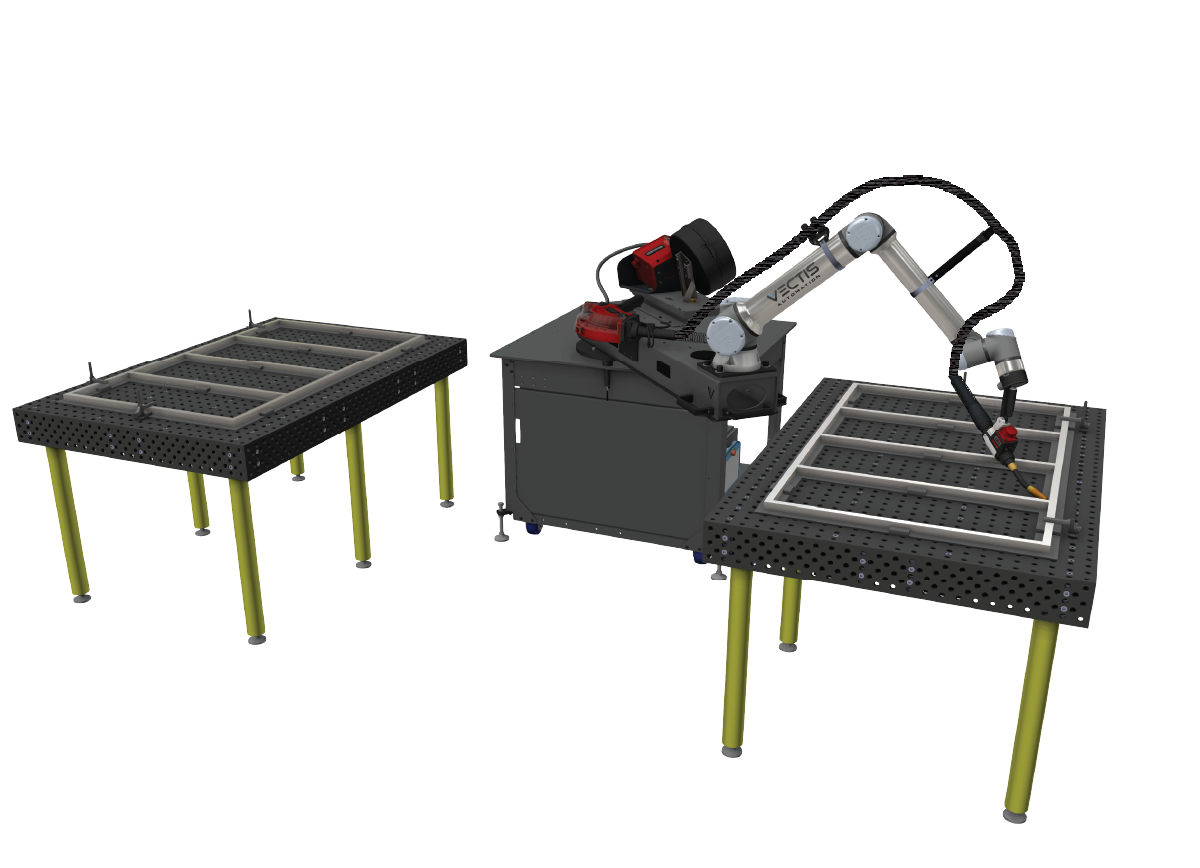
For Real Production Environments
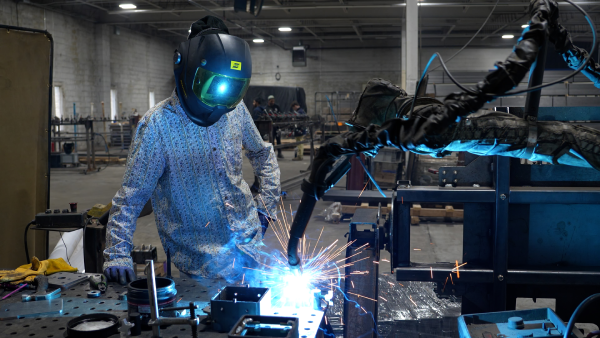
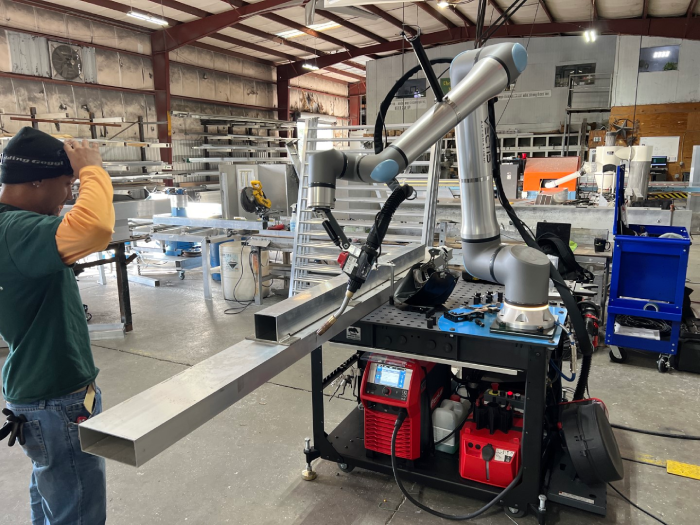
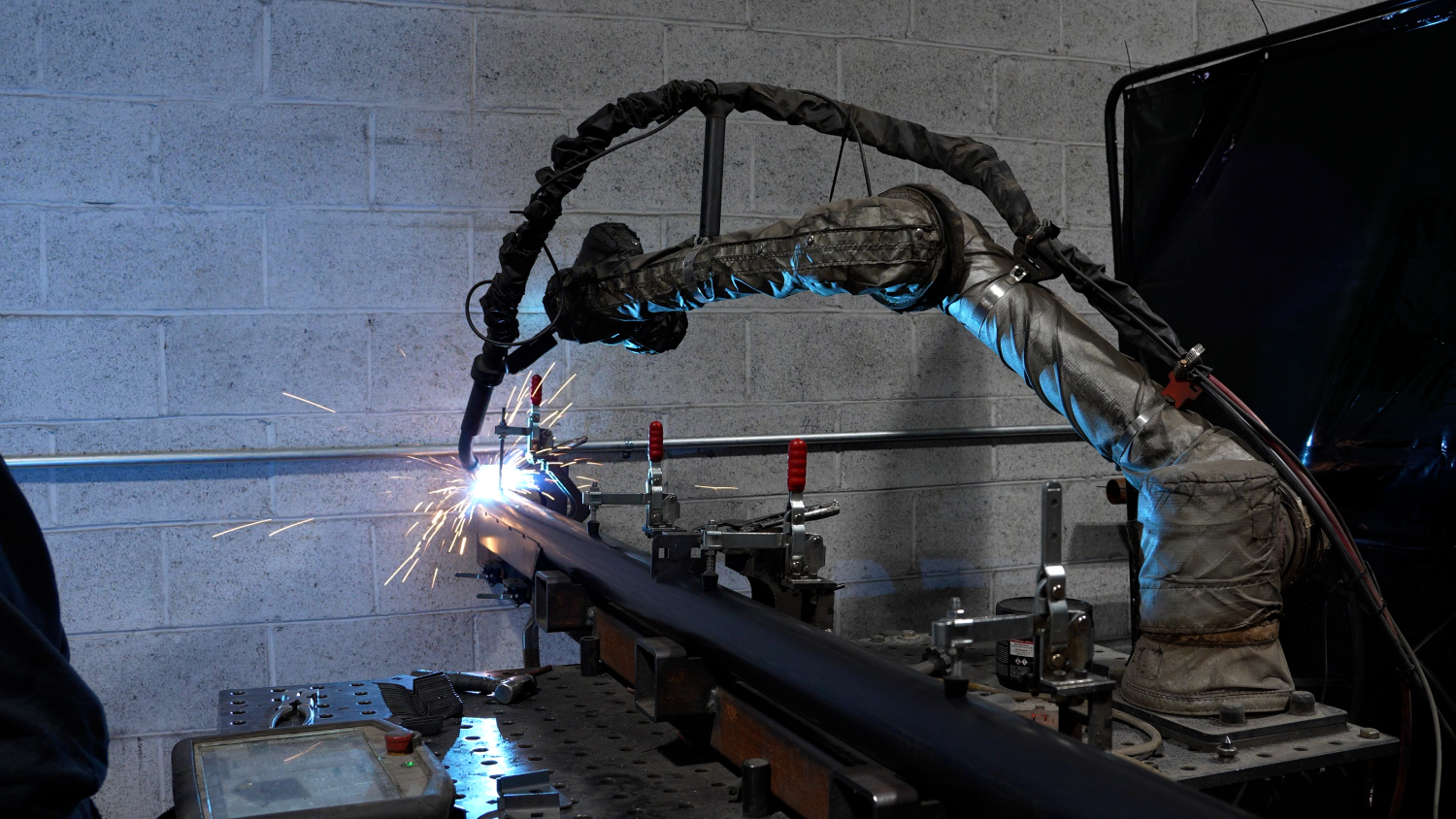
For applications that extend beyond the cart, mobile Vectis systems can be configured with standalone fixture tables or rolled directly to the work. The dual-table layout shown allows operators to fixture or unload one part while the cobot welds in the other work zone, enabling consistent arc-on productivity.
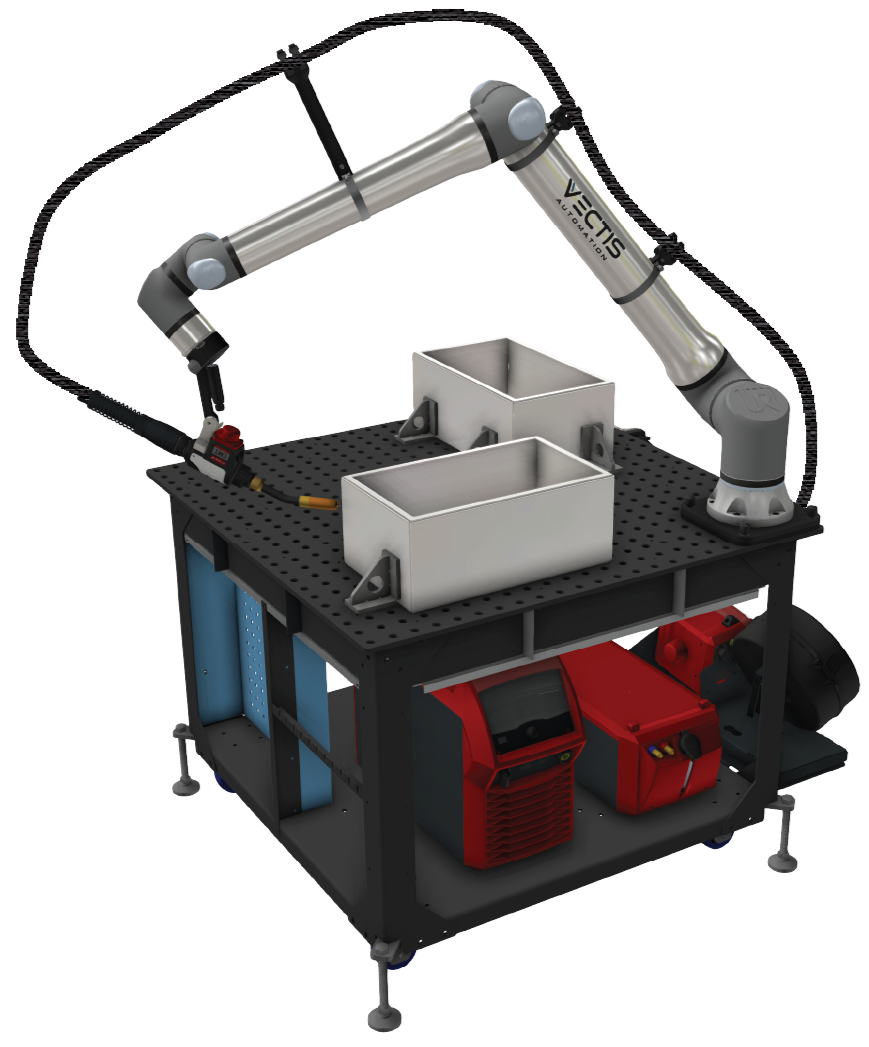
Vectis systems are compatible with a range of mobile cobot-to-part and part-to-cobot deployment options, allowing shops to match the system to their workflow.
Compact, Efficient Workspaces
For Smaller Parts
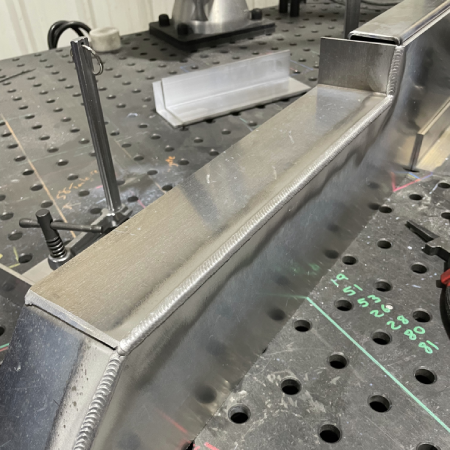
For subassemblies and smaller parts, on-table applications offer a compact and efficient workspace. The cart-based deployment shown provides a practical, mobile workspace for repeatable weldments such as boxes, brackets, and other compact fabricated assemblies.
Built Around Application Support and Long-Term Success
The Vectis team brings centuries of combined robot welding experience to every automation project. We begin each project with a thorough application evaluation to determine if your application is a viable fit for cobot automation. Beyond application fit, we partner with your team to share tried and true best practices for successful implementation and long-term success.
Built Around Application Support and Long-Term Success
Our focused team of application experts offers lifetime support with:



Programming best practices
Layout recommendations for your parts and workflow
Ongoing guidance from our applications team as your needs evolve
Cycle time estimates using proven real-world data
Is Cobot Welding the Right Fit for Your Aluminum Applications?
We’ve seen a lot across our hundreds of deployments, and will work with your team to provide an honest assessment of whether cobot automation is right for your applications.
When cobot welding can be the right fit:

Repetitive aluminum weldments with good fit-up
Long welds that demand repeatability from start to finish
Parts creating throughput bottlenecks
Work that pulls skilled welders away from higher-value tasks
Shifting manual TIG to cobot MIG, increasing travel speeds while maintaining weld quality
When cobot welding is NOT a good fit:
Highly complex welds requiring constant manual correction
Large or inconsistent gap conditions
Poor or inconsistent gap placement
Common Questions About Aluminum Cobot Welding Production
-
MIG welding is generally easier to automate, easier to keep consistent in production, and well-suited for longer or repetitive welds where throughput matters.
Although TIG can be automated, it is typically chosen for specialized applications that require maximum precision and control. When the application allows, automated MIG often provides the best balance of quality, speed, and productivity.
That’s why many fabricators move repeatable TIG work to automated MIG: to help increase output, improve consistency, and free skilled welders to focus on the work that needs their hands and experience most.
-
Aluminum cobot welding is usually a strong fit for moderate to thicker materials that support a stable automated MIG process. Consistent arc performance and predictable weld quality parts are easier to maintain when material thickness is sufficient to handle heat input.
Very thin aluminum may require closer evaluation. The best way to determine fit is to review the part geometry, joint type, material thickness, production volume, and quality requirements with an applications expert.
-
Yes! With a consumables changeover, Vectis systems can switch between aluminum and steel welds in about 20 minutes, helping fabricators move between jobs quickly without needing separate equipment.
-
Yes, we strongly believe a push-pull setup is required for robotic aluminum welding applications. Aluminum wire is notoriously difficult to feed, and when a robot is constantly changing direction and orientation, wire-feed consistency becomes an even greater challenge. While there are rare exceptions that may call for a spool gun or pull-only feeder, the realities of a constantly changing wire path, varying bend angles, and extensive real-world testing have led Vectis to recommend a traditional push-pull setup. For these reasons, Vectis chooses not to offer a push-only setup specifically for aluminum. This approach delivers the reliable, robust performance our customers expect for aluminum welding applications.