Vectis Support Accelerates Company Growth
Caltech Manufacturing | Ivyland, PA
At a Glance
MANUFACTURER TYPE

Contract Manufacturer
CHALLENGE

Welding capacity limited the ability to scale and keep up with project volume
VECTIS APPROACH
Progressive deployment of Vectis systems across the manufacturing floor, eliminating welding bottleneck while scaling alongside increased capacity
OUTCOME

• Expanded from 1 to 7 cobot welding systems
• Increased welding capacity to support business growth
• Supported production schedules up to 24 hours/day, 6-7 days/week
• Shifted repetitive manual TIG weldments to cobot MIG, freeing skilled labor
WHY IT MATTERS

Drove scalable, sustainable growth by boosting throughput, improving efficiency, and automating repetitive tasks
Caltech Manufacturing, Ivyland, PA, is a contract manufacturer specializing in fabrication, machining, welding, and assembly for customers across a wide range of industries. Through continual investment in advanced manufacturing technology, the company has built a reputation for delivering complex fabricated components at both prototype and production volumes.
As customer demand increased, so did the complexity and volume of the work moving through the shop. Caltech recognized that welding capacity would play a critical role in determining how far and how fast the company could grow.
Before implementing their first cobot welding system, “we weren't able to scale or keep up with capacity," explains Jack Callender, President of Caltech Manufacturing.
What began as a search for additional welding capacity ultimately evolved into a long-term automation partnership. Today, Caltech operates seven Vectis cobot welding systems across its facility, leveraging cobot automation to support continued growth as an enterprise and scale alongside customer demand.
“The support with Vectis has been the reason why we keep coming back.
The [cobot] integrator is absolutely everything.”
Jack Callender (President, Caltech Manufacturing)
The Challenge: Welding Capacity Limiting Growth
Caltech had invested heavily in advanced fabrication and machining equipment, but welding capacity remained a limiting factor.
"We needed to get into [welding] automation," says Callender.
At the same time, Caltech had seen examples of robotic welding systems that failed to deliver long-term value. Too often, automation was purchased for a specific project only to sit idle when production needs changed.
"We'd seen a lot of shops over the years that had robotic welding that was not getting used," Callender recalls. "Maybe they had that one job back in the day, and that went away."
Caltech needed an automation solution that could adapt to a wide range of fabrication work and continue delivering value as the business evolved.
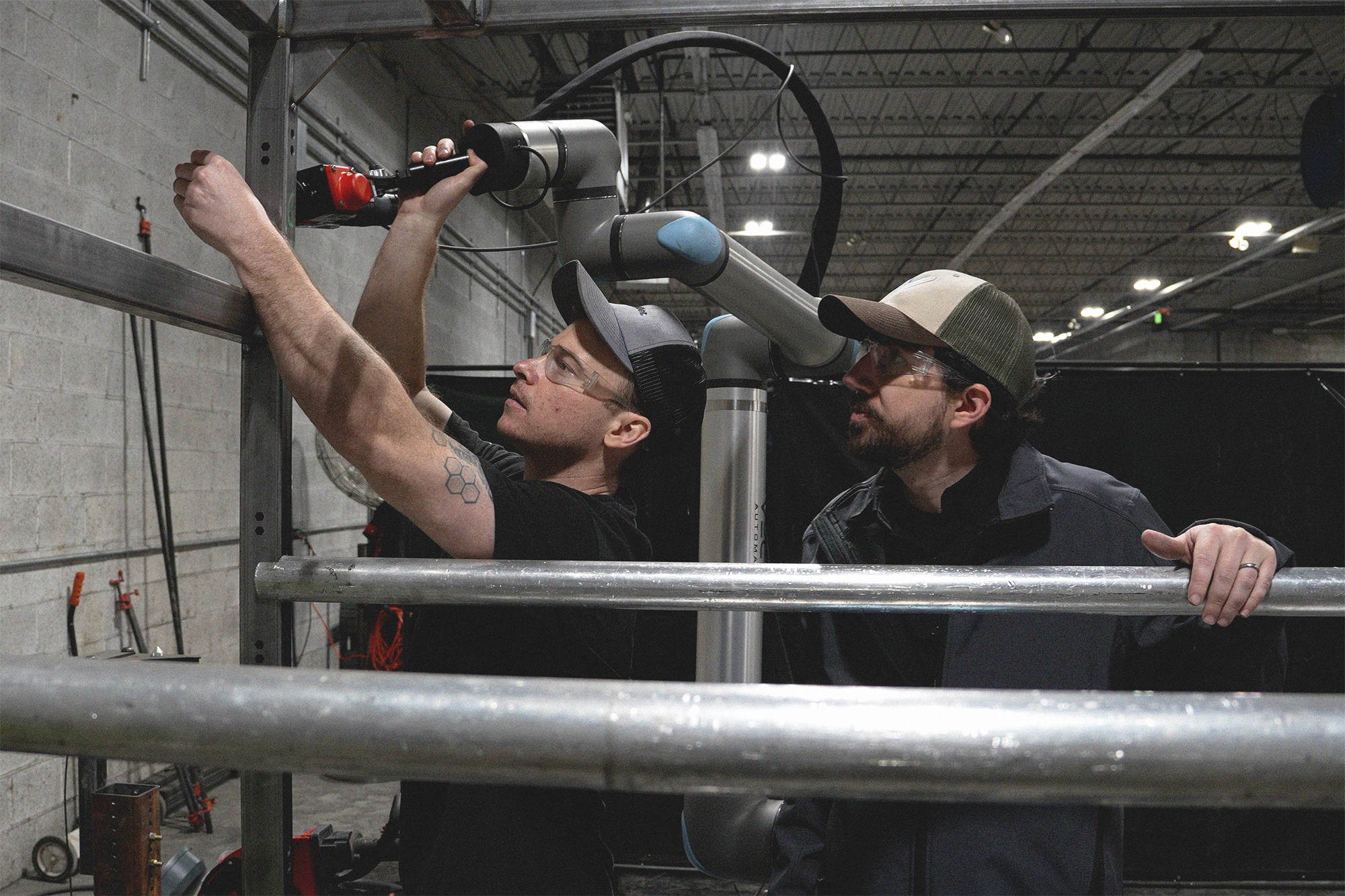
Choosing the Right Cobot Integrator
For Caltech, the decision ultimately came down to more than equipment.
“There are a lot of integrators out there. Robotic welding has been figured out," says Callender.
"The difference is we found a partner in Vectis."
The team recognized the importance of choosing an integrator that could provide the application expertise and long-term support needed to ensure success as production evolved.
According to Callender, that support has proven valuable from the very beginning.
"When you're down, when you have a question, when you're struggling with a weld, when you don't think you can do something and they're like, 'Yeah, you can,' that's where Vectis steps in."
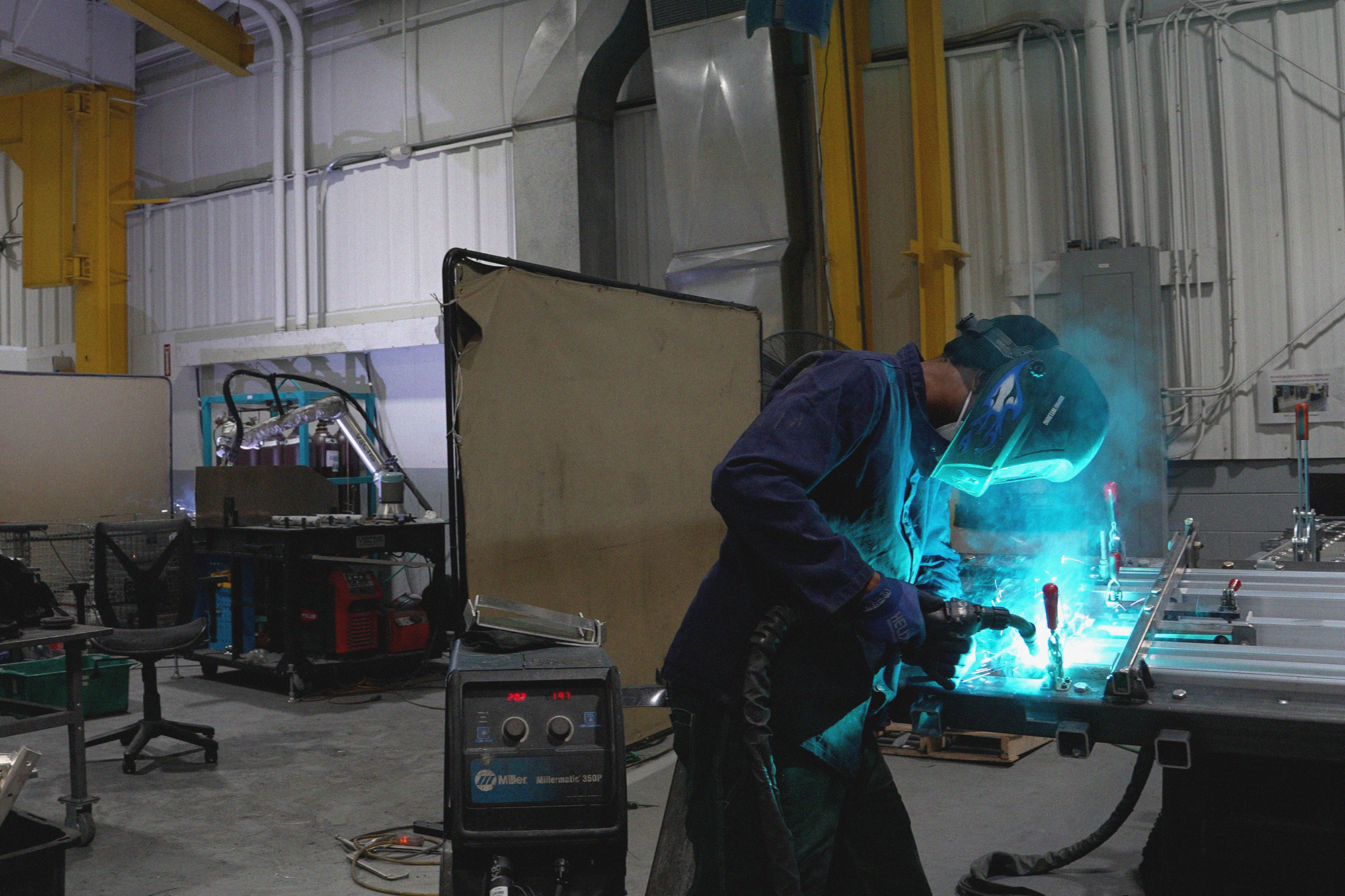
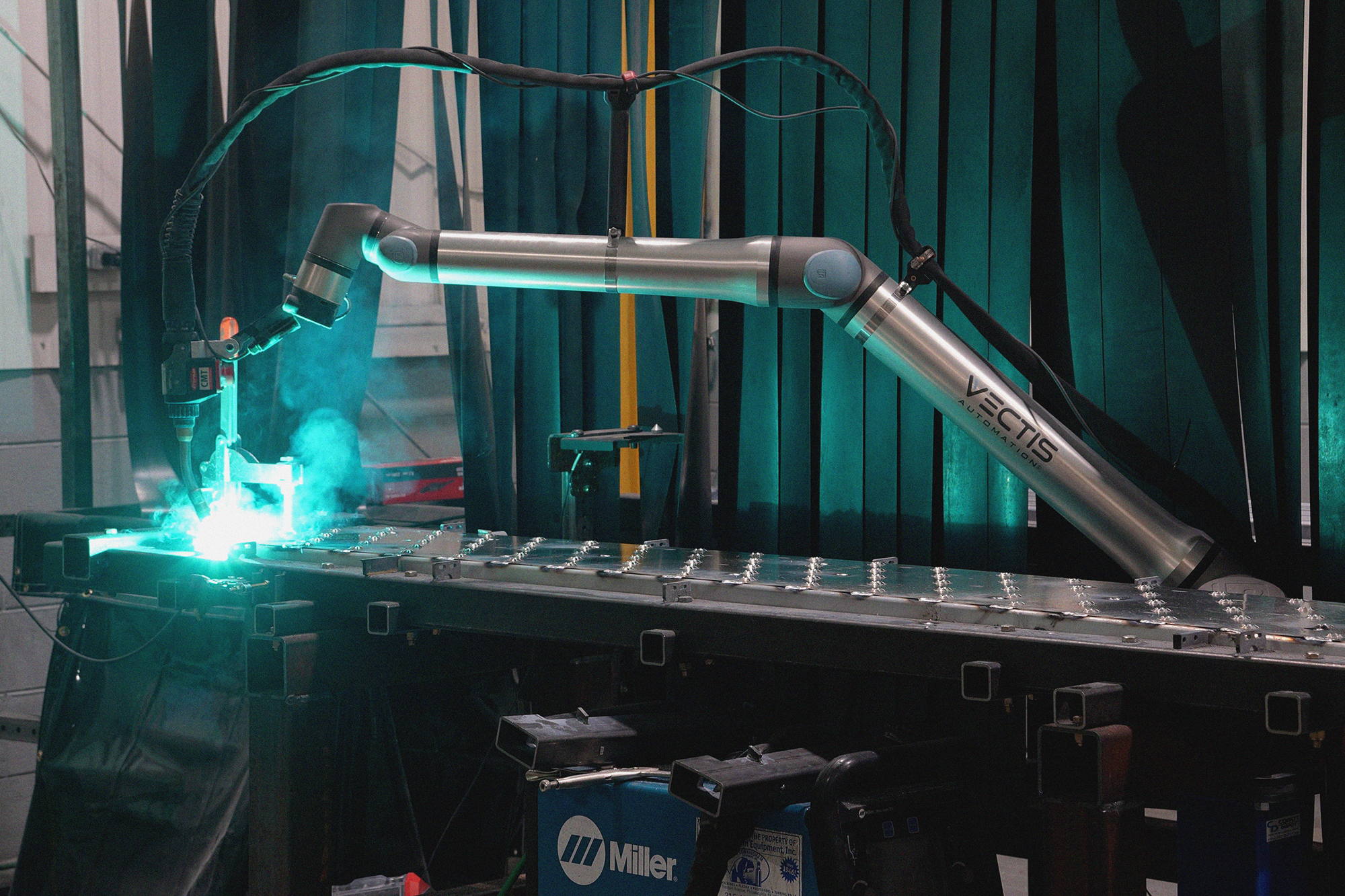
Caltech maximizes productivity by setting up efficient workstations for quick part changeover
From 1 Vectis Cobot to 7
Caltech's first Vectis deployment quickly proved its value in tackling a range of applications across the shop.
What began as a single automation investment eventually expanded into seven systems as the company identified additional opportunities throughout the operation.
As Caltech gained experience with welding automation, the company's approach continued to evolve.
"I think that's the key. Your adoption starts to transform and evolve as you get better at leveraging robotic welding,” says Jack.
Today, Caltech uses its systems in a variety of ways, including pedestal setups, off-table welding applications, and multi-robot configurations.
"We're welding off the table with pedestal setups. We're fixturing very long, large parts outside of it. We're putting two arms in tandem."
Rather than treating automation as a standalone process, Caltech has integrated it into the broader manufacturing operation.
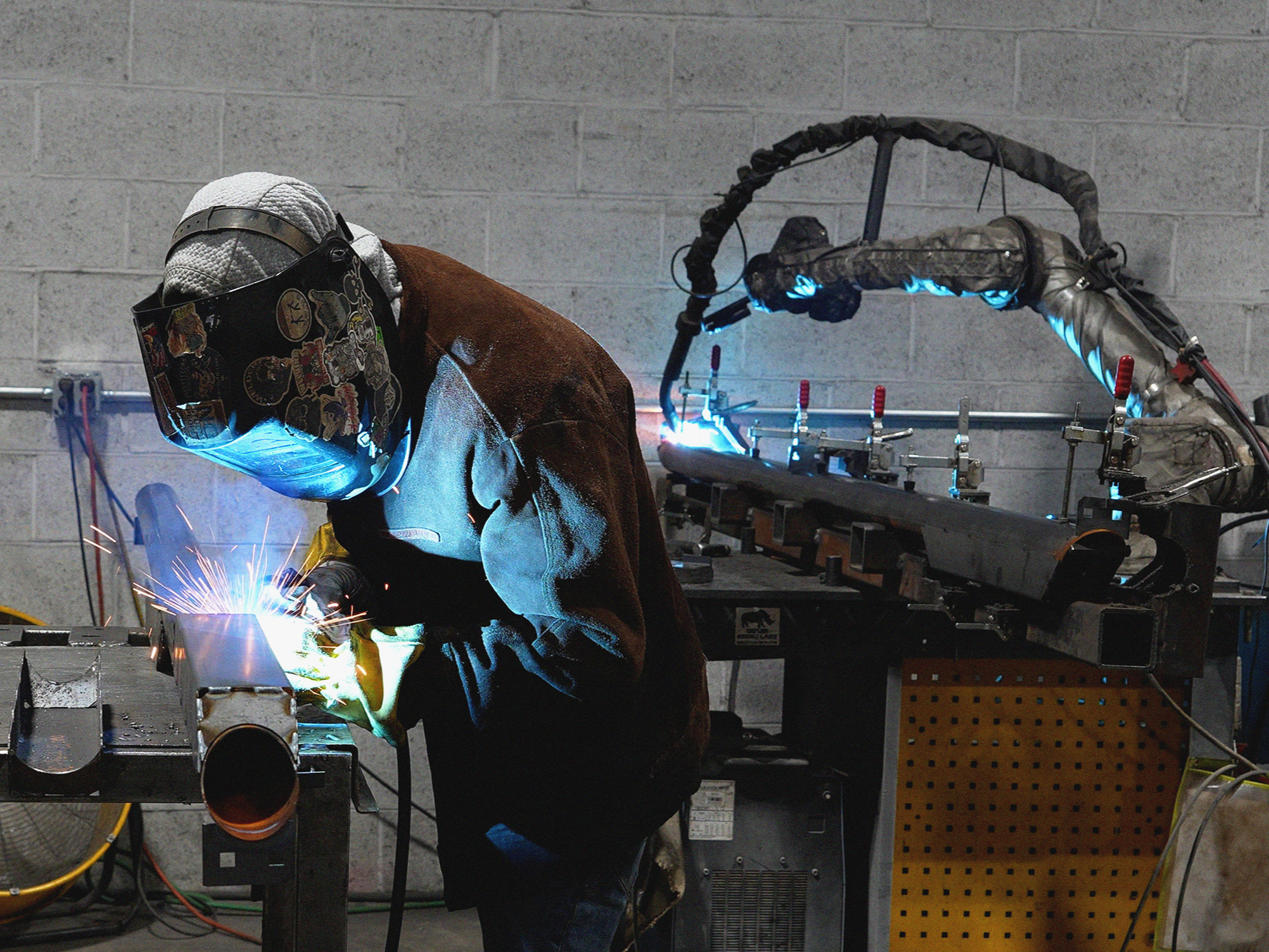
Caltech welder prepares the next part for the Vectis cobot to weld.
Maximizing Productivity by Maximizing Arc-On Time
The impact on production capacity has been significant. Caltech now routinely runs demanding production schedules while maintaining the flexibility required of a contract manufacturer.
"We have jobs that we're running two shifts, six to seven days a week, 10 hour shifts", says Callender. "These machines practically never come off. It’s very impressive."
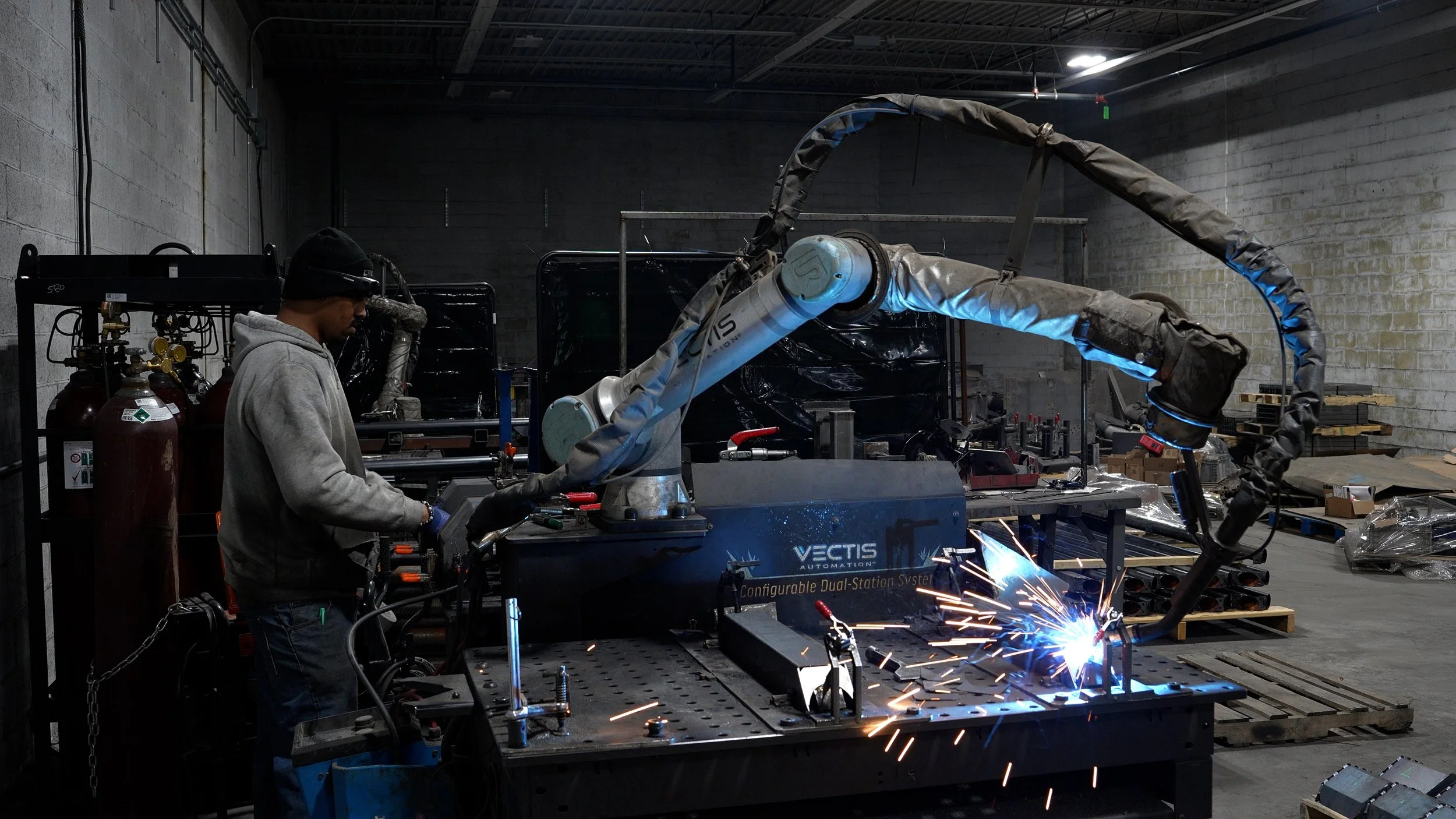
On just one of their systems, Caltech is running over 35,000 welds per week, putting the cobot on pace to complete more than one million welds in just over six months.
A key driver of their increased productivity is maximizing arc-on time. Brian Wasserman, Mechanical Engineer at Caltech, explains how the team structures workstations to keep parts flowing through production.
"There's ways for us to put parts back-to-back on separate tables, so we can have the robot welding one piece while the operator is working on setting up a new piece."
"It's basically non-stop action."
The additional welding capacity has allowed Caltech to better leverage the fabrication equipment already present throughout the facility and continue scaling alongside customer demand.
"We would not be the size of company we are today without the ability to send customers finished, welded parts at the end of the day,” Callender continues.
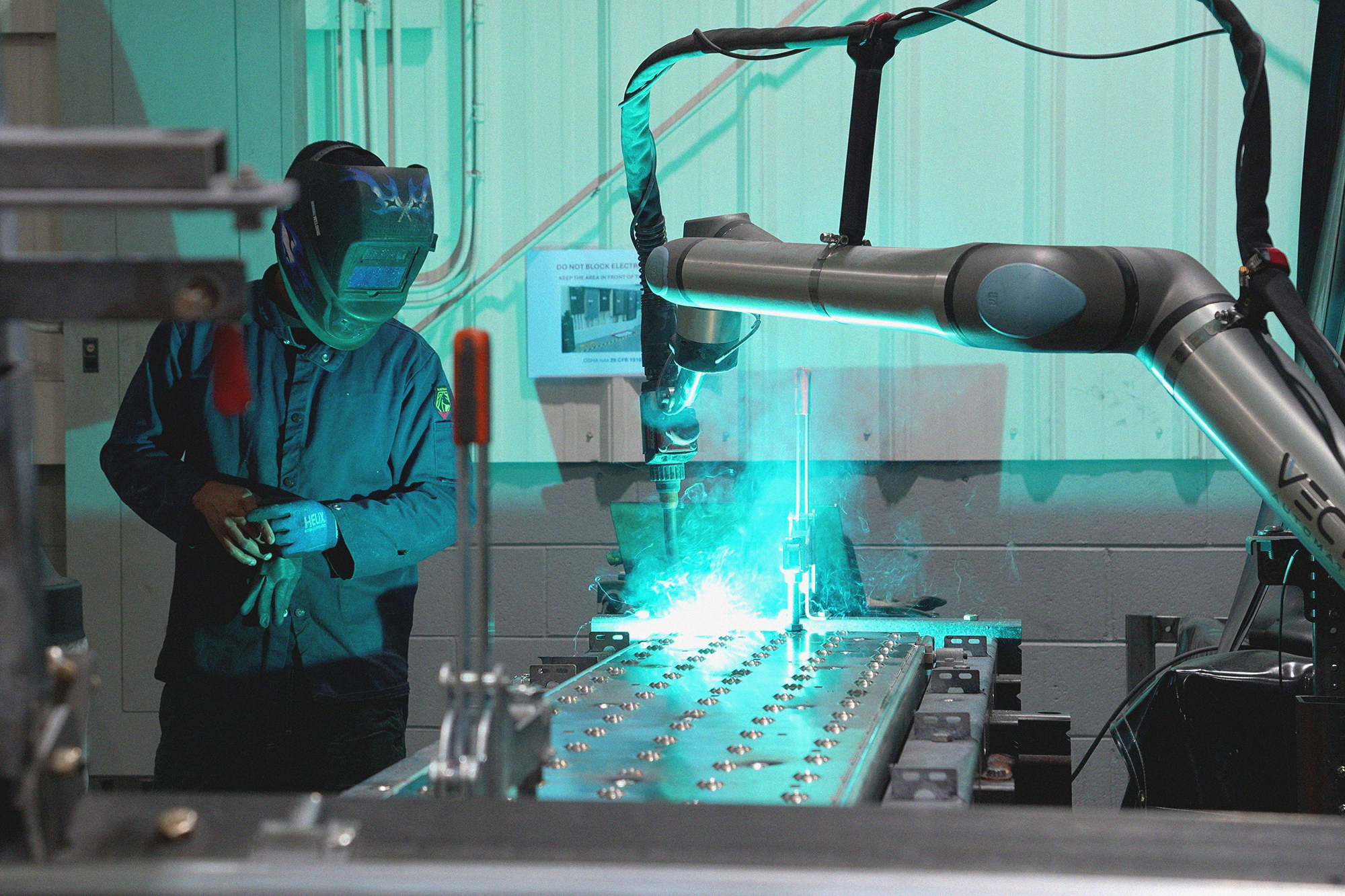
Caltech is now able to robotically MIG weld repetitive applications that were formerly TIG welded
Automating Former TIG Welding Applications
As Caltech's automation capabilities expanded, so did the range of applications they were able to automate.
One of the most impactful developments has been the ability to automate repetitive aluminum welding applications that had previously been manually TIG welded, freeing skilled welders to focus on the highest-skill work in the shop.
"That was probably the biggest win for us”, says Jack Callender. “We’re now able to take on jobs that really feed the tube laser well, and the company well as whole. We would never be able to handle the capacity with a TIG welder doing it.”
“Vectis has helped us take welding capacity from a constraint to a strength, while allowing our skilled welders to focus on the work that truly needs their experience,” says Tyler Callender, Director of Manufacturing & Quality at Caltech.
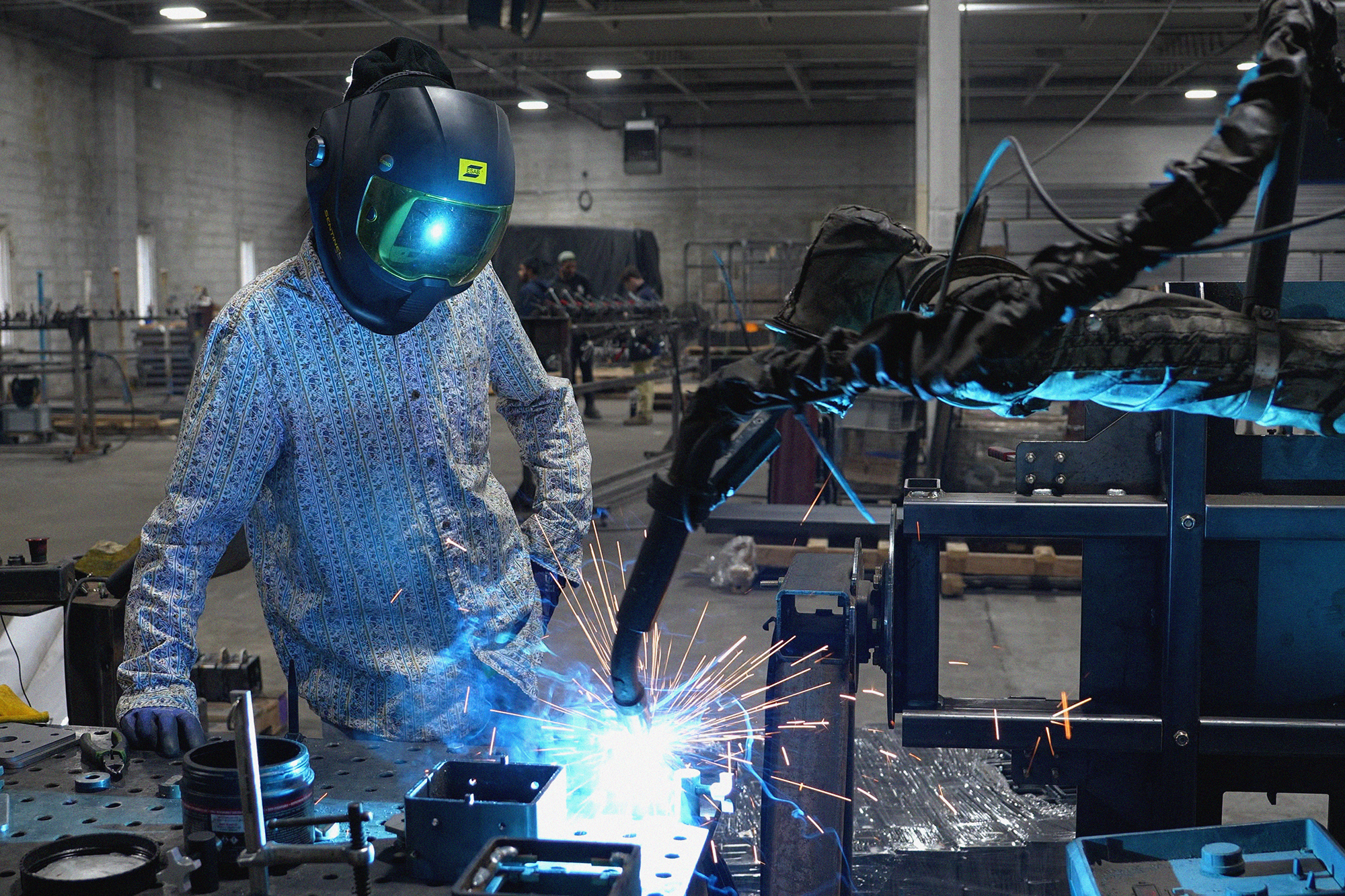
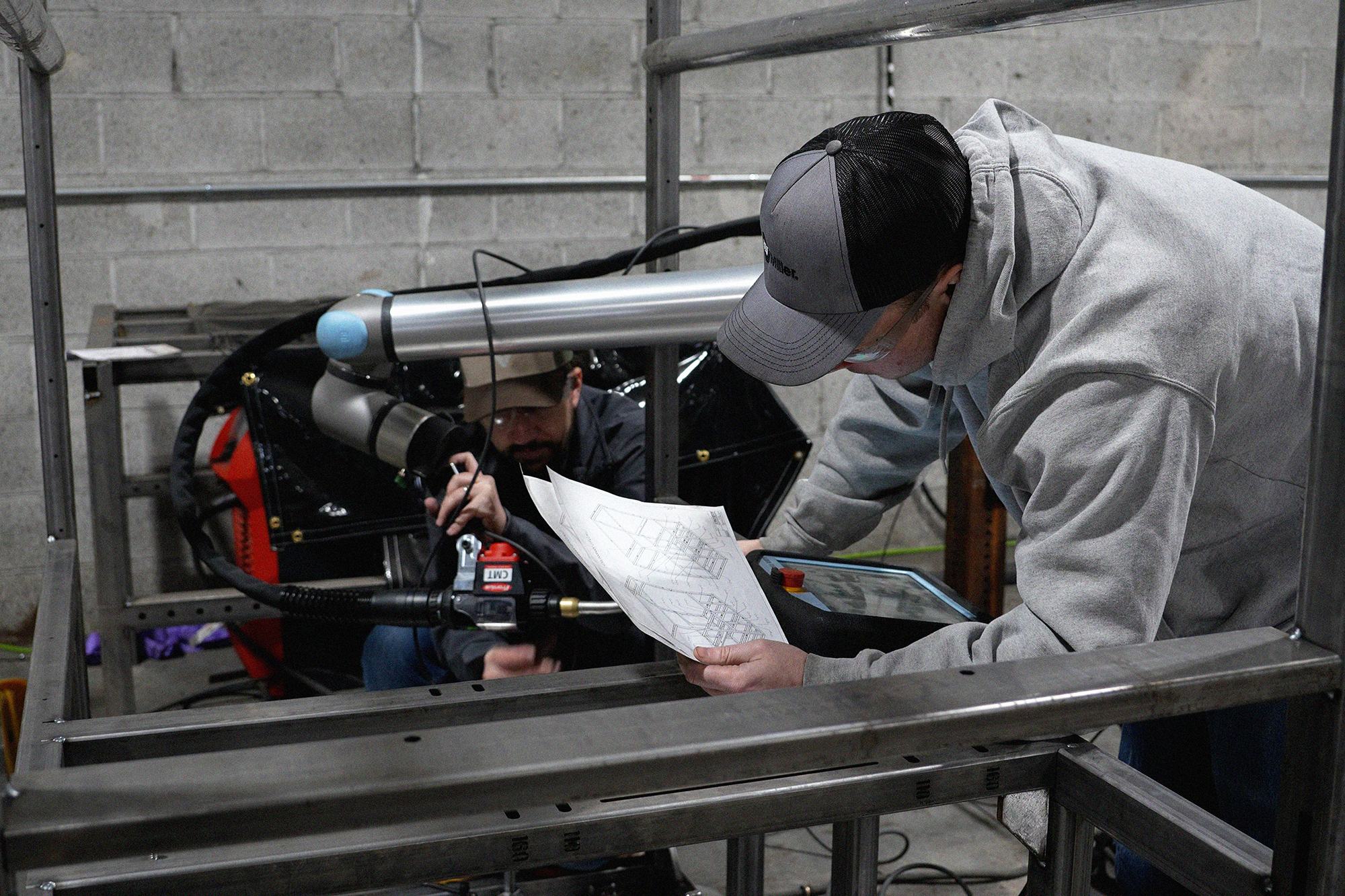
Owen Doran, Cobot Champion, observes a new weld program
Developing the Next Generation of Welders
Automation has also become a valuable workforce development tool.
For Cobot Champion Owen Doran, working with the Vectis system created an opportunity to grow both his technical skills and his interest in automation.
"It wasn't until I'd seen Vectis' system that I boosted my love for robotics and automation."
Doran describes the collaborative nature of the technology as one of its most appealing characteristics.
"I'm able to work with the robot, and it feels like we're a team together. I’m able to take the knowledge I learned in school, and just tell the robot what to do, and we can get those welds out."
Developing Cobot Champions and internal automation expertise is one of the most important keys to long-term automation success. Callender explains that automation allows new employees to become productive more quickly, while enabling experienced welders to focus on the highest-skill work in the shop, helping reduce burnout.
"Our ability to get them in front of the robotics and let the robotics be the experienced welder, and them become the operator and programmer…the impact they have in our company is just far greater than what they can do per hour by themselves."
“Vectis has helped us take welding capacity from a constraint to a strength, while allowing our skilled welders to focus on the work that truly needs their experience.”
Tyler Callender (Director of Manufacturing & Quality, Caltech Manufacturing)
Support That Drives Long-Term Success
Caltech has realized significant productivity gains through automation, and the team repeatedly points to Vectis’ service and support as the primary reason they continued expanding their automation footprint.
"The support with Vectis has been the reason why we keep coming back," says Callender.
Whether troubleshooting applications, optimizing weld parameters, or guiding as the team expands into new areas of automation, Caltech views the partnership as a key contributor to long-term success.
"We really get support. There's not a lot of finger-pointing, and we're able to keep our systems running."
Jamie Callender, Director of Operations, echoed the importance of robust systems and equally reliable support.
“I am very focused on capital equipment running and making parts. When machines are down, it drives me nuts.
Vectis has been so reliable in helping us make sure that our machines are up and running. That value is unmeasurable to me."
Continuing to Scale
Today, cobot welding automation is a core component of Caltech's growth strategy. The company continues to expand how it leverages robotic welding, increasing capacity and scaling production alongside customer demand.
In 2026, Caltech planned to purchase its sixth and seventh Vectis cobots by the end of the year. Instead, both systems were purchased by the end of January.
The team continues to add both cobots and personnel as the business grows, actively hiring welders and cobot operators to support continued expansion.
"That's the beauty of this," says Jack Callender. "Once we build a fixture and a program and have a machine, if capacity doubles, you've kind of already figured that out right away. It’s just copy and paste."
As manufacturers continue searching for ways to increase productivity and navigate labor constraints, Caltech's experience demonstrates that successful automation is about more than equipment alone. Choosing the right automation partner, developing Cobot Champions, and building internal expertise creates a scalable foundation for long-term growth as an enterprise.