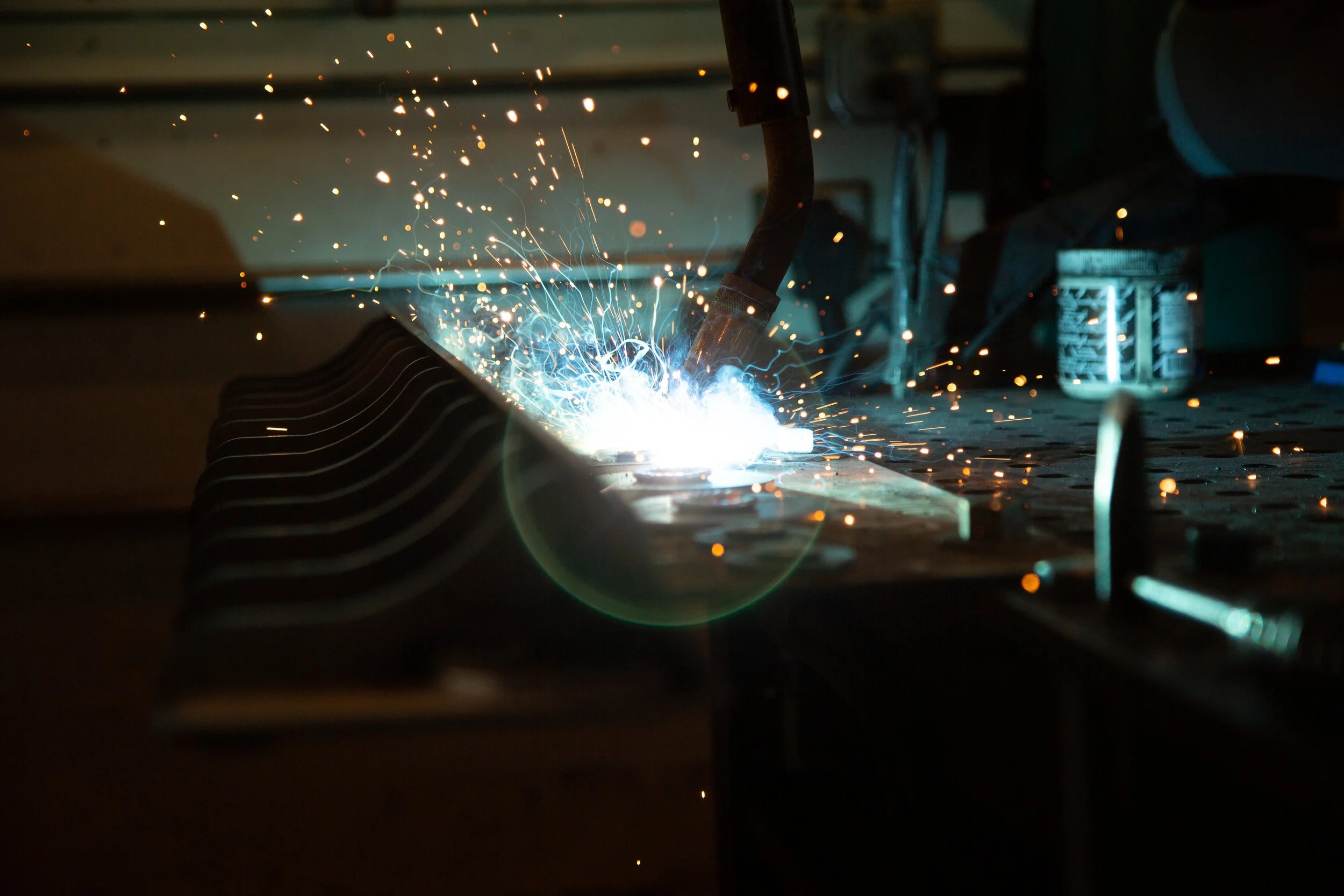
Cobot welding & cutting with a proven track record of 800+ systems in production, supported by a team with centuries of combined automation expertise
Automation Tailored to Your Industry
Cobot welding & cutting with a proven track record of 800+ systems in production, supported by centuries of combined automation expertise.
Explore Your Industry
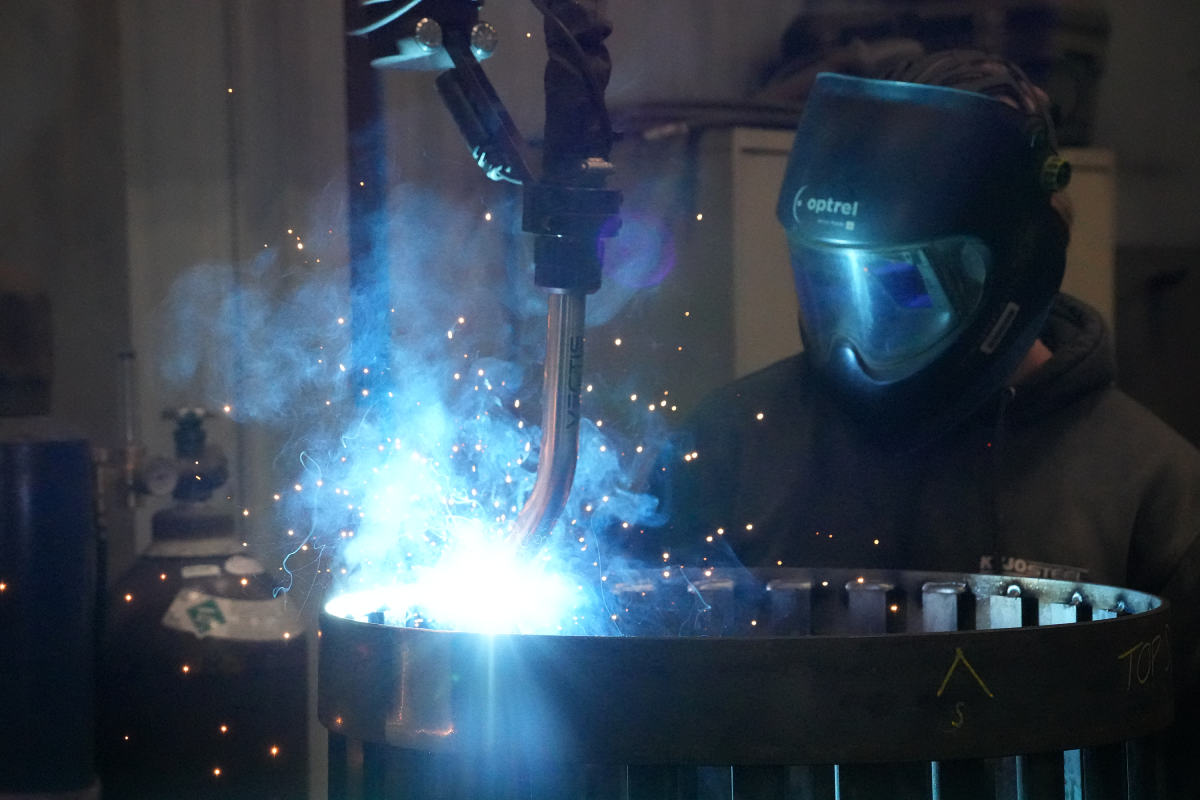
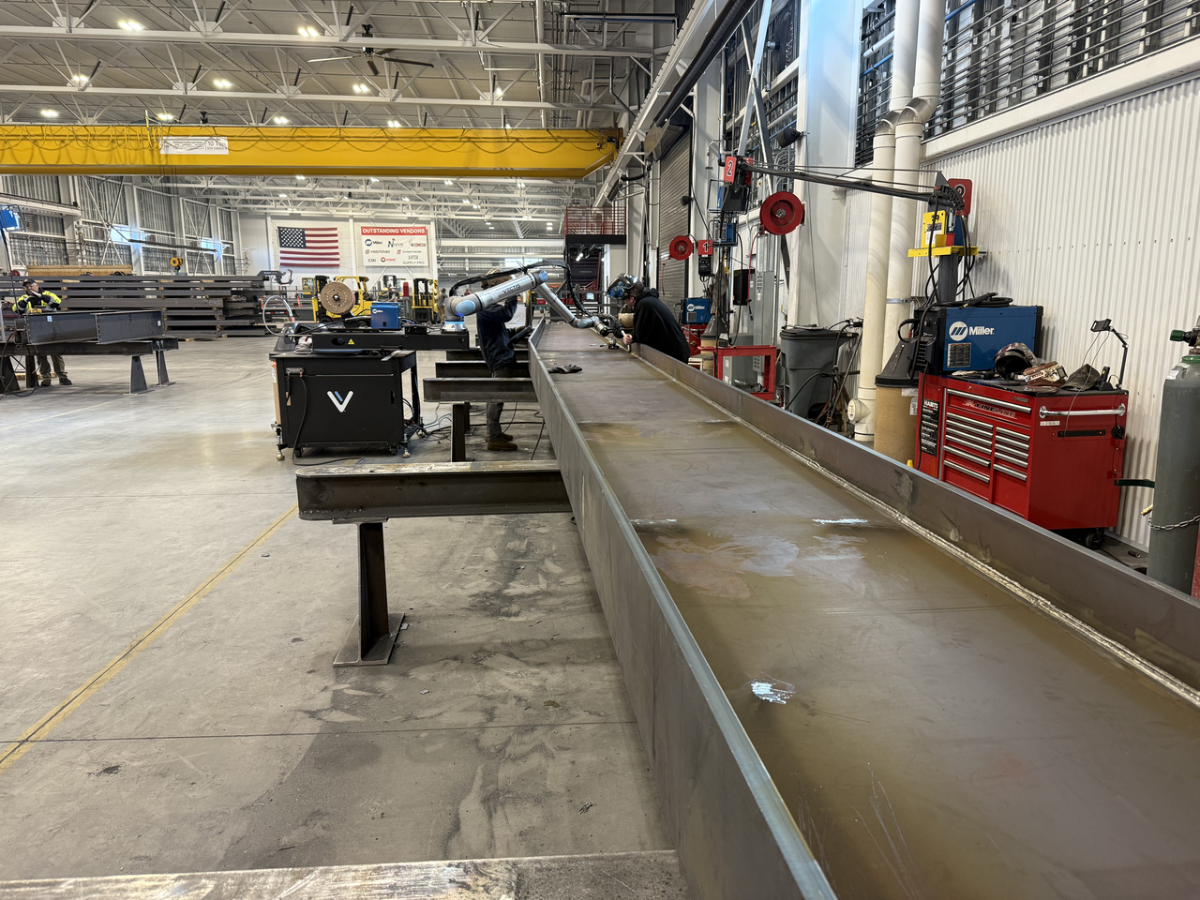
Don’t See Your Industry?
We understand that every shop is different. Reach out to our applications engineers to evaluate your parts, production goals, and workflow to determine if our tools can lend a hand in your operation. We’ve seen a lot in our hundreds of deployments.
Different Industries. Different Shop-Floor Challenges.
Vectis tools are helping solve them across 800+ deployments.
Different Industries. Different Shop-Floor Challenges.
Vectis tools are helping solve them across 800+ deployments.
Increase Capacity
Increase the capacity of your existing team with the help of cobot tools.
Improve Consistency
Reduce variability and build more dependable production processes.
Stay Flexible as Your Work Changes
Use tools that can move between parts, projects, and production requirements.
Reduce Rework
Achieve more repeatable weld quality and spend less time correcting avoidable issues.
Improve Throughput and Lead Times
Keep more work moving through the shop and deliver projects with greater predictability.
Make Better Use of Skilled Welders
Move repetitive arc time to the cobot while your team focuses on fitting, problem-solving, and higher-skill work.
Different Industries. Different Shop-Floor Challenges.
Vectis tools are helping solve them across 800+ deployments.
Contract Manufacturing
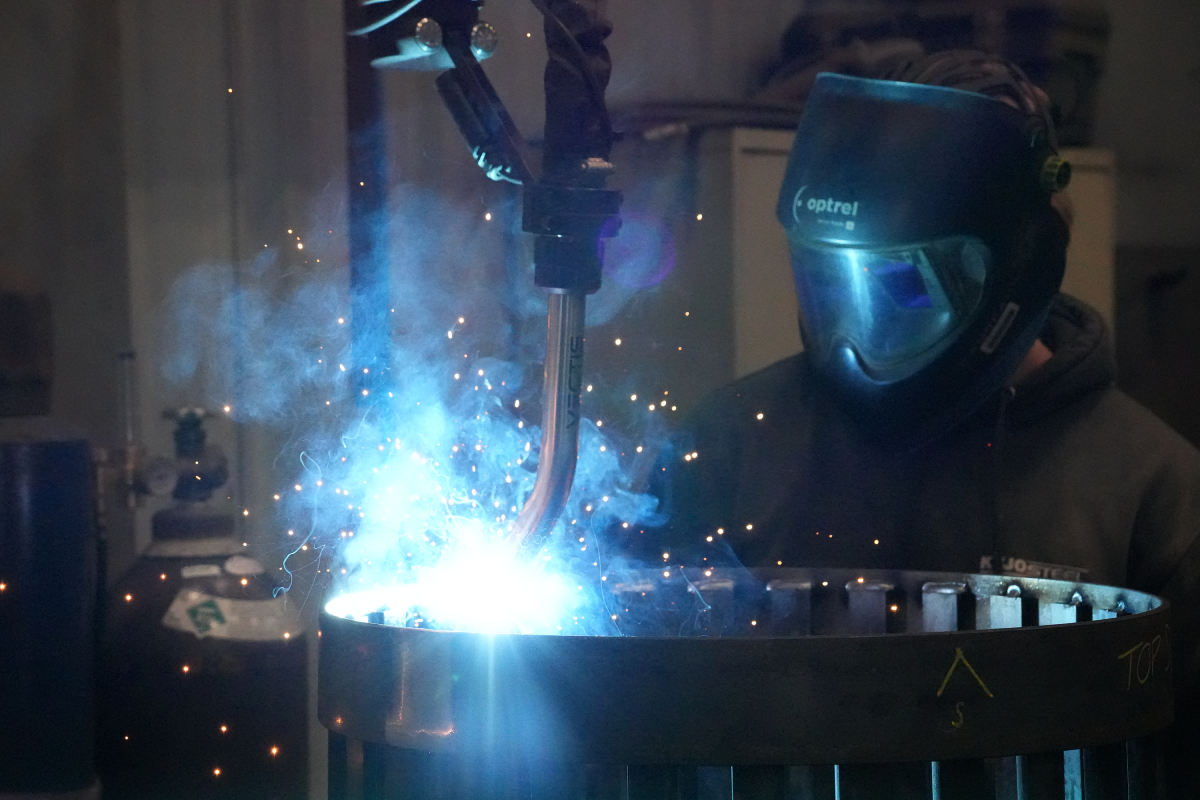
“We’re welding so many different types of parts... and [the Vectis] just switches from one to the other with ease.”
— Luke B. (Operations Manager, KYJO Steel)
Flexible Tools for Changing Workloads
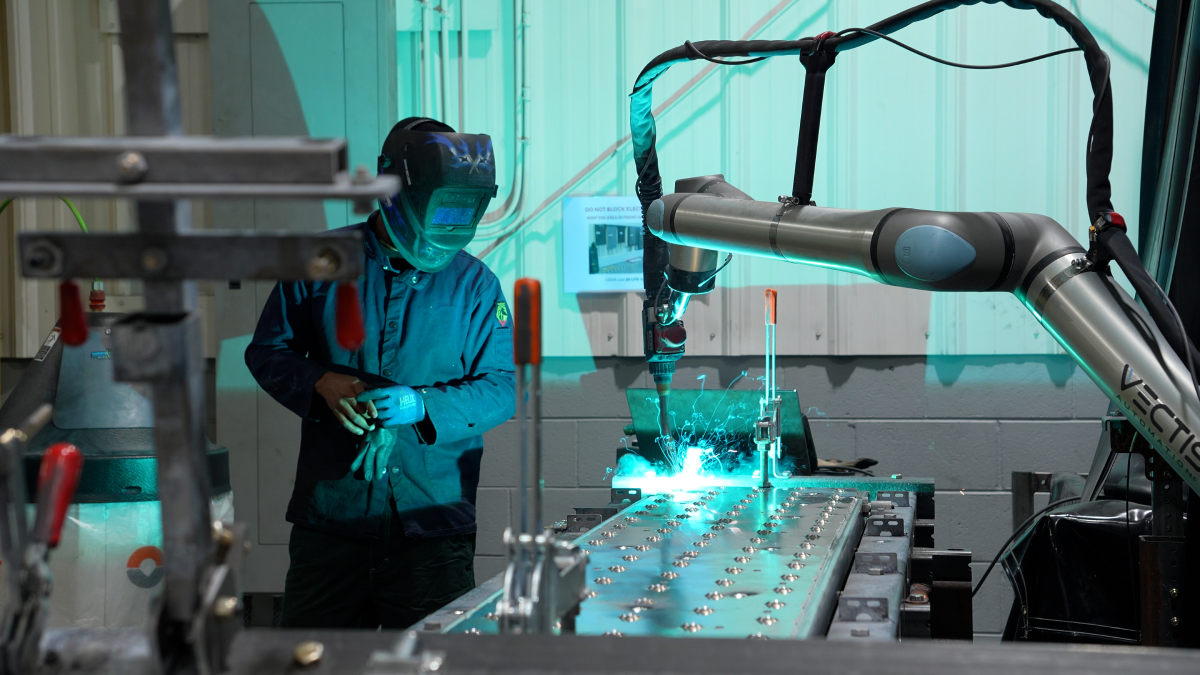
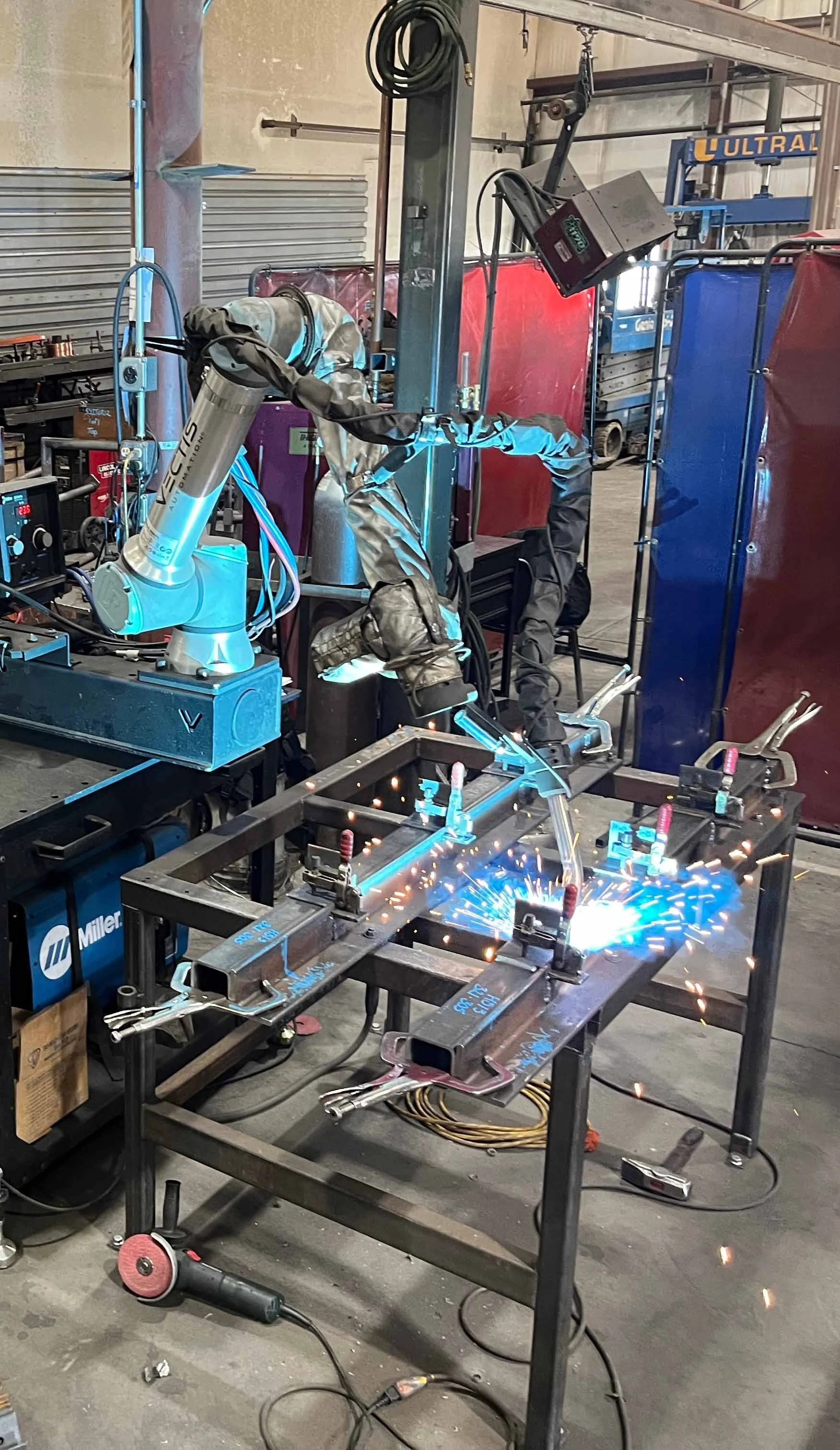
Job shops/contract manufacturers rely on the flexibility and programming ease of Vectis tools for high-mix production, while increasing capacity for larger part runs. Free up welders from repetitive arc-time while maintaining the agility to handle short runs, varied parts, and changing customer demands.
Common Use-Cases
MIG welding, stitch welds, boring arc-on time, long welds, heavy welds, multipass, plug welds, patterns, medium-volume batches, seal welds, X-ray & UT welds, and much more.
Structural Steel & Heavy Fabrication
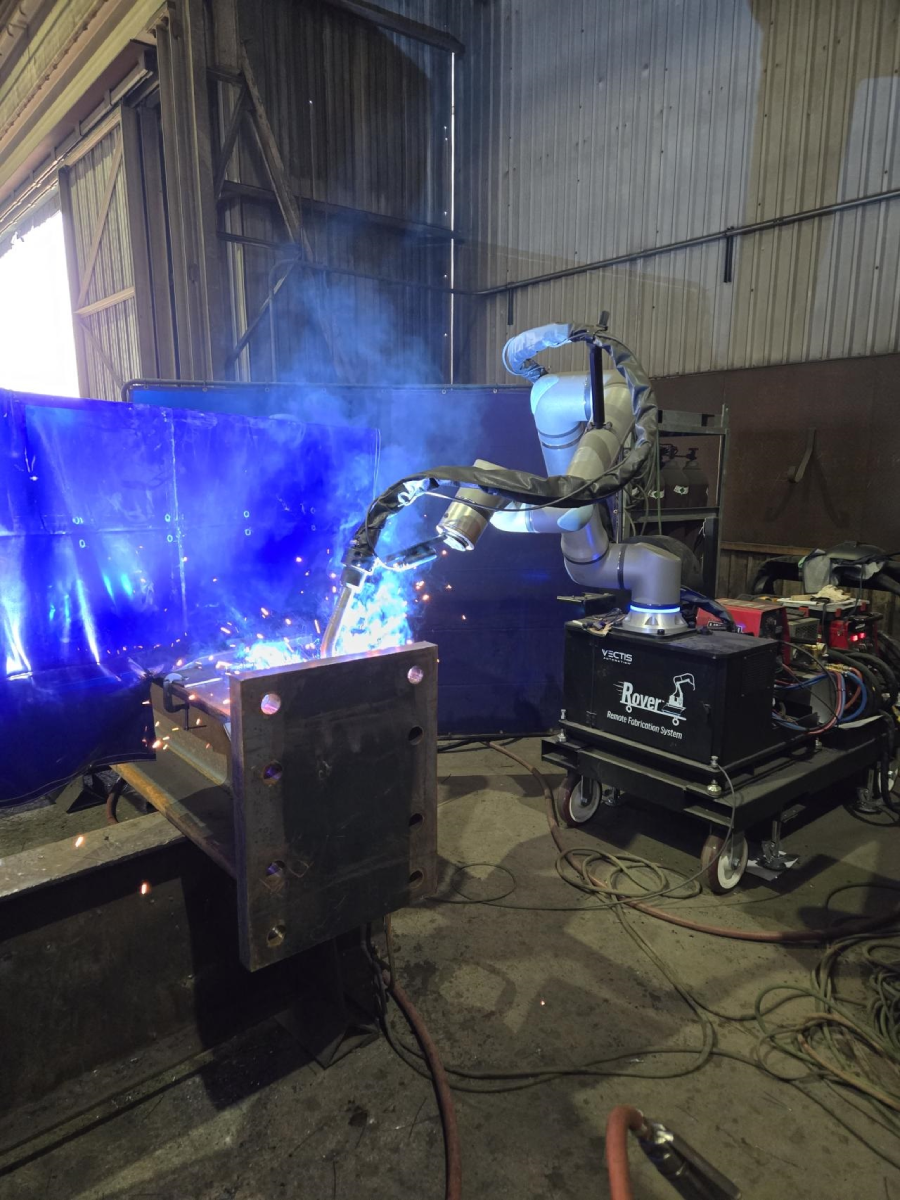
“The Vectis Rover is pulling its weight, helping combat the shortage of highly skilled CJP welders our US structural steel industry is facing.”
— Roy E. (VP of Operations, Central Texas Iron Works)
Bring Automation Directly to the Work
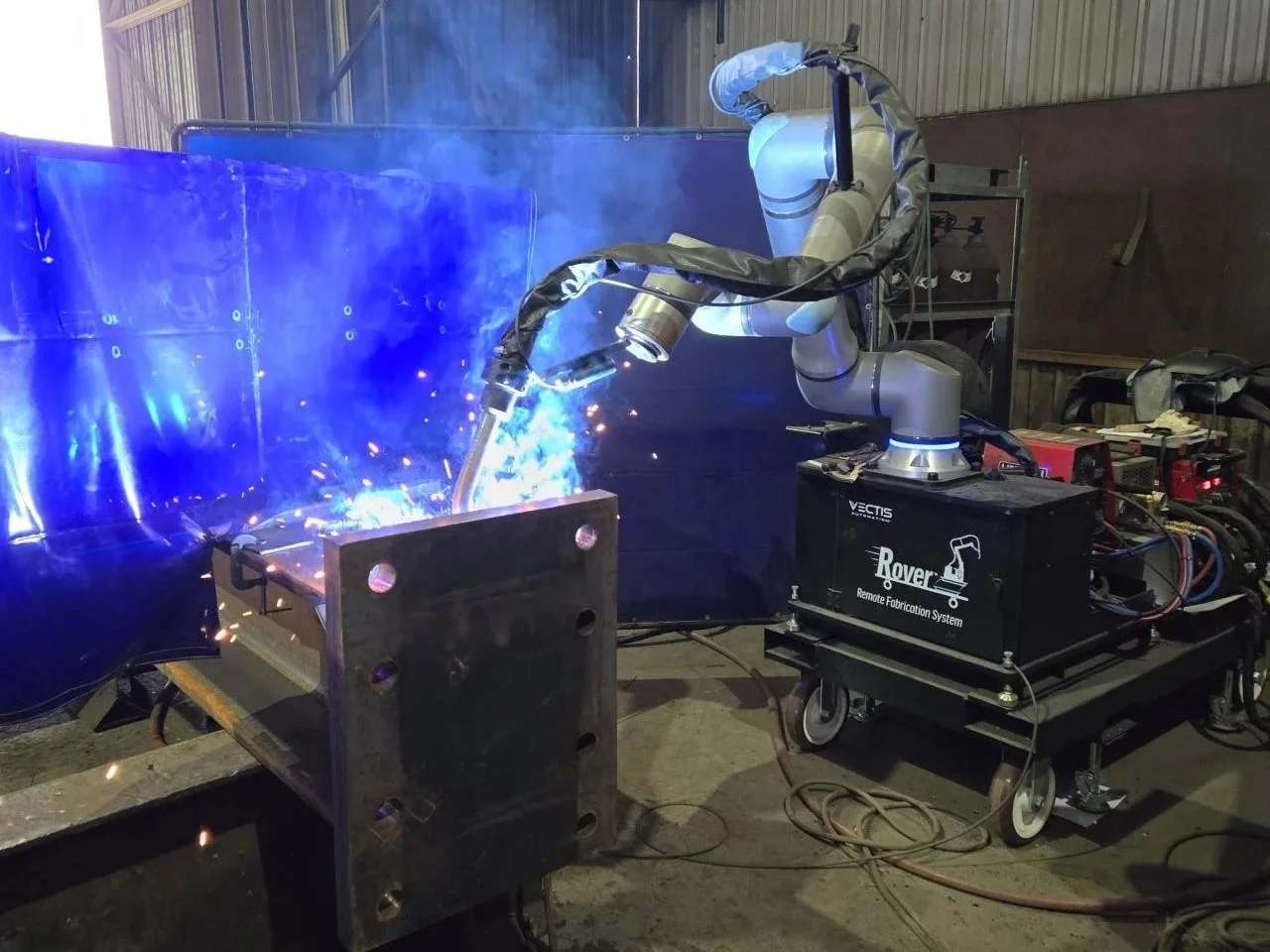
Structural steel fabricators are using Vectis tools to soak up massive amounts of arc-on time on even their largest weldments. Mobile deployment options such as the Vectis Rover™, Park’N’Arc™, and Slide™ bring automation directly to the work, boosting productivity by an average of 3-4x while keeping skilled welders focused on high-value work.
Common Use-Cases
Critical CJP welds tested with RT or UT, moment connections, bridge subassemblies, bracing plates, fabricated I-beams, base plates, anchor plates, embeds, bracketry, vertical-up welds, slots in large formed parts, thick-plate beveling, and much more.
Aluminum Fabrication
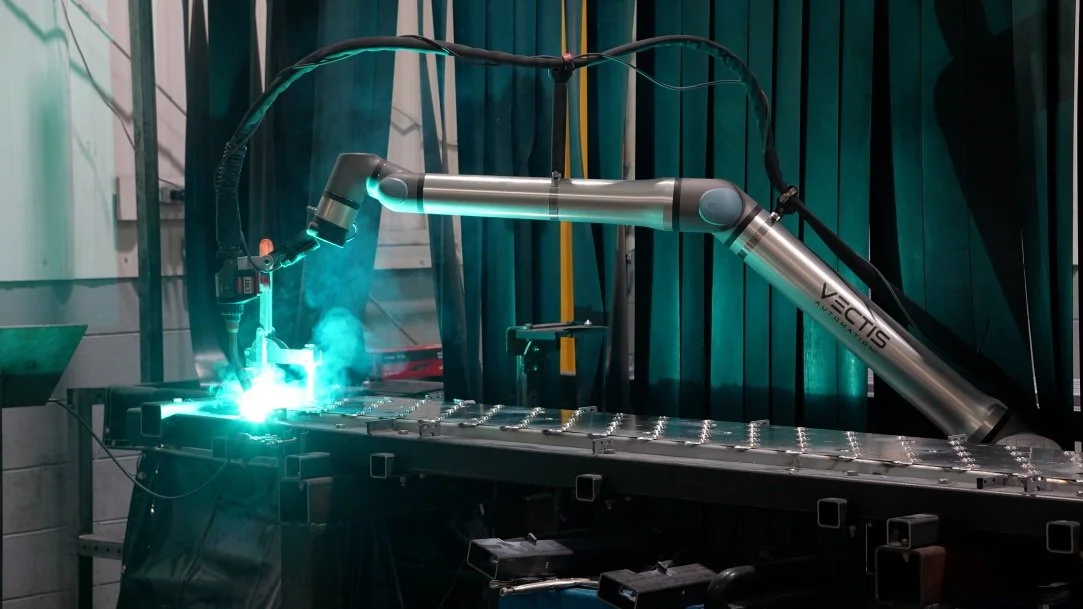
“Vectis has helped us take aluminum welding capacity from a constraint to a strength.”
— Tyler C. (Director of Operations, Caltech Manufacturing)
Precision Aluminum Welding Automation
Aluminum fabricators rely on Vectis solutions to automate precise welds without sacrificing flexibility. Advanced push-pull aluminum welding capabilities help teams improve consistency, increase productivity, and, in some cases, shift their most time-consuming TIG welding to cobot MIG.
Common Use-Cases
Automotive aftermarket components, brackets, boxes (electrical, marine, toolboxes, etc.), handrails, light poles, structural aluminum, and much more.
Equipment Manufacturing
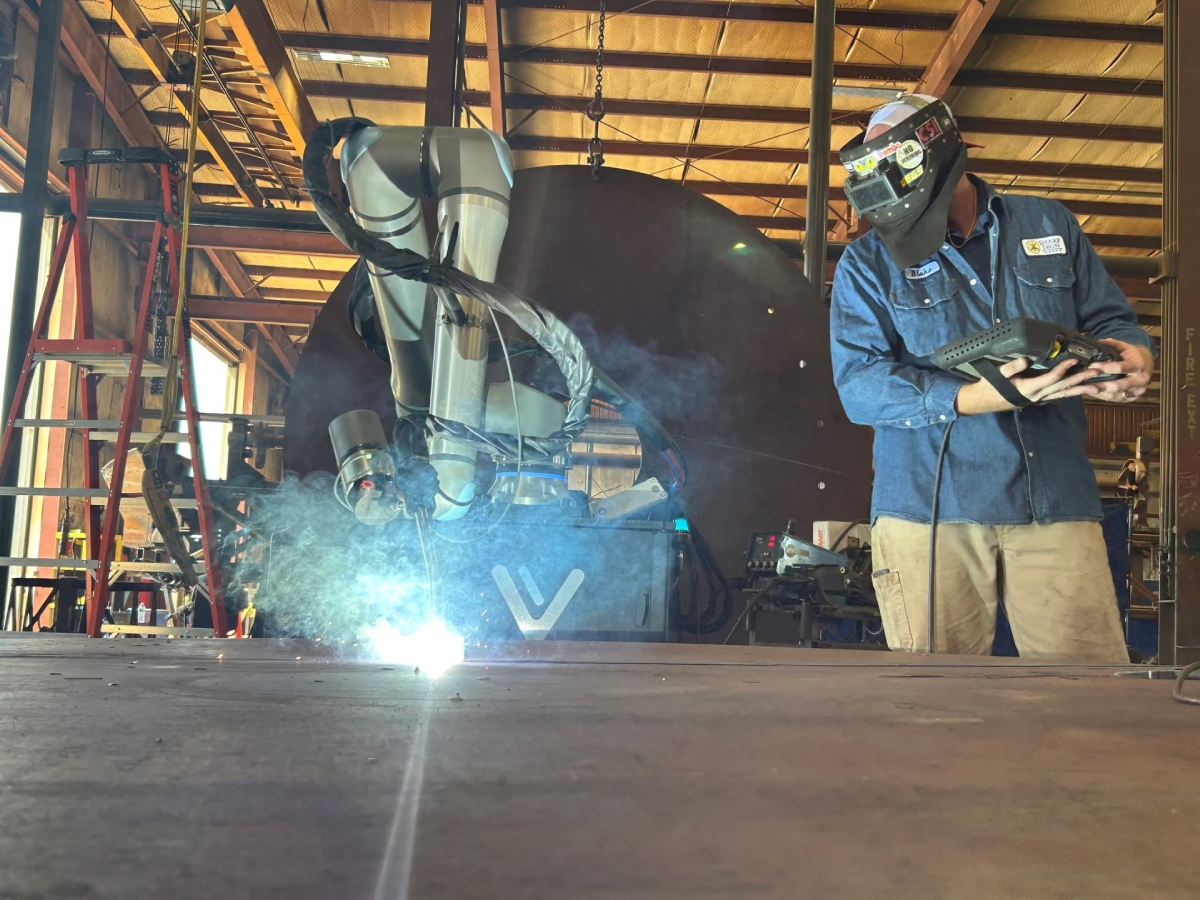
“That part used to take us 8 hours… now we do it in 30-45 minutes.”
— Blake F. (Welding and Finishing Supervisor, Sharp Iron Manufacturing)
Robust Capability for Heavy Equipment Fabrication
Equipment manufacturers often balance a wide variety of parts, assemblies, and production requirements. Vectis solutions help teams automate repetitive arc-on time, increase throughput, and reduce rework while maintaining the robust capability needed for construction, agriculture, and mining equipment, and other heavy equipment applications.
Common Use-Cases
Blades, box beams, buckets, chassis/frames, couplers, grapplers, hydraulic cylinders, hydraulic tanks, motor mounts, outriggers, pump frames, rippers, towers, and much more.
Shipyards & Marine Fabrication
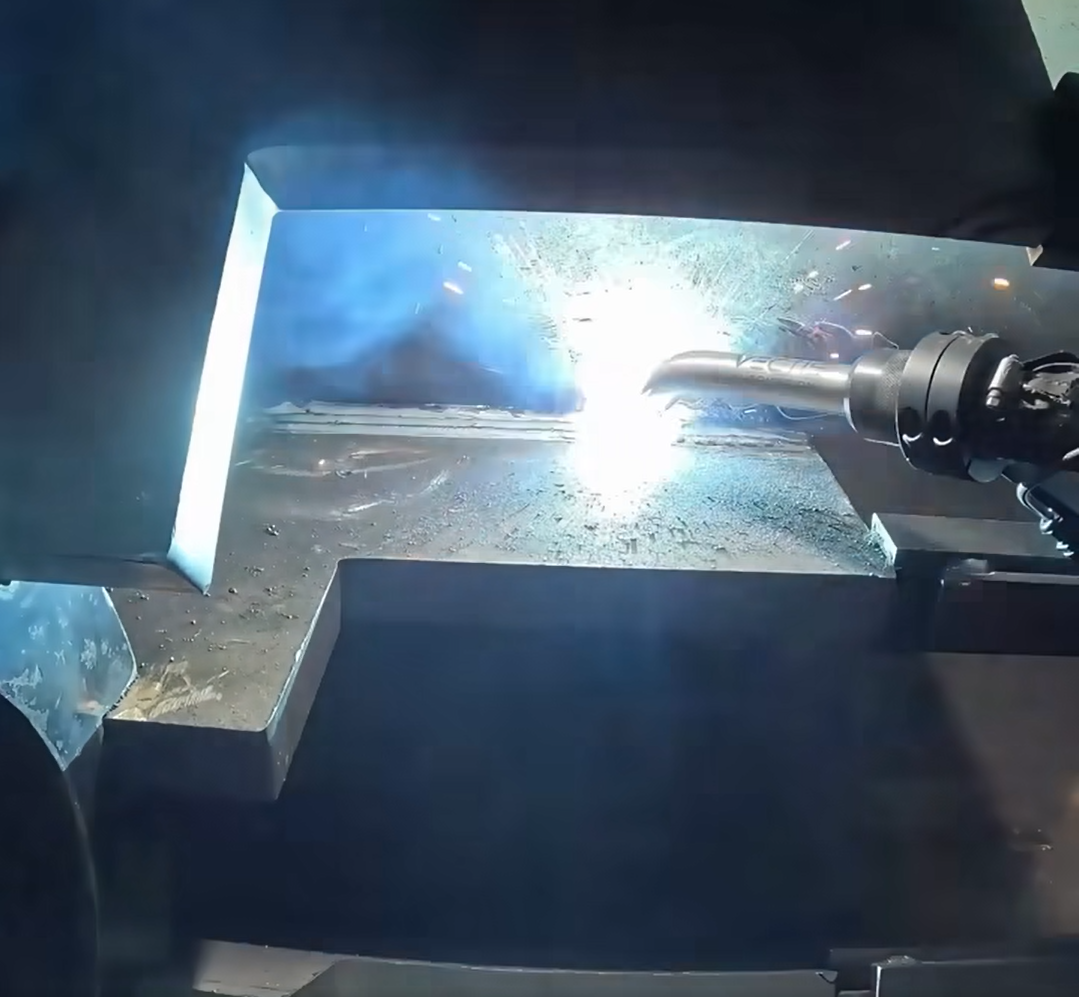
“Traditional ROI calculations don’t fully capture the value of preventing injuries, minimizing weld fume exposure, and improving welder comfort.”
— Intercon (Heavy Machinery & Shipbuilding)
Ultraportable Tools for Large, Demanding Weldments
Vectis cobot cutting & welding tools provide the versatile, capable, and easy-to-use automation solutions marine and defense fabricators require. Gone are the days of tedious programming and large, expensive, high-risk installations. Vectis offers a scalable, sustainable approach that can help offset the critical welder shortages and boost productivity by 3-4x.
Common Use-Cases
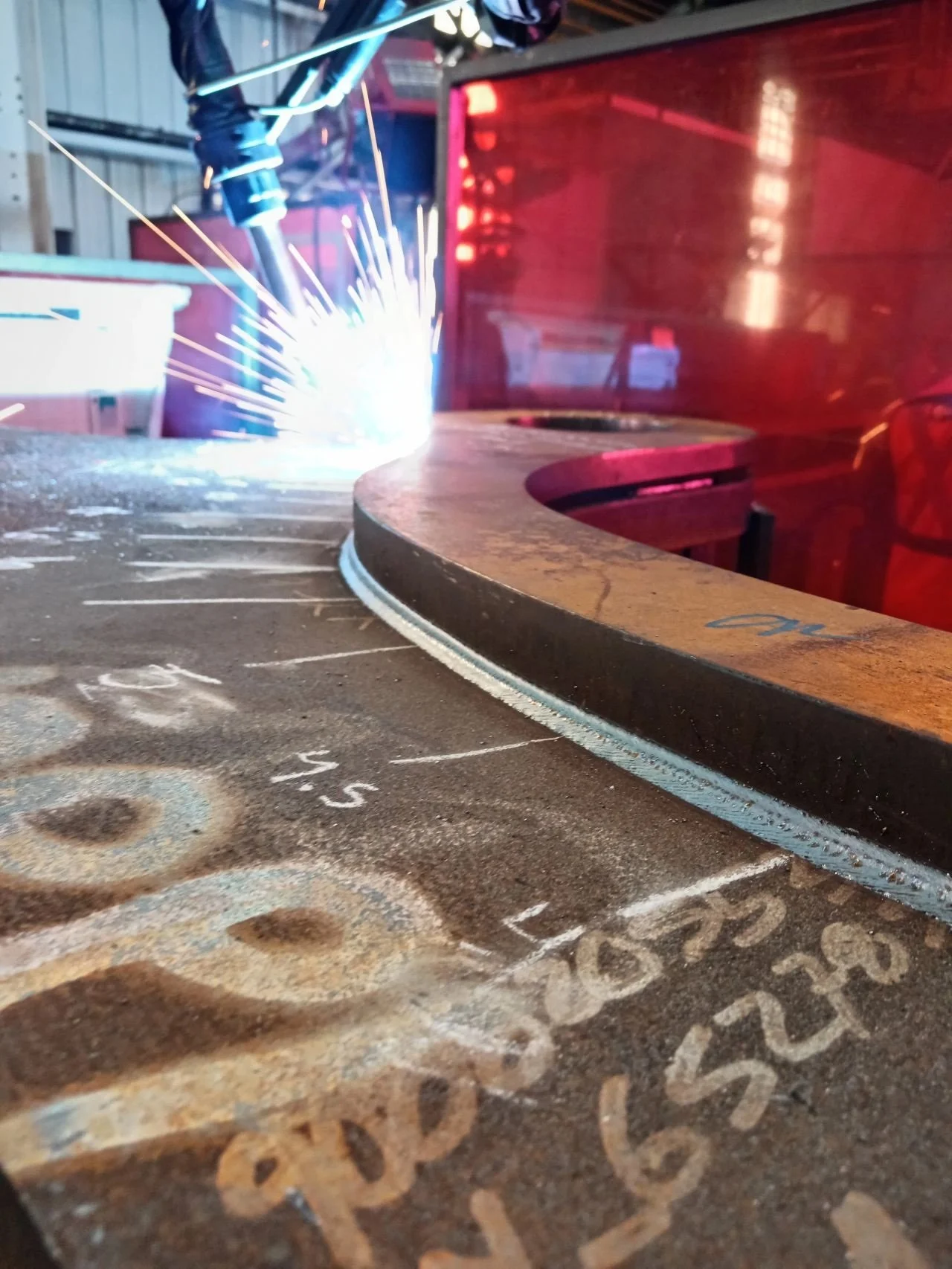
Magnetic deployment, complex paths, multipass welds, one-off parts, large fillet welds, groove welds, PJP and CJP welds, 3D cutting and beveling, joint preparation for as-built conditions, and much more.
Data Center & Mission-Critical Fabrication
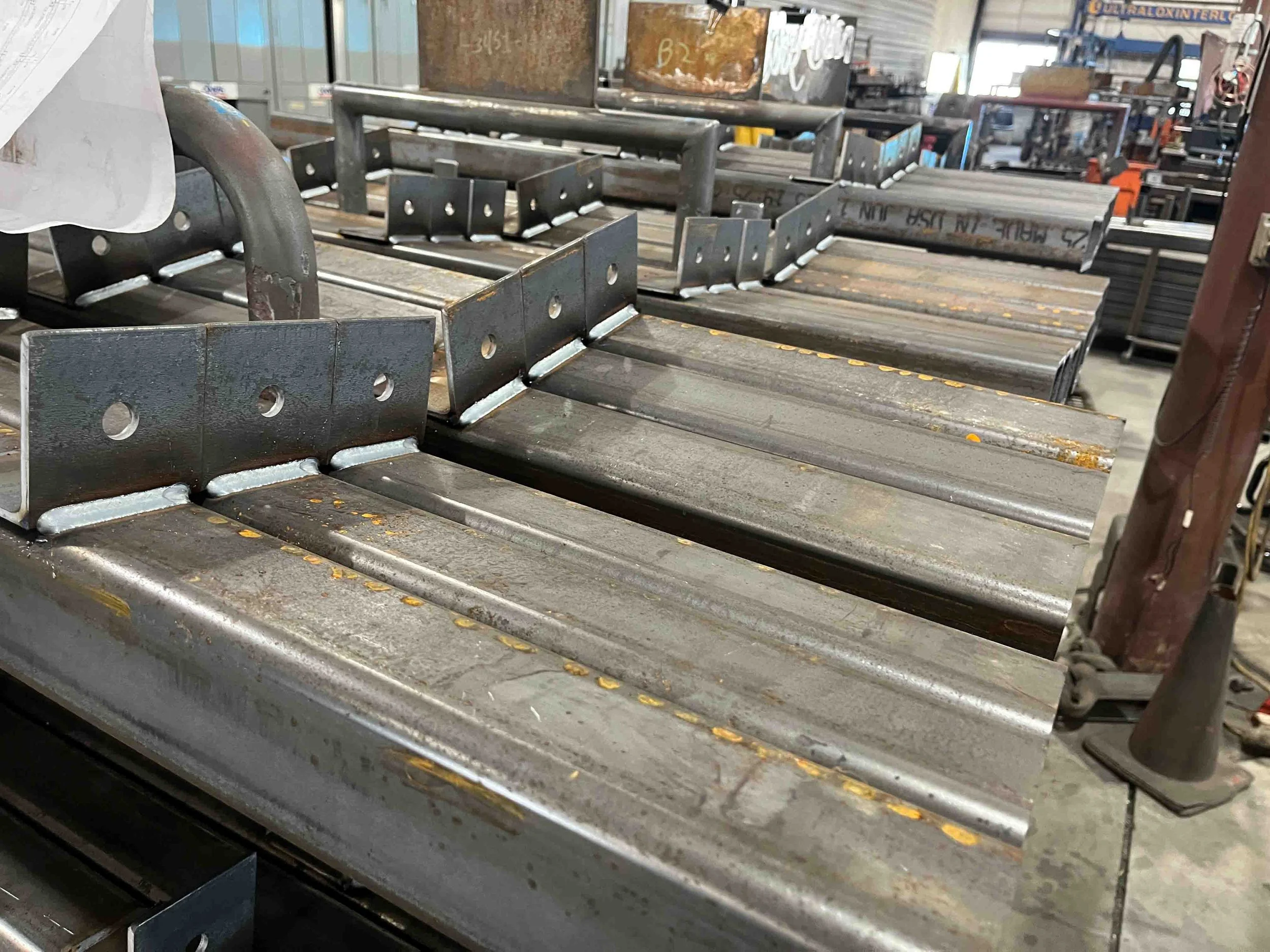
Helping manufacturers power one of the fastest-growing segments in manufacturing.
Scalable Automation for Growing Data Center Demand
Vectis is helping fabricators power the rapid growth of data center infrastructure. Easy-to-use, flexible cobot tools help teams expand welding capacity, maintain weld quality, and keep pace with increasing fabrication demand — boosting productivity by 3-4x on average. Shorter startup times and low-floor, high-ceiling programming help teams get production moving quickly, without giving up the ability to adapt to new applications and opportunities as the business evolves.
Common Use-Cases
Server racks & enclosures, cooling lines & related components, modular data center skids, pipe supports, hanger brackets, rest pads, stiffeners & structural components, utility support structures, and much more.
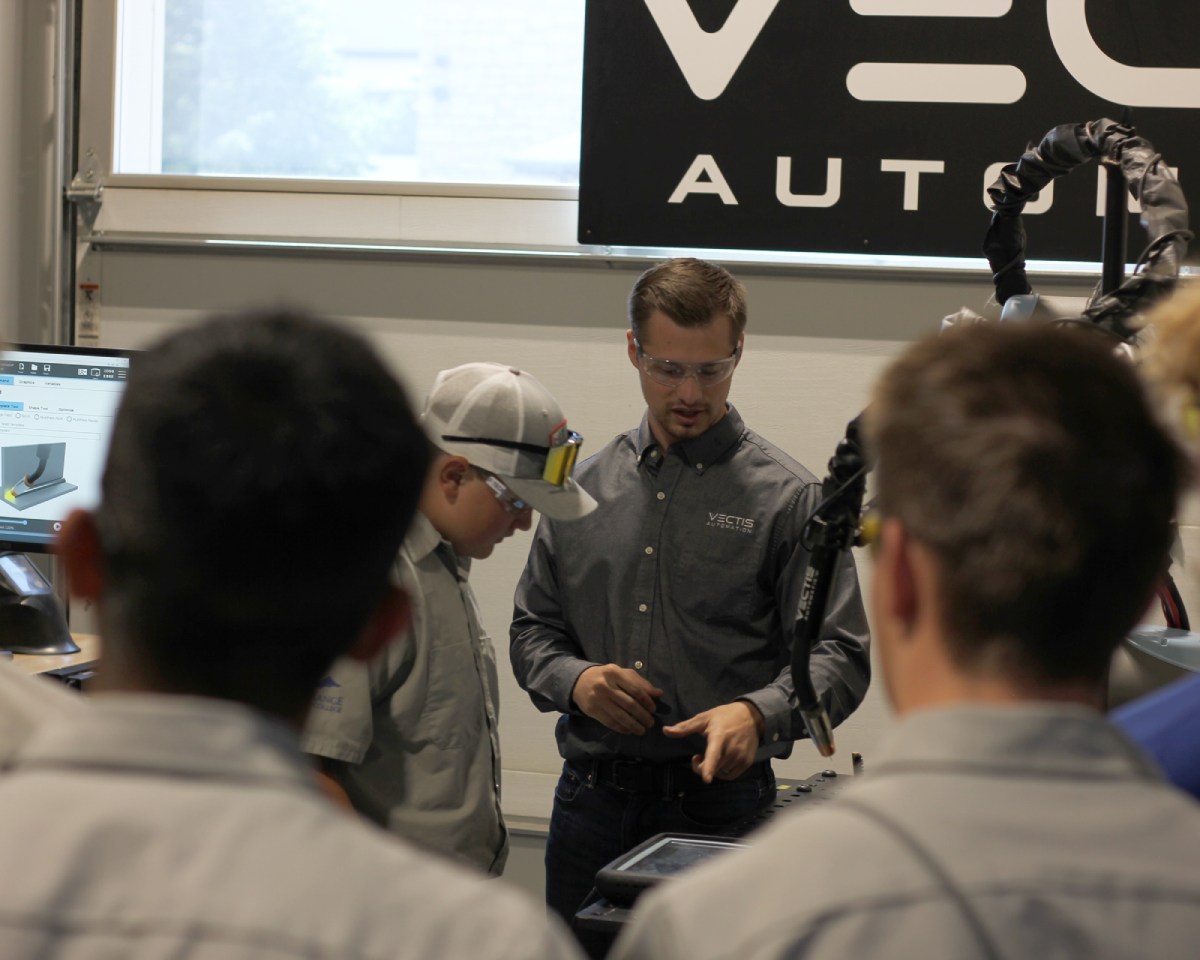
Education & Workforce Training
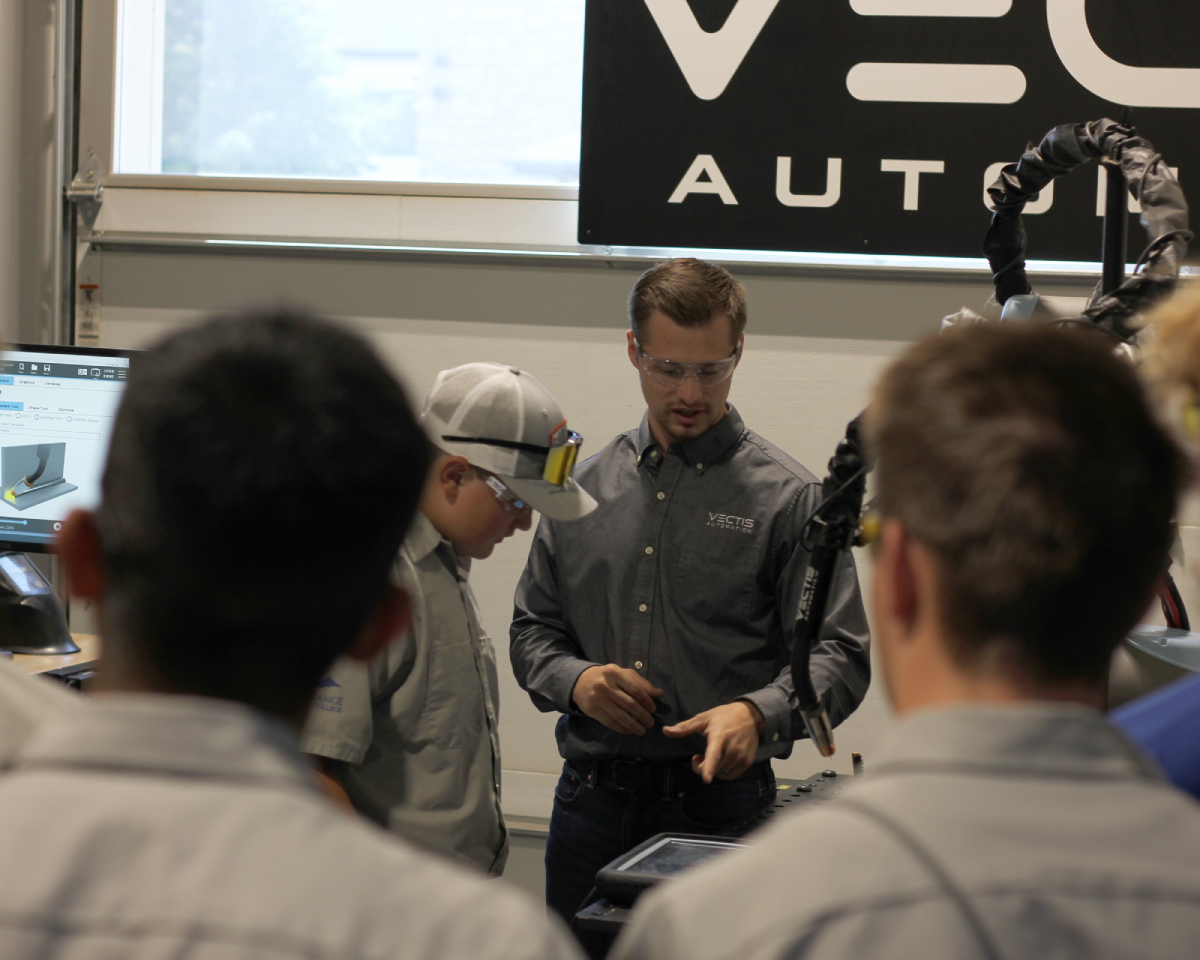
"[Young welders] really gravitate toward the self-guided training and conversational-style programming."
— Corey M. (Founder, Owner, and Operator, CM Welding & Machine)
Approachable Programming to Build Practical Skills
Schools, training programs, and workforce development organizations need tools that help students build practical fabrication skills while preparing for the technologies they will encounter in modern manufacturing. Vectis tools provide an approachable way to introduce cobot welding and cutting, giving learners hands-on experience with automation while reinforcing the value of skilled welders, fabricators, and Cobot Champions.
Common Use-Cases
Welding fundamentals, cobot programming, manufacturing automation training, workforce development programs, student capstone projects, operator upskilling, plasma cutting instruction, and much more.
Explore the Right System for Your Operation
The Right Tool for the Job

Start the Conversation
Start by telling us about your parts, workflow, and production goals. We work with you to understand your operation and guide you toward the best-fit solution using real-world welding automation experience from thousands of shop-floor visits.

Expert Guidance to Create the Best-Fit-Solution
Our experienced Application Engineers recommend solutions tailored to your specific needs. We provide honest feasibility evaluations, layout and workflow visualizations, reach analyses, cycle time estimates, and virtual programming demos so you can see the art of the possible.

Crawl, Walk, Run, into Boosted Production
Your system arrives ready-to-fab, with baseline parameter templates and all of the self-guided training modules your Champion needs to start producing. Vectis software is designed with a low floor to get your first welds running in minutes, and a high ceiling of programming potential to grow into the future.

Grow with Confidence — We’ve Got Your Back
We are your automation partner beyond installation, providing lifetime support, expert application guidance, and zero subscription fees. As your needs evolve, we stay alongside your team to help you keep moving forward.
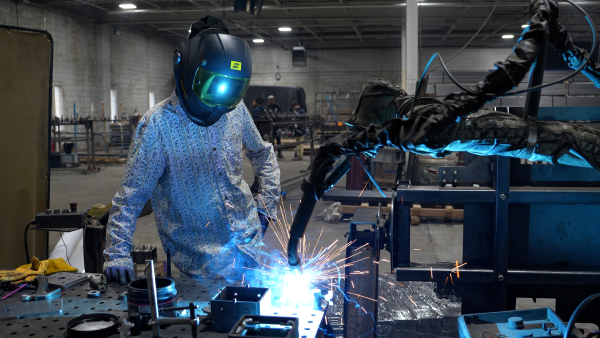
“With the Vectis, welding is no longer our bottleneck.”
— Jim H. (Owner, H&H Metals)
Cobot Welding FAQ
-
Cobot welding is lending a hand in small job shops and Fortune 50 companies alike, anywhere there is “boring arc time” and/or production pains in quality, labor, or throughput. With approachable programming, flexible deployment options, and a lower barrier to entry, cobot welding makes automation more accessible.
-
Cobot welding is helping anywhere there is “boring arc time” and/or critical pains in quality, labor, or throughput. This can be with medium/higher-volume parts; but also with low-volume parts – from heavy-multipass one-off welds, to critical and demanding tank seal welds, and many different applications in between. Reach out and let’s have a discussion – we always evaluate applications both technically and economically with you as part of our overall viability assessment.
See how KYJO Steel is putting that flexibility to work. Read the full case study here.
-
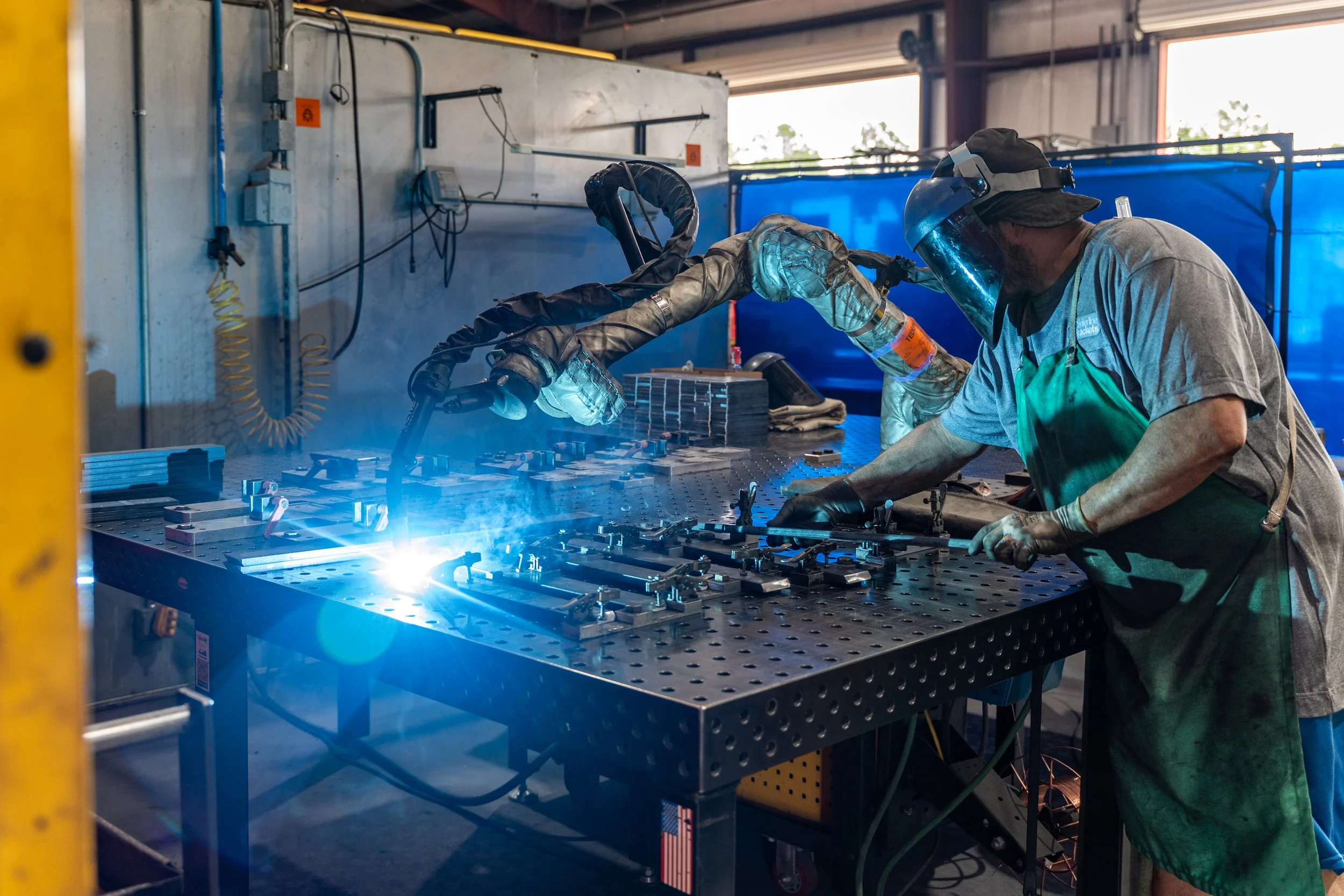
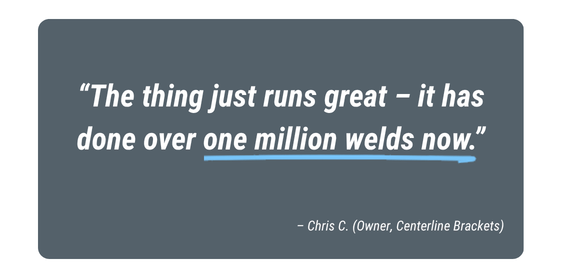
Yes! Vectis cobot welding has demonstrated the robustness required to support demanding, high-volume applications. For example, Centerline Brackets’ Vectis cobot tool completed more than one million welds over multiple years with zero break-fix downtime, showing the kind of long-term reliability manufacturers need in repeatable production.
-
The best way to determine fit is through an application evaluation. Our team of applications experts will review your parts, weldments, production goals, and current bottlenecks to identify where cobot welding could make the biggest practical impact. We’ve seen a lot in our combined centuries of experience and will always provide an honest assessment of whether cobot welding or cutting is the right fit for increasing productivity in your shop.
Let’s see if our systems can lend a hand on your applications
Every shop’s parts and production needs are different. Connect with our applications team to review your weldments and talk through your goals to determine where cobot welding could make an impact in your operation.
Reach out to chat with our team of application experts.