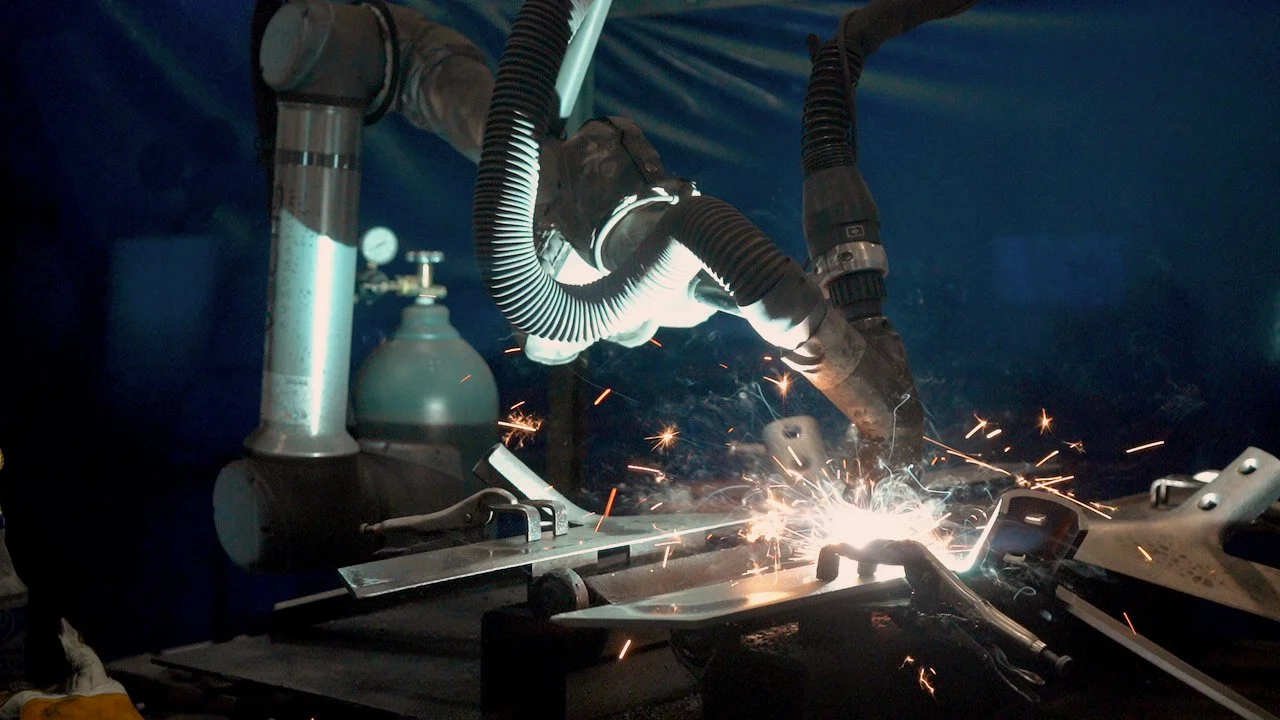
Automating Dull, Dirty, Dangerous Hardfacing with Cobot Tools
Wearparts Tillage Tools | Gothenburg, NE
At a Glance
MANUFACTURER TYPE

Agricultural Parts Manufacturer
CHALLENGE

Implement a lower-cost, simpler solution to replace aging traditional robotic cells used on repetitive hardfacing welding applications
VECTIS APPROACH
Qualified the application through reach studies, cycle time analysis, and live weld trials before eventually deploying four cobot welding systems
OUTCOME

• Replaced traditional robotic welding cells with four Vectis cobot systems
• Maintained high throughput in hardfacing operations
• Reduced automation footprint and complexity
• Prevented employee exposure to soot, smoke, and heat of hardfacing applications
WHY IT MATTERS

Modernized hardfacing applications while balancing throughput, flexibility, and operator working conditions – a win for both the business and the employees
Introduction
Wearparts Tillage Tools manufactures high-quality, high-durability aftermarket tillage and planting components for agricultural applications. Founded in Nebraska in 2010, the company has built a reputation for producing durable tools that give farmers an edge by offering a longer wear life and reducing costly downtime.
The Wearparts team identified an opportunity to modernize and simplify the automation supporting their hardfacing welding. When aging traditional robotic welding cells approached replacement age, the company turned to Vectis Automation to evaluate whether collaborative robotic welding could provide a simpler, lower-cost solution while maintaining high throughput.
Evaluating Cobot Hardfacing
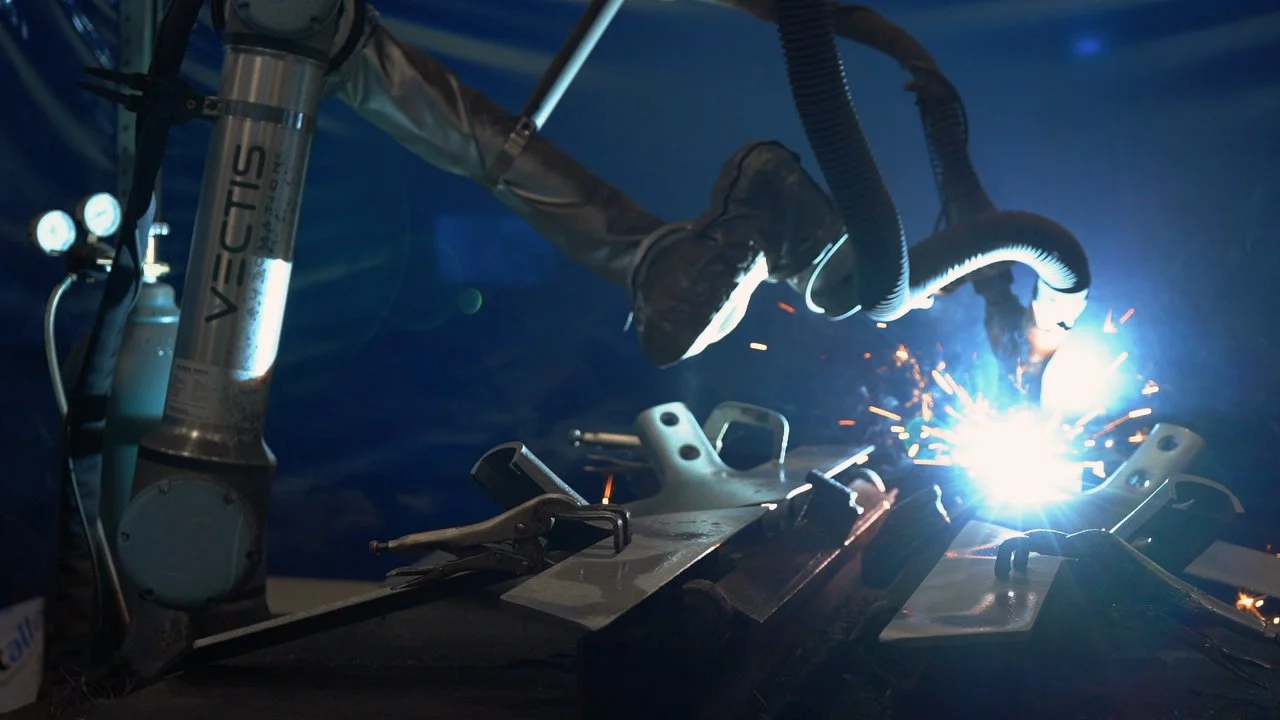
Before transitioning to collaborative robotic welding, Wearparts worked with Vectis’ team of application engineers to qualify the application through a detailed review process that included reach studies, cycle time estimates, and live weld trials.
This upfront evaluation ensured the proposed solution could meet the requirements of the application before deployment. Wearparts purchased their first cobot welding system, and over the course of one year, implemented four systems across their operation.
The result was a modernized automation approach that was easier to use, occupied a smaller footprint, and maintained high throughput.
A win for the business, a win for the employees
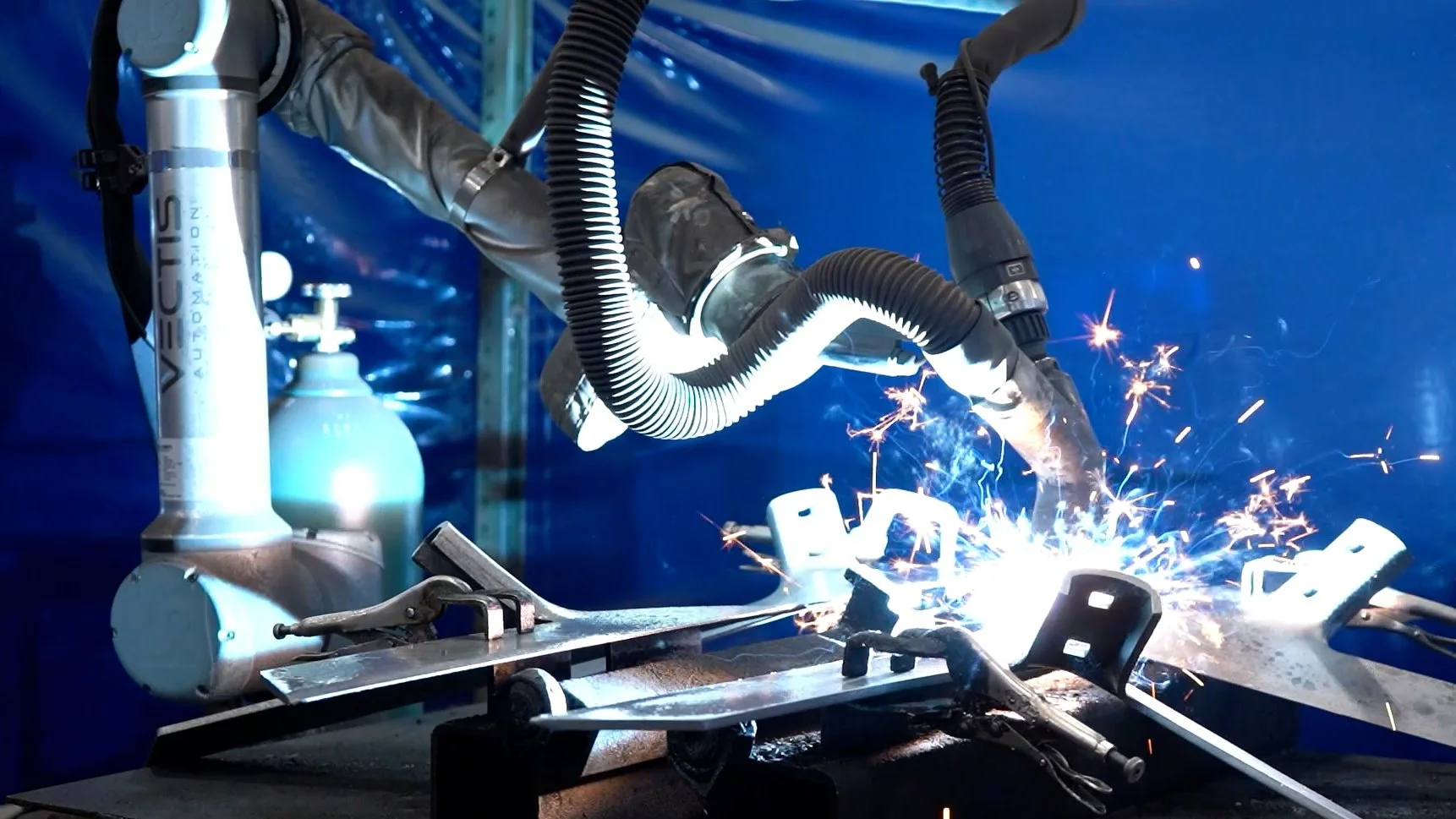
Collaborative robots allow operators to remain engaged in value-added production tasks while the cobot handles the most repetitive, strenuous welding. This is particularly valuable in hardfacing applications, where operators can be exposed to a significant amount of heat, smoke, and soot over the course of a shift.
Any time a cobot can take over a dull, dirty, or potentially dangerous task, it represents a win for both the business and its employees.
By automating the most repetitive portion of the process, Wearparts can keep production moving while reducing the amount of time operators spend directly exposed to challenging welding conditions.
Applying Cobot Welding to Repetitive, Physically Demanding Work
Hardfacing, cladding, and weld overlay applications are repetitive by nature, making them strong candidates for collaborative robotic welding. Long-term success, however, depends on more than simply purchasing automation. Proper qualification of applications and adoption of automation are essential to achieving long-term results.
Wearparts' cobot deployment demonstrates the value of that approach. Through upfront application qualification and testing, their team was able to confidently transition from aging traditional robotic systems to four cobot welding systems tailored to their production needs.
Today, those systems enable Wearparts to balance throughput requirements, operational flexibility, and employee working conditions, while continuing to support their customers in the US agriculture industry with high-quality products.