Leveraging Mobile Cobot Tools to Tackle Large Applications: Sharp Iron’s Rover™ Story
Sharp Iron Manufacturing | Wichita Falls, TX
At a Glance
MANUFACTURER TYPE

ISO-certified Contract Manufacturer/Heavy Equipment Manufacturer
CHALLENGE

Large, high-mix weldments and long manual welds limited productivity, while skilled welders were tied up on repetitive, time-intensive tasks
VECTIS APPROACH
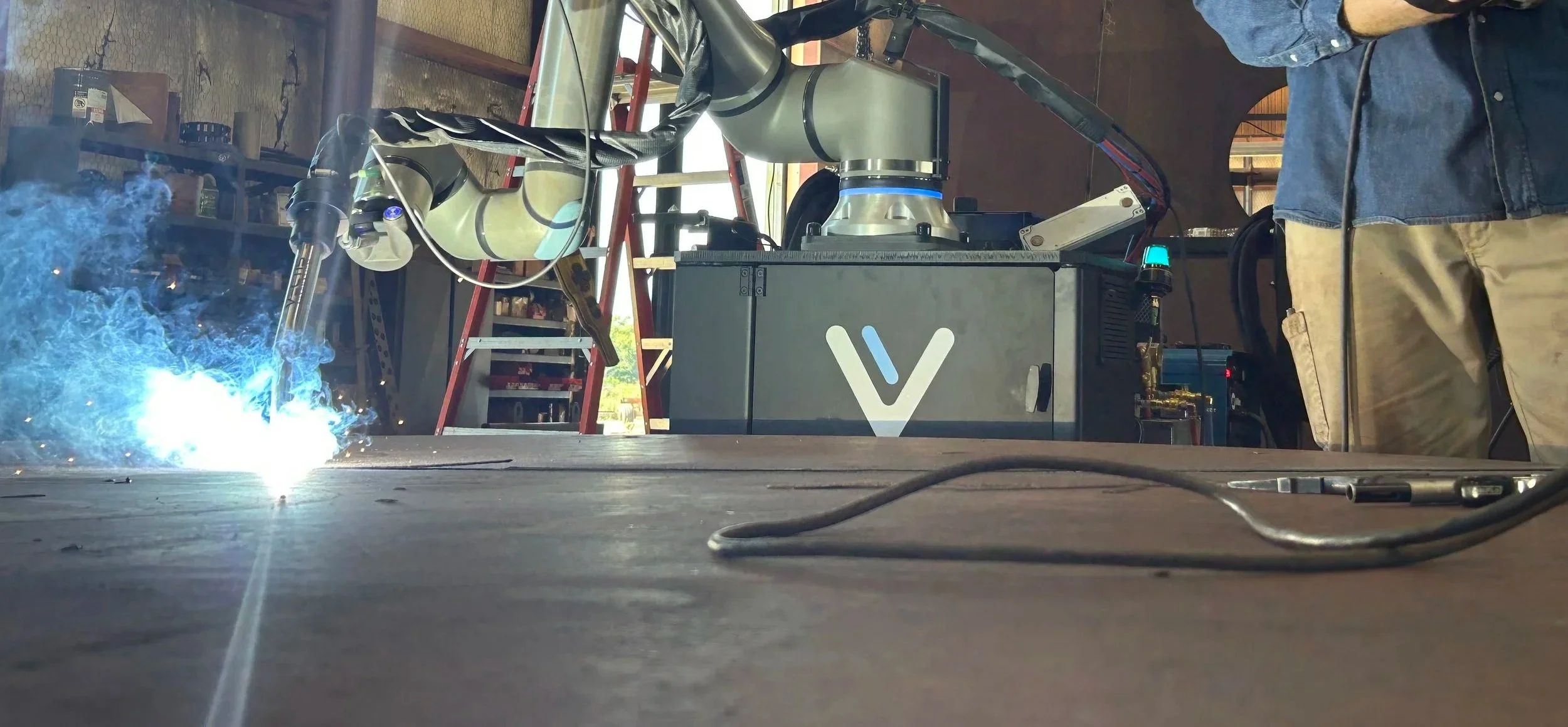
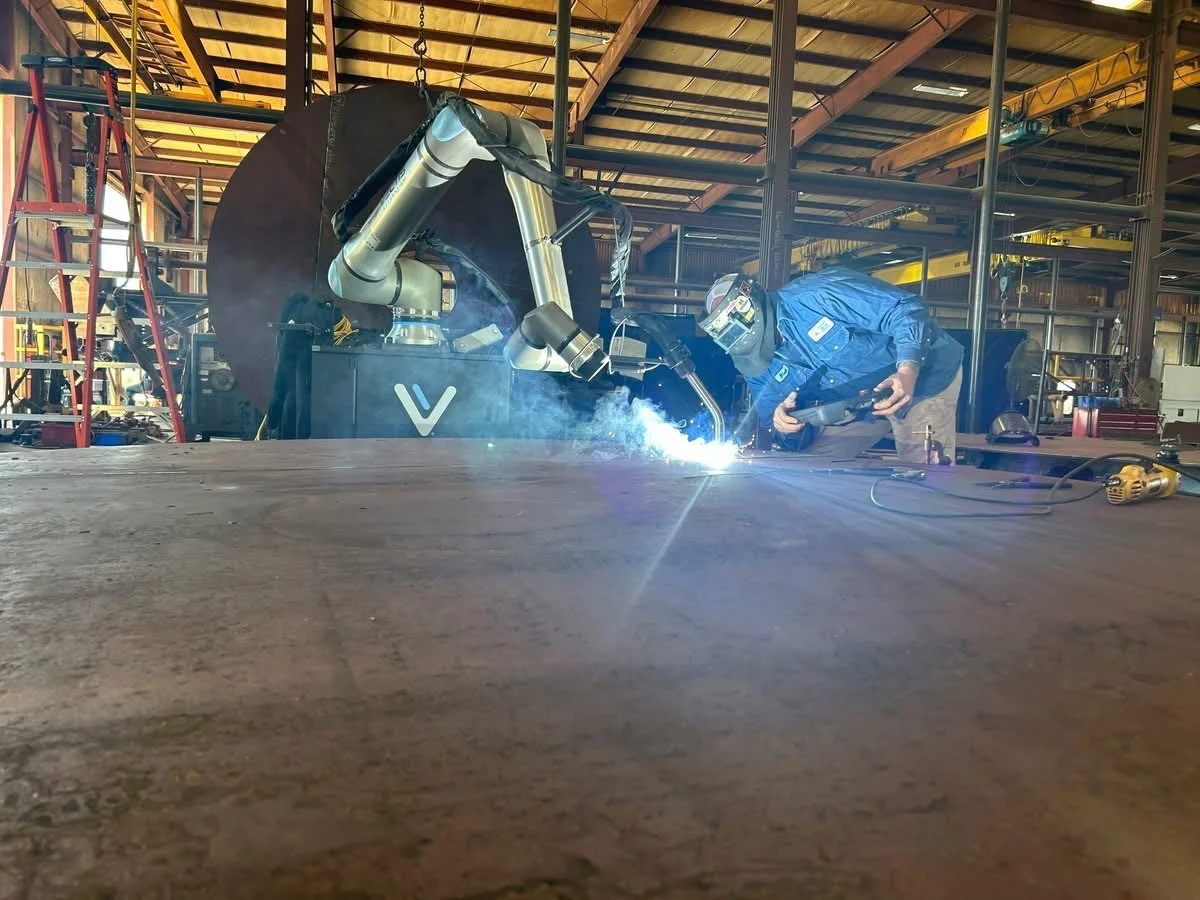
Deployed the mobile Vectis Rover™ (UR20 cobot arm) directly on large parts to automate long, continuous welds while keeping operator expertise in the process
OUTCOME

• Reduced weld time from 8 hours to 30–45 minutes on key weldments
• Improved weld consistency across long seams
• Increased productivity by freeing skilled welders for higher-value work
• Reduced operator strain and weld fume exposure
WHY IT MATTERS

Increased throughput on large weldments while delivering more consistent weld quality and reducing operator fatigue on long, demanding welding applications
Introduction
Sharp Iron Manufacturing is an ISO-certified contract manufacturer based in Wichita Falls, TX. They serve customers across a wide range of fabrication and manufacturing applications, including heavy-duty components such as mining drills where reliable, durable welds are critical.
Sharp Iron wanted to grow capacity without compromising the quality and service standards that built its reputation. With a limited supply of skilled welders and a wide variety of large, complex weldments moving through the shop, the team needed a practical way to increase output while supporting the people already doing the work.
Long, heavy multipass welds were a particularly time-consuming weld that once required up to eight hours of manual welding. Now, they can be completed in as little as 30-45 minutes with the help of the Vectis Rover™.
Welding and Finishing Supervisor Blake Fulton helped lead Sharp Iron's adoption of cobot welding and establish a strong foundation for long-term automation success. Using Vectis sotware features such as QuickTeach™ and intelligent MultiPass welding, Blake and his team efficiently programmed long, continuous welds while maintaining consistent arc-on time across demanding fabrication applications.
“That weld used to take us 8 hours... now we do it in 30-45 minutes.”
Blake Fulton, Welding and Finishing Supervisor, Sharp Iron Manufacturing
The Challenge
Sharp Iron’s operation is built around large, complex weldments that can vary significantly from project to project. Unlike high-volume manufacturers producing the same parts repeatedly, Sharp Iron needed a solution capable of adapting to changing production demands and a wide range of part geometries.
The team initially explored traditional robotic welding systems but found they were difficult to justify for their environment. Conventional robotic cells are often designed around repetitive production and highly customized workflows, making them less practical for shops producing large, high-mix weldments.
Sharp Iron needed automation that could move to their parts, adapt to different applications, and deliver productivity gains without requiring extensive re-engineering every time the work changed.
Most importantly, they needed a solution that would allow skilled welders to spend less time on repetitive arc-on work and more time applying their expertise where it creates the greatest value.
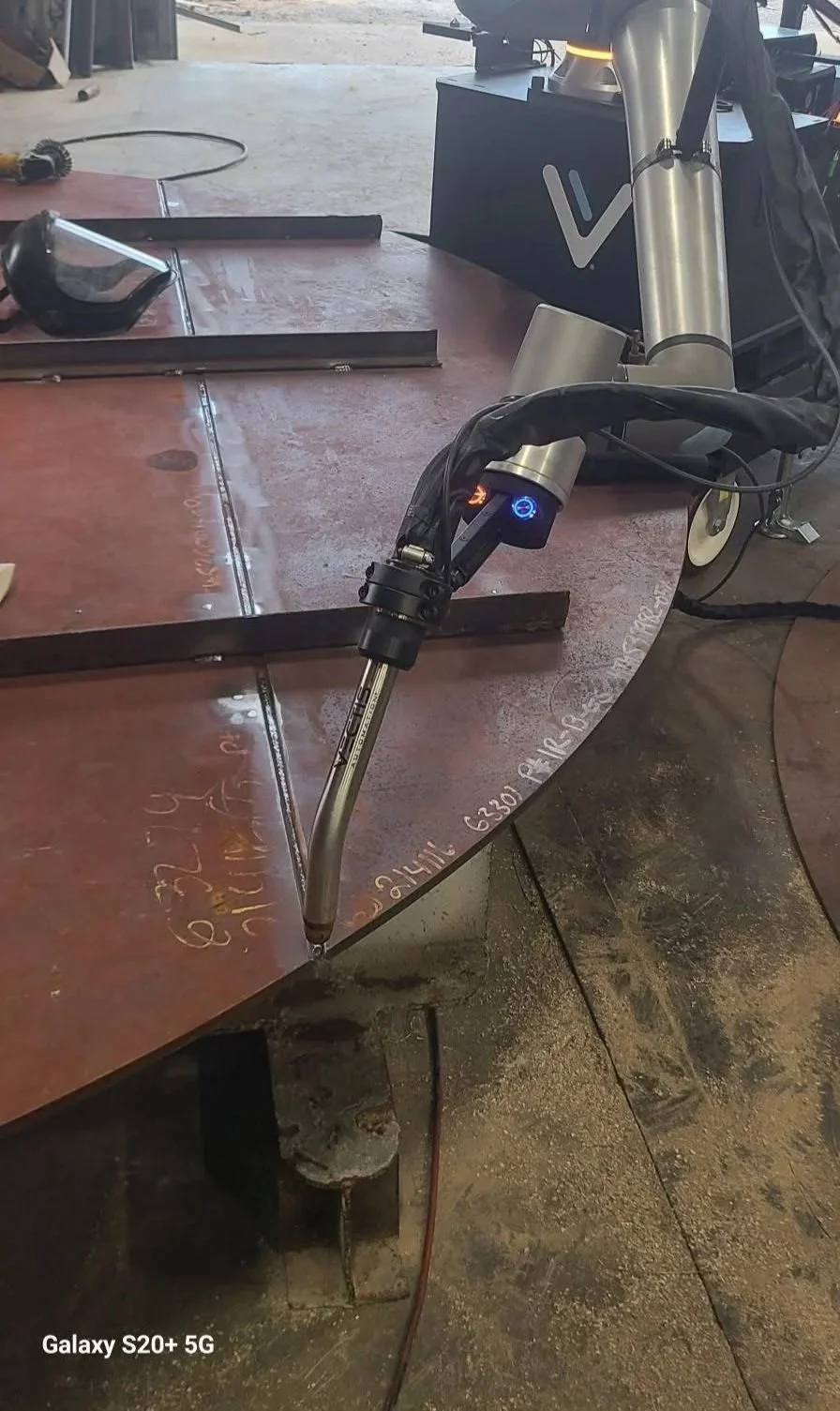
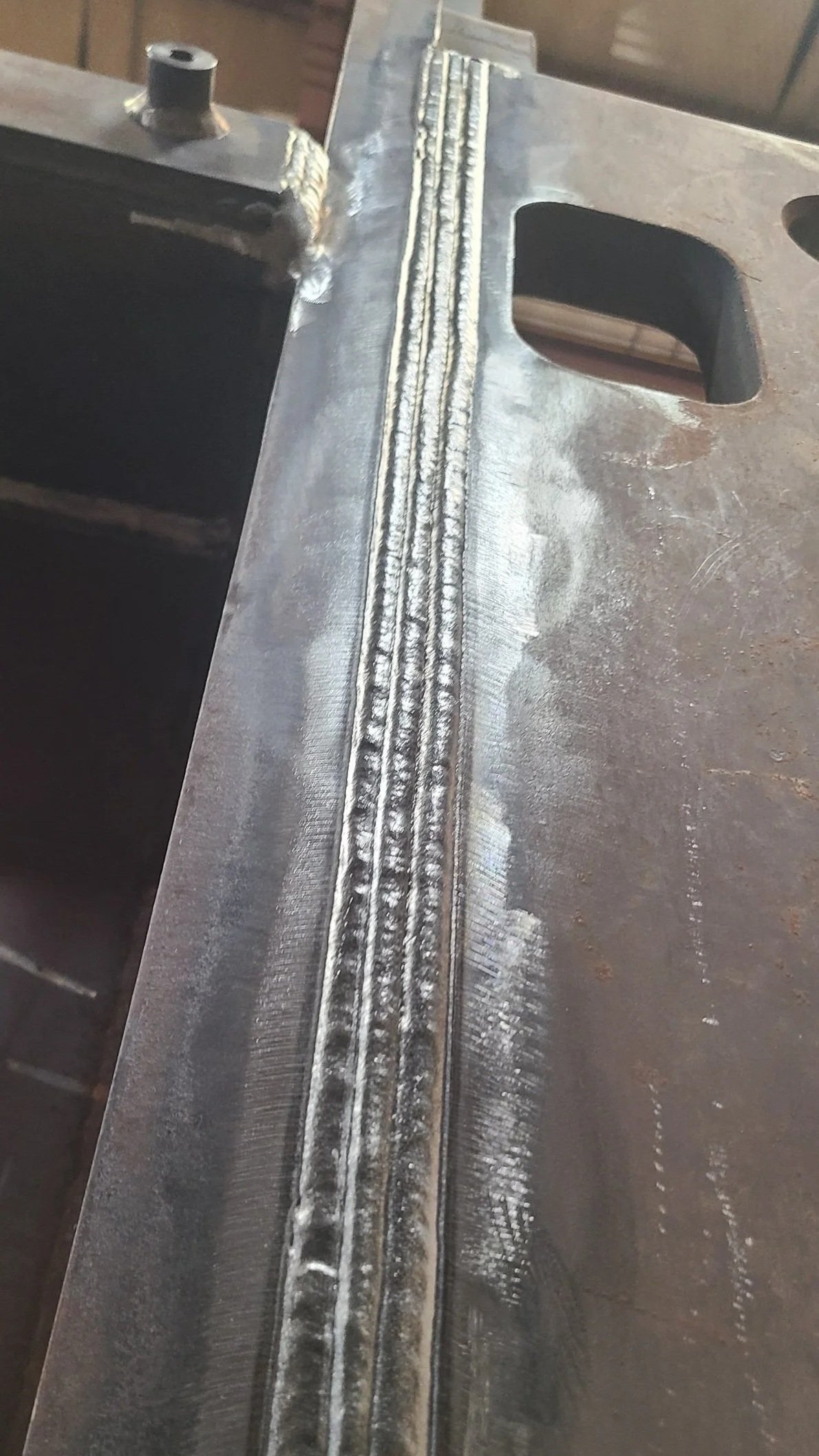
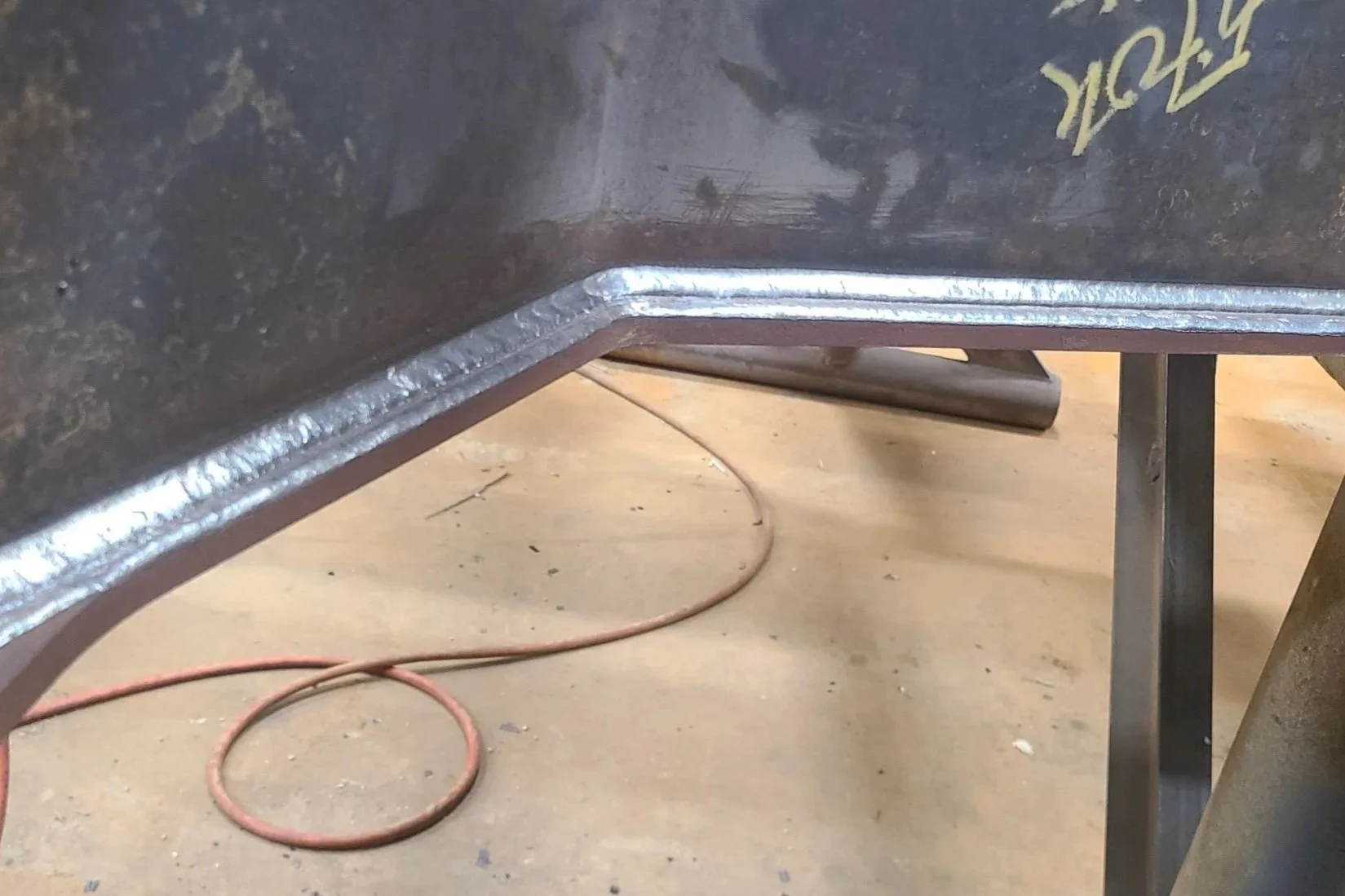
Cobot-to-Part Automation for Large Weldments
The Rover™ was deployed to bring flexible automation directly to Sharp Iron’s large weldments, helping tackle the repetitive arc-on time required for long, demanding welds.
Using Vectis QuickTeach™ programming and MultiPass welding, operators can quickly teach weld paths while the system maintains consistent torch angles, travel speeds, and weld quality throughout long weld sequences.
The practical cobot-to-part workflow absorbs significant amounts of repetitive arc time while giving skilled welders the freedom to focus on fit-up, fabrication, inspection, and other high-value work.
The collaborative design also supports safer operation around personnel. The cobot’s built-in safety sensors support safe operation alongside workers on the shop floor.
Built for the Long Run
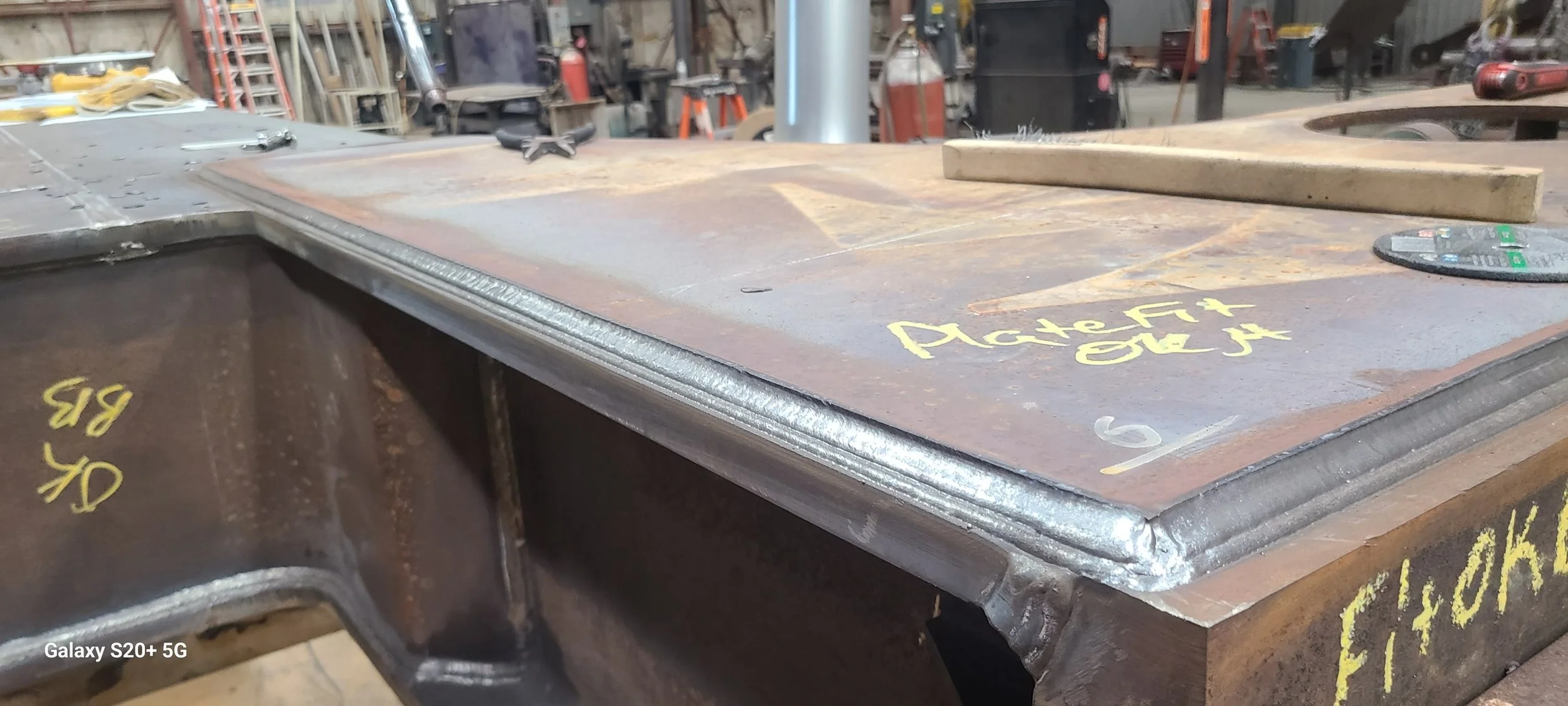
Since integrating the Vectis Rover™, Sharp Iron has seen immediate gains in both productivity and consistency.
Long, continuous welds that previously took an entire shift to manually weld can now be completed in a fraction of the time.
The system is routinely used on long 2F, 1G, 3F, and 3G welds, where maintaining consistent travel speed and weld quality is physically demanding during manual welding. By automating the repetitive arc-on portion of these applications, the Rover™ enables welders to stay productive elsewhere in the shop while the system continues welding.
Reducing time spent in demanding welding positions and near the arc contributes to a more comfortable working environment and helps Sharp Iron make the most of its skilled workforce.
Just Getting Started
Sharp Iron's success demonstrates what practical automation adoption can look like in a high-mix heavy fabrication environment.
Blake and the Sharp Iron team have embraced a hands-on approach to implementation, continuously evaluating new opportunities and refining processes as they gain expertise with the “low barrier to entry, high ceiling of potential” Vectis software. That mindset has helped create strong momentum while building confidence in automation throughout the organization.
As they move forward, Sharp Iron plans to scale their capacity further by adding additional cobots to their team.
For fabricators facing large weldments, high-mix production demands, or the need to increase throughput without adding unnecessary complexity, Sharp Iron's story demonstrates that automation success does not require a complete transformation overnight.
It starts with identifying the right application, empowering a committed Cobot Champion, and implementing flexible tools that deliver real-world value from day one. With a strong foundation now in place, Sharp Iron is well positioned to continue expanding its automation journey and unlocking even greater productivity in the years ahead.
To see the Rover™ in action and hear more from the Sharp Iron team, watch this feature from KAUZ News Channel 6.