CAMA Member Spotlight: Vectis Automation Q&A
This article was originally published by Colorado Advanced Manufacturing Association (CAMA). Visit: https://co-cama.org/articles/cama-member-spotlight-vectis-automation/
For many small and mid-sized manufacturers, automation is no longer a question of whether the technology exists. The harder question is whether it will actually work inside their shop, with their people, their parts, their workflows, and their production realities.
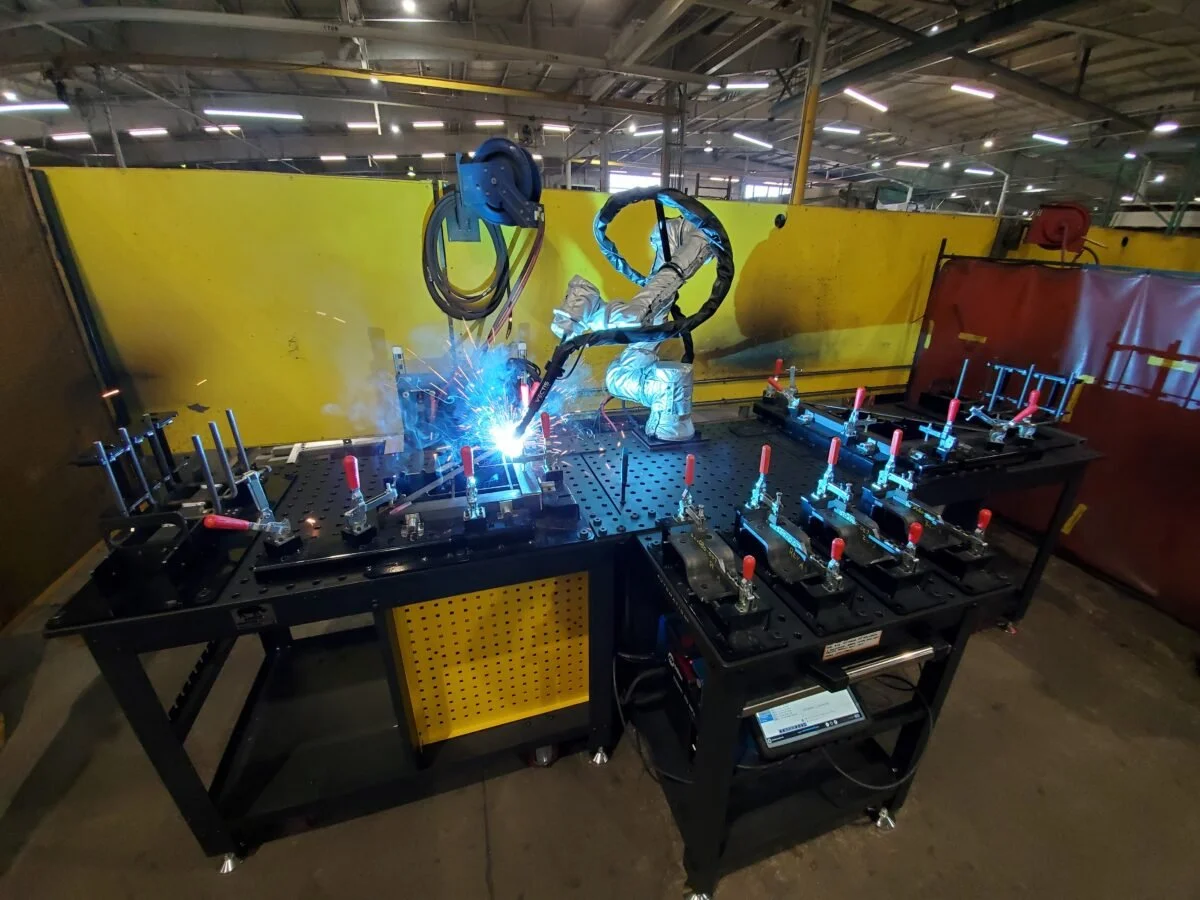
That is the space Vectis Automation is focused on. Founded in Loveland, Colorado, Vectis was built by robotic industry veterans who saw how often traditional automation could become too expensive, too complex, or too difficult to sustain for fabricators trying to improve productivity. Their approach is intentionally customer-driven: make automation more accessible, approachable, and useful as a flexible tool that helps existing teams do more, rather than replacing the knowledge and skill already on the shop floor.
In this CAMA Q&A, we spoke with Josh Pawley, Founding Partner and Vice President of Business Development at Vectis Automation, about how cobot welding and cutting tools are helping manufacturers bridge the gap between manual production and traditional robotic systems. The conversation covers training, adoption, ROI, workforce development, and the importance of designing automation around real shop-floor needs instead of forcing manufacturers to adapt to rigid technology.
For those new to Vectis Automation, can you give us a brief overview of your company and the problems you’re solving?
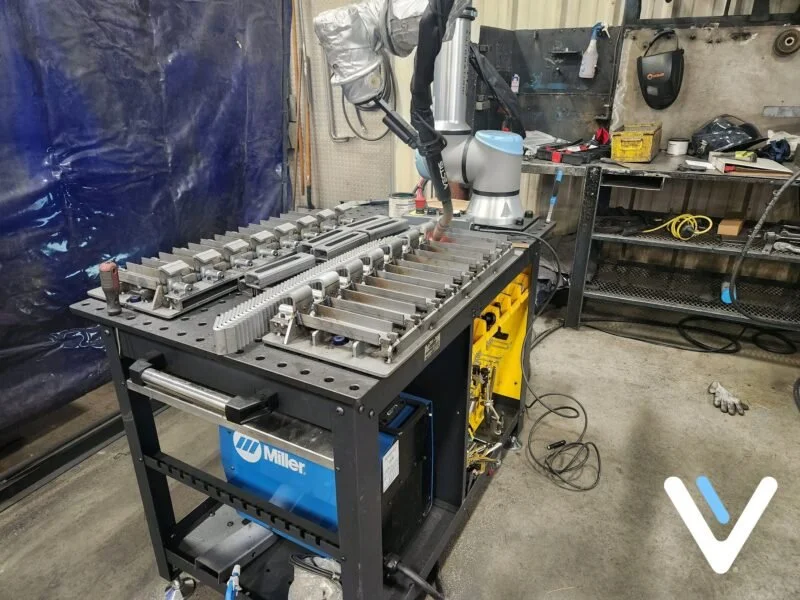
Vectis Automation was founded in early 2019 by several robotic industry veterans that had seen & lived some of the challenges that fabricators faced when trying to implement long-term success with traditional automation solutions. With the enabling technology of the “Collaborative Robot” (cobot) also coming to prominence around that time, Vectis’ mission has been to make automation more accessible, approachable, affordable, and versatile for manufacturers of all types and sizes. We’re helping bridge the sizeable gap between purely-manual welding/cutting and high-volume, high-complexity traditional automation solutions – helping fabricators boost productivity on smaller batches, by upskilling their existing teammates to be able to use flexible Vectis cobot welding/cutting tools. Our core rule is the Golden one – “treat others the way you want to be treated”.
What trends are you seeing in adoption of cobots among small-to-mid-sized manufacturers?
Over the last 7 years we’ve seen the maturing of the marketing – customers going from automation curiosity to automation necessity. Labor challenges remain a key driver, but there’s other factors at play to automate – quality, stability, reliving team members of the “boring arc time”, and enticing folks into the industry via approachable technology (a “second prong” of solving the labor challenge, in addition to increasing individual productivity). We’re also seeing a trend where customers are now investing heavily in repeat systems – they’ve proven out the technology and – more importantly – their internal processes & champions, and are now “copy-pasting” the cobot tools for maximum impact.
Who is the ideal Vectis Automation customer today, and what challenges are they typically facing when they first come to you?
The ideal customer is anyone with “boring arc time” that is looking to increase productivity and efficiency. They typically come to us because they have a backlog of work they can’t fulfill or they are seeing inconsistent quality and high rework rates on repetitive parts. They aren’t looking for a “lights-out” factory; they are looking for a reliable tool to help their existing team do more.
Are you seeing more first-time automation adopters, or companies expanding existing programs?
Currently, we see a heavy mix of both, but the influx of first-time adopters is unprecedented. Many of these shops previously looked at traditional robotics and walked away because the price and complexity were too high. Now, they are realizing that cobots are a viable entry point, while our existing customers are coming back for their second, third, or 61st systems as they find new applications and “copy-paste” their cobot successes across the factory (or factories!).
You highlight a very real question on your website that truly resonated with my past experiences buying advanced equipment – ‘How do I know automation will actually work for my specific application and business?’ Why was it important for Vectis Automation to address that concern so directly, and what does it say about how you approach automation differently?
We addressed this because “robotics” as an industry has historically over-promised and under-delivered to the small shop. We wanted to be radically honest about what the technology can and cannot do. By offering application evaluations and being transparent about fit, we build a relationship based on technical reality rather than a sales pitch, which is the only way to ensure long-term success in this industry.
In many cases, the person purchasing an automation solution isn’t the one who will ultimately implement or use it day to day. How does Vectis Automation gather input around real-world workflows, operator needs, and shop environments to ensure your systems are set up for success from the moment they arrive?
Our team spends a tremendous amount of time on the shop floors of our customers, watching how they actually move parts and interact with the equipment. We are fabricators ourselves, so we design the systems based on what we would want to use in a production environment. This “operator-first” feedback loop is what drives our software updates and hardware refinements—ensuring the tool fits the shop, not the other way around.
How is automation changing the roles of welders and operators on the shop floor?
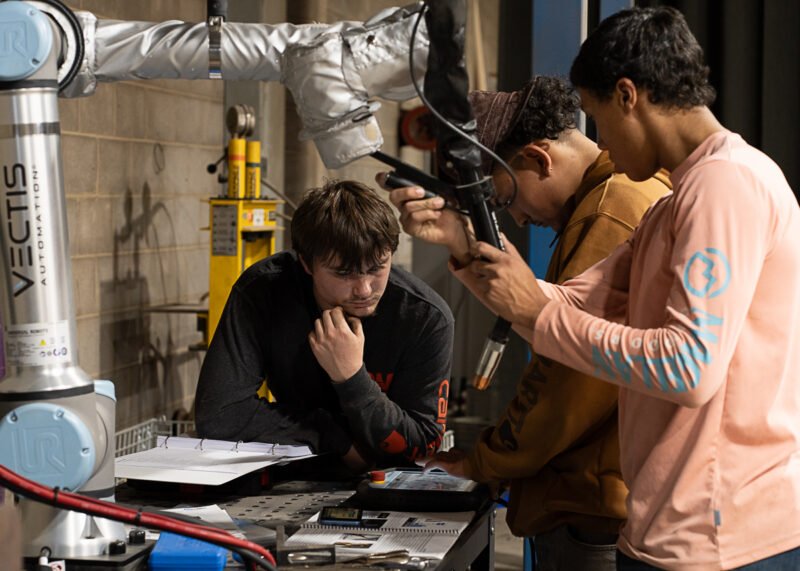
It is evolving the welder from a “manual laborer” to a “process champion”. Instead of spending eight hours under a hood in a hot, smoky environment, they are now managing a tool, optimizing programs/fixtures, and overseeing the outcome. It makes the job less physically taxing and more mentally challenging, which can be a really great fit for the right cobot champion.
Are you seeing more upskilling and retention as a result?
Absolutely; giving a welder the opportunity to learn robotics is a powerful retention tool. In a competitive labor market, shops that offer the chance to work with cutting-edge technology are much more attractive to the younger generation of fabricators. It provides a clear career path from manual welding into automation and manufacturing engineering.
How do you balance simplicity and ease of implementation for new users with advanced capabilities for experienced teams?
The goal is to provide a “low floor and a high ceiling”—the software should be intuitive enough for a welder to make their first arc within hours, yet powerful enough for a seasoned programmer to fine-tune complex parameters. We focus on a “no-code” interface that uses the language of welding rather than the language of computer science. This ensures that the automation expertise can grow with the person who knows the craft of metal fabrication, not a specialized robotics engineer.
Vectis Automation has invested in building its own proprietary training academy – what motivated you to develop an in-house training?
The motivation came from two observations from visiting thousands of fabricators in our centuries of past-life: 1) the customer should be the hero and should be able to train anyone, anytime – we want to democratize the ability to learn the system, and 2) let’s cure the “dust-collecting boat anchor” effect—where advanced equipment sits idle because the one person who knew how to run it is no longer at the company or in that role. The online Academy ensures that training is repeatable, scalable, and doesn’t rely on a single “tribal knowledge” holder within a customer’s shop.
You include access to the Vectis Automation Training Academy as part of the customer experience – how do you see training as part of the product itself, rather than a separate service?
It goes to our core mantra of “treating others the way we’d want to be treated” – I want to be able to learn on my own if needed, rather than only having the option to have my integrator as a crutch/hero to come in and save the day. If a customer can’t effectively deploy the tool for the long-term, then the product has failed in its mission regardless of any tech specs. By making training a core & included part of the experience, we remove the friction of “per-head” training costs and provide customers with flexibility on who & how they train.
How does this approach impact customer outcomes – like time to first weld, productivity gains, or ROI?
It’s the old adage “Give someone a fish and you feed them for a day; teach that person to fish and you feed them for a lifetime”. I think the biggest thing we see with self-guided training and this tool-like mindset is better ownership of the long-term outcome from the customer side. It can be really comforting to be “given a fish” with a full turnkey easy button workcell from an integrator – their techs onsite, their fixturing, their program, everything humming on install day. However, in our lived observations over decades, those “awesome on day 1” systems collect dust the most often in the long run – because the customer was never really “taught how to fish”. So, when things inevitably change (operator change, part design change, fixture change, demand/workflow change, etc) – that turnkey system is too rigid and difficult to repurpose. That’s the beauty of more flexible cobot tools with a much lower learning curve – they’re useable by more teammates on more applications over the long run.
Lowering the barrier to advanced technology is critical in today’s manufacturing landscape – how does your training platform help make robotic welding and automation more accessible to a broader range of users?
Accessibility is about removing the fear of the unknown. Our training platform uses video-based, bite-sized modules that operators can reference on the shop floor in real-time. It shifts the focus from “learning a robot” to “using a tool,” which makes the technology feel like a natural extension of the welder’s existing skillset rather than an intimidating new discipline.
Was there a specific gap you were seeing with customers – whether in adoption speed, confidence, or long-term success – that pushed you in this direction?
The gap was primarily in long-term success and “cross-training” within the shop. We saw too many instances where a shop’s automation program would stall if the primary operator was promoted or moved on. By providing a structured, on-demand, self-guide Academy, we give owners the confidence that they can train a new champion in a matter of days, ensuring the machine stays running, productive, and profitable even amid the natural coming-and-going of personnel.
Can you share a recent Colorado manufacturer success story (or 2) that really illustrates the impact of your approach? (do you have any media assets, photo/video we can include in the story, of these success stories?)
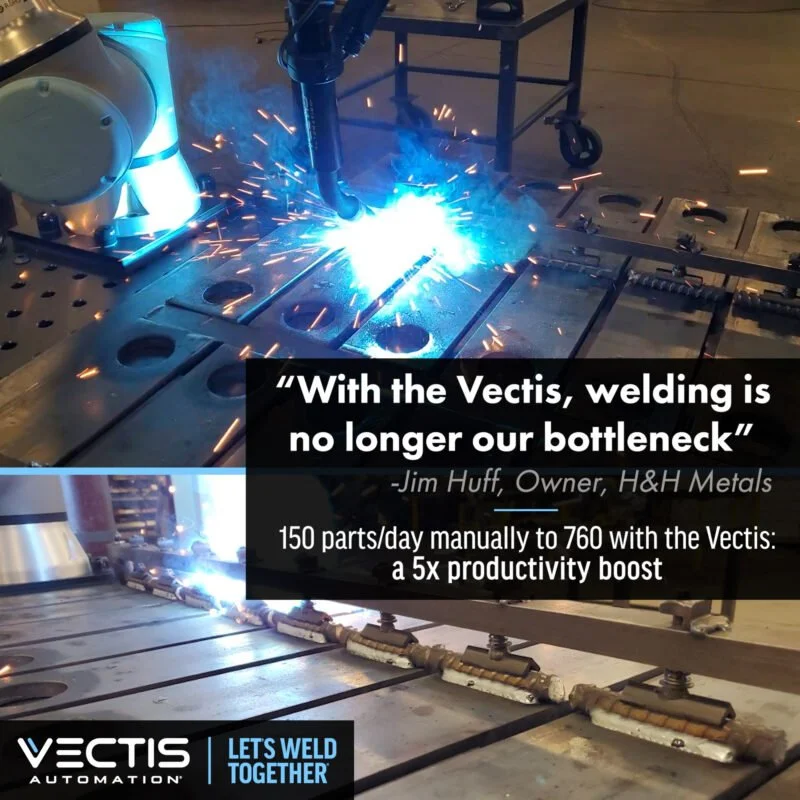
H&H Metals in Thornton had a traditional robot system for a part they made 50,000/yr of, but needed help with their smaller batches. They brought in a Vectis cobot tool and their welder Tess has been using it for all sorts of small/medium batch sizes as a tool – a really neat story of where a family-owned job shop was able to use all tiers of automation for the different varieties of jobs they see in a given year.
What changed for that customer(s) – from before implementing Vectis Automation Cobot Fabrication Tools to after?
They went from 150 parts/day to 760 parts/day on a given batch, able to leverage automation for batch sizes that did not make sense for their traditional robot cell, and were able to upskill their welder Tess to be a cobot champion.
For a shop implementing automation for the first time, what does the first 30–60 days with Vectis Automation typically look like?
The first 30 days are focused on “quick wins”—identifying the low-hanging fruit in their production line to build team confidence. We work with them to ensure the system is physically integrated into their workflow and that the operators are utilizing the Academy. By day 60, most shops have moved past the basic learning phase and are starting to optimize their fixtures and part-flow to maximize the cobot’s arc-on-time.
What surprises customers the most during that process?
The most common surprise is how quickly their own team takes ownership of the robot. Owners often expect pushback from the shop floor, but they find that welders often enjoy “offloading the boring arc-time” to the cobot, so that the welder can focus on the more interesting and high-skill work. There is a “lightbulb moment” when a champion realizes they can program a new part in minutes without ever touching a line of code – all the while liberating them from the most monotonous parts of their day!
How do customers typically justify the investment in automation, and how quickly are they seeing returns?
Most customers first look at the weld labor savings – which is a significant chunk of the tangible ROI. To that end, most customers report back a ~3x productivity boost with the cobot as a “middle of the bell curve”, which very often translates to a payback period of 1-2 years; in addition to some of the “less tangible” benefits outlined below.
Are there specific metrics – like labor savings, throughput, or quality – that stand out most?
Reduced rework/scrap due to poor-quality manual welds (or missed welds): Look at COPQ metrics – rework, scrap rate, field failure rate, etc to see if some could be solved through improving quality of welds
Reduced training time for new welders – operating the cobot doesn’t require the same dexterity/experience as manual welding, so the learning curve is much quicker. Look at training cost and turnover cost metrics
Talent attraction & retention tool. Look at cost of recruitment, and opportunity cost of not having enough welders on-hand to meet current demand (if this is a challenge you currently face – many of our customers state this is the #1 reason to automate – meet current/future demand).
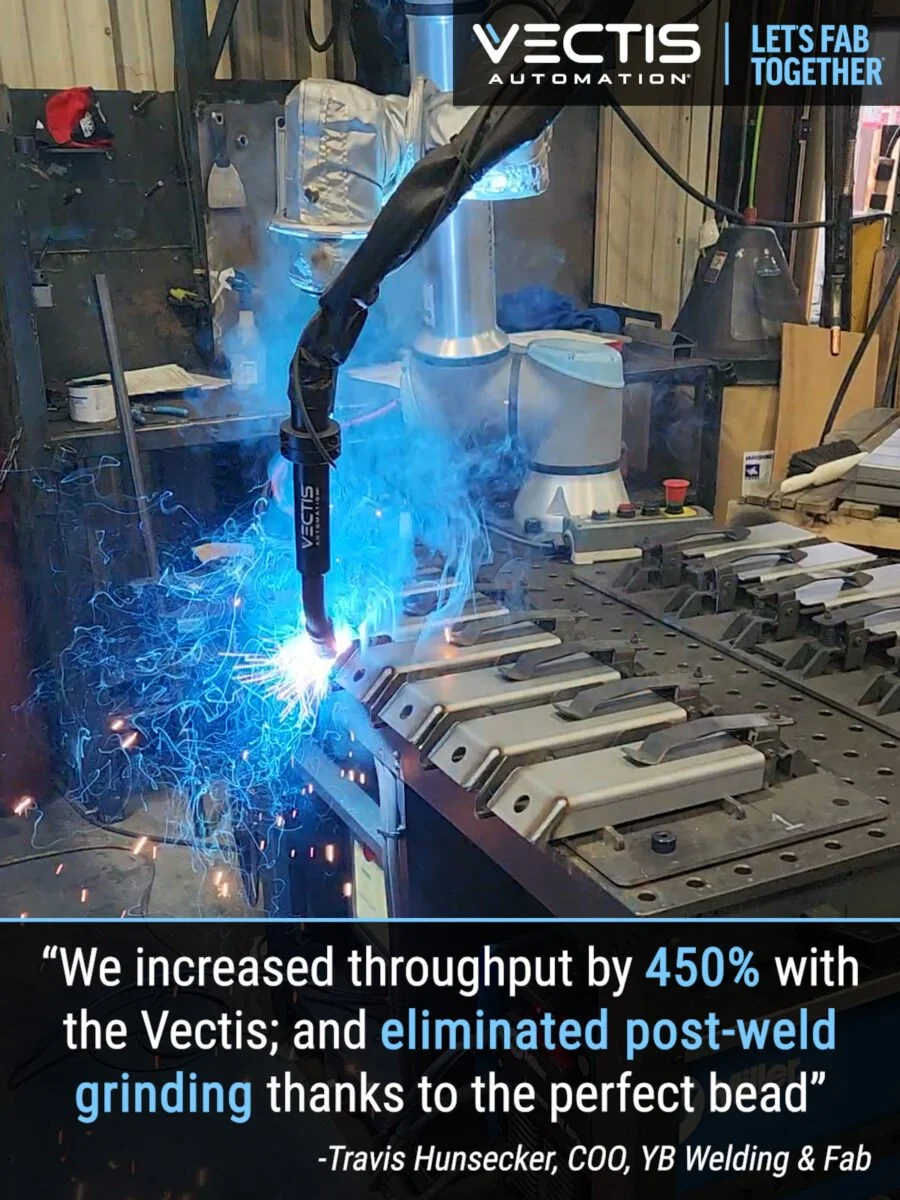
Reducing grinding/clean-up time (sometimes even eliminated). This can sometimes be an even greater financial and EHS impact than the weld labor savings. To calculate, look at amount of grinding/clean-up time related to the applications you’re looking to cobotically weld. Conservatively reduce it by 50%; or 100% (eliminate) if you want to be aggressive.
Ability to bring in new business due to increased capacity. Look at “opportunity cost” – “if we had Xhrs more welding capacity, how much more revenue would that allow us to generate?”, with the Xhrs provided by the increased productivity of the cobot
Looking ahead, how do you see the role of automation – and Vectis Automation – evolving in the next 3–5 years?
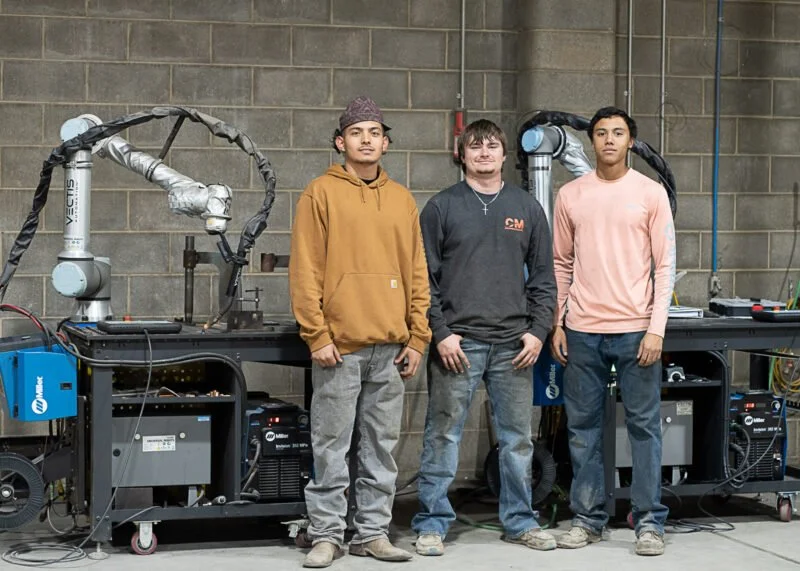
We are already seeing – and expect to see even more – widespread adoption: “crossing the chasm” from early adopters and early-mainstream customers into cobots being put to work in even more shops. One of our customers that started with 1 system and now has 7 (and looking at their next 7!) told us – “I want every one of my welders to have a Vectis tool in the coming years – so they can boost their individual efficiency.”
Any closing thoughts?
Thanks for the opportunity to be part of this CAMA feature! We are a proud Colorado Advanced Manufacturer!