AWS Welding Journal: Hot Job Opening: Cobot Champion
This article was originally published in the February 2024 issue of the AWS Welding Journal. Visit: https://www.aws.org/magazines-and-media/welding-journal/2024/february/wj-feb-24-feature-02-pawley-vectis/
Easy-to-learn cobot technology helps usher in the next generation of fabricators
We’ve all heard about the skilled labor gap that American manufacturers are facing. Many of us are living it. It remained pervasive at FABTECH 2023 last September. The aisles provided constant echoes of fabricators telling equipment providers they’re turning away business because they can’t find or keep employees. Worse still is the fact that we aren’t near the end of the tunnel, with 155,000 welders approaching retirement in the coming years and a staggering 360,000 new welding professionals projected to be needed by 2027 (weldingworkforcedata.com).
Two major initiatives are attempting to solve this elusive challenge: 1) AWS and other organizations have enacted strategies to encourage more folks to join the trades as an excellent, tangible, and bill-paying career that doesn’t come with loads of student debt; 2) many businesses are deploying innovative new technologies to boost productivity on the shop floor, allowing one fabricator to leverage technology to perform many times the output they could do with manual methods alone.
Yet, even with these two initiatives, the labor gap remains the primary concern for the majority of manufacturing businesses. So, where do we go from here?
Over 2300 years ago, Aristotle introduced the idea that the whole is greater than the sum of its parts. This is proving true today as a symbiosis of these two initiatives; approachable technology is helping bring more people into the trades and providing those new team members with fulfilling opportunities to grow in place of work while boosting their individual output.
“I got started by going after the work that nobody wanted to do. I did a lot of pipeline maintenance and agricultural maintenance to begin with,” said Corey Mays, founder, owner, and operator of CM Welding & Machine, Midland, Tex. Being in the Permian Basin naturally meant that CM would support the oil and gas industry, which currently makes up about half of its business, with the other half diversified in other contract manufacturing work. Mays has found a niche in creating products that help manage the so-called produced water output of oil fields and thus aid oil and gas operators in reducing their impact on the environment. Building this niche has also created the need for more team members and more productivity to handle the increased volume.
To meet the ever-increasing demand, Mays invests heavily in technology, which has simultaneously helped him attract new talent into the workforce. In the fabrication shop, Mays currently leverages three cobot welding and cutting tools with three “cobot champions” — a term coined by Vectis Automation, Loveland, Colo., to describe an individual responsible for making a piece of automation work — who are trained to use them along with one apprentice learning the ropes. The oldest champion is at the very beginning of his career at 20 years old. The youngest is a junior in high school. Bringing in this next-generation workforce has stabilized CM’s ability to provide critical manufactured components to America well into the future. Employing young talent provides new welders with the ability to produce acceptable parts quickly while giving them the necessary time to hone the dexterity required for manual welding. As a bonus, young welders get to learn from experienced fabricators before they retire, an exchange that seasoned team members often find fulfillment in as well.
“One of my champions, Colton, is part of the iPad generation,” said Mays. “Rather than combating this stigma, I recognized I needed to adapt in how I teach and the methods we use to teach [to] meet this young individual at their interests and skill sets. So, I gave him a crack at the Vectis [cobot welding tool], which is an iPad-like technology for manufacturing. That kid has since blown the doors off. I told him that he can’t really break the thing, and then he went to town, watched the Vectis Academy videos, and started laying down welds the same day. I found that style of learning is his preferred method. They really gravitate toward the self-guided training and conversational-style programming, so I continued to encourage it.”
Colton has since moved on to more difficult applications, and his progression benefits both the business and his personal growth by allowing him to tackle the wide variety of weldments that come through CM’s doors.
Approachable technology like cobot welding and plasma cutting provides a stimulating challenge for the next generation of fabricators, who now want to join what is all-too-often perceived as a dull, dirty, and dangerous industry.
“If we didn’t have this cobot technology in place, they’d be out there grinding. In six to eight months, they’d be bored out of their minds and looking to leave,” said Mays. “Everyone seeks an attainable challenge to keep growing, and our cobots provide that at an accessible level.”
Mays and his business culture embody the number one key to automation success: empowering the right internal champion. Vectis tools are drastically lowering the learning curve of welding and cutting automation, but customers still need the right champion to take ownership of automation’s success on their applications and in their production workflow.
“There’s nothing quite like seeing the light bulb ‘aha’ moment when your team member really connects with the cobot and tackles a challenge with it,” said Mays. “Leveraging new technology is allowing us to attract new talent and boost our individual productivity to keep growing and serving customers, a win-win for all parties.”
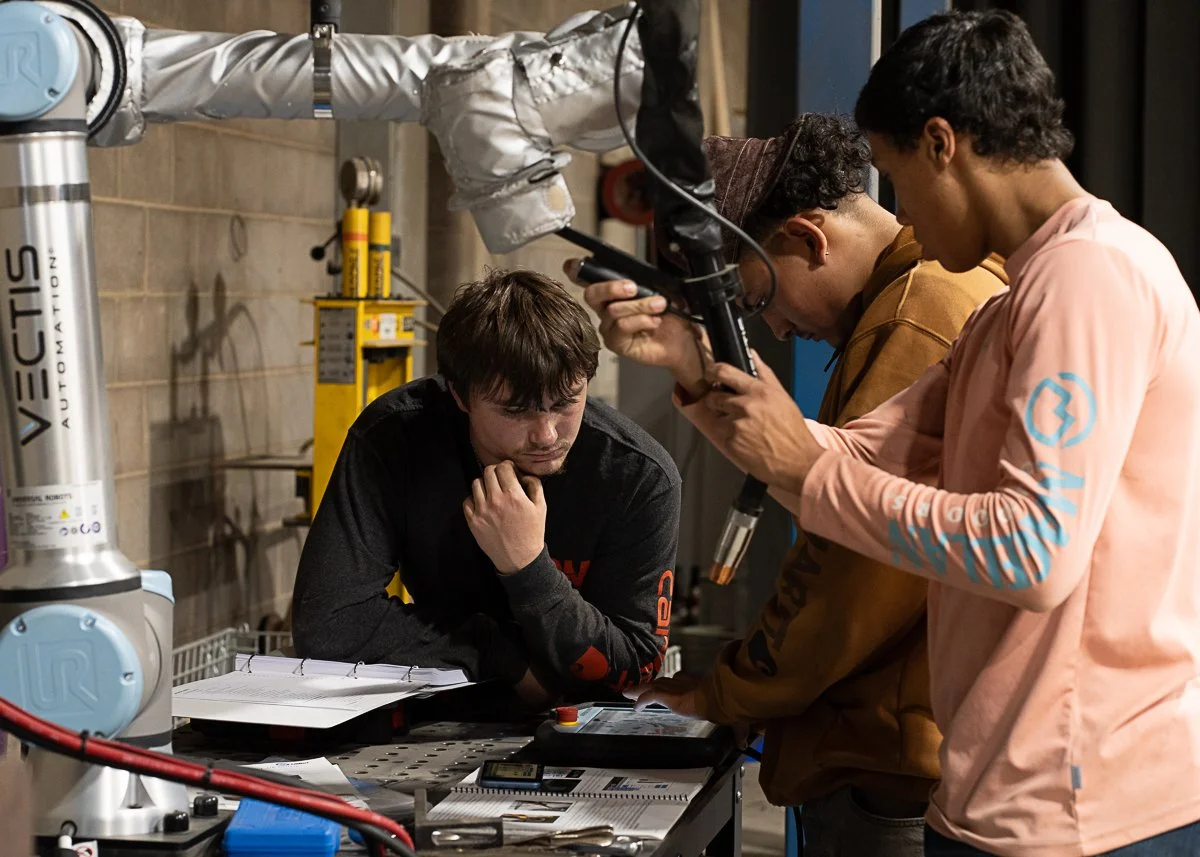
Approachable technology and self-guided training are enticing the next generation workforce into the manufacturing industry. (All photos are courtesy of CM Welding & Machine and Joe Cobb.)
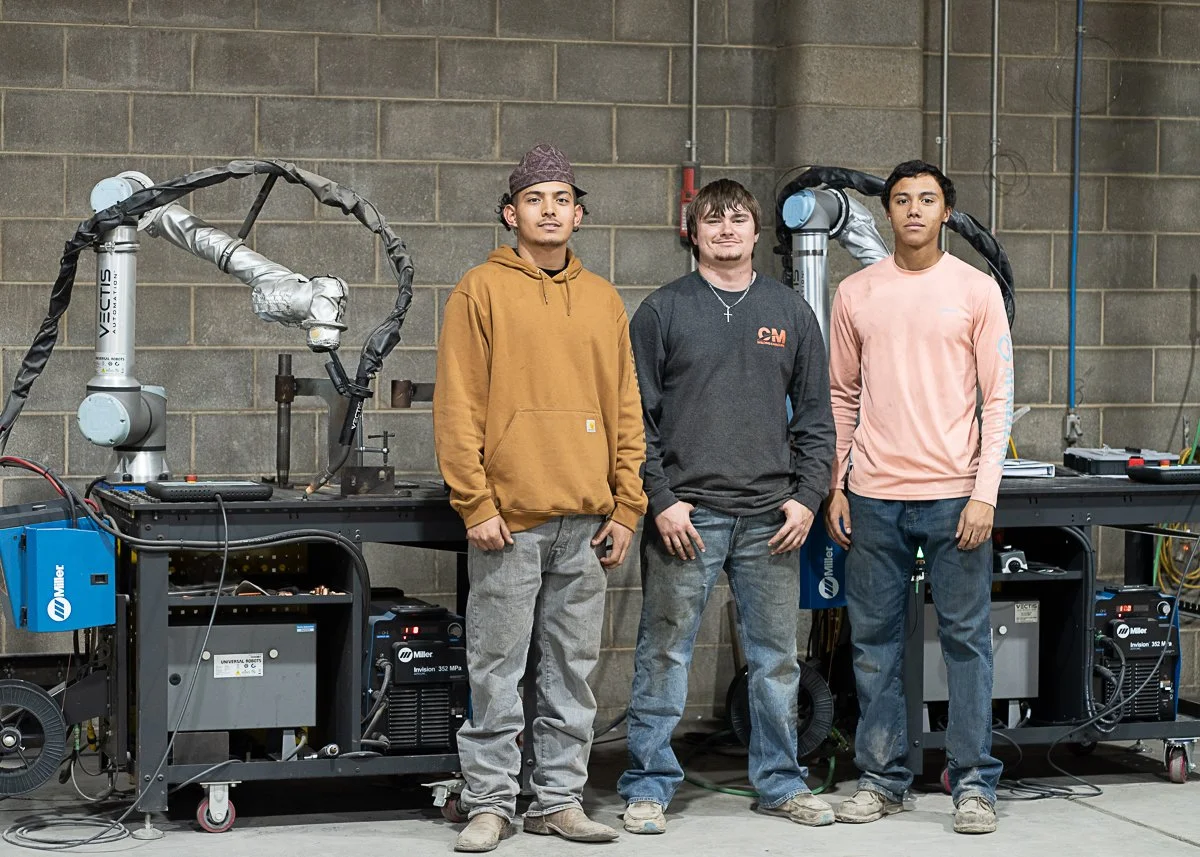
Easy-to-use automation creates pride and exciting challenges for the young cobot champions at CM Welding & Machine.
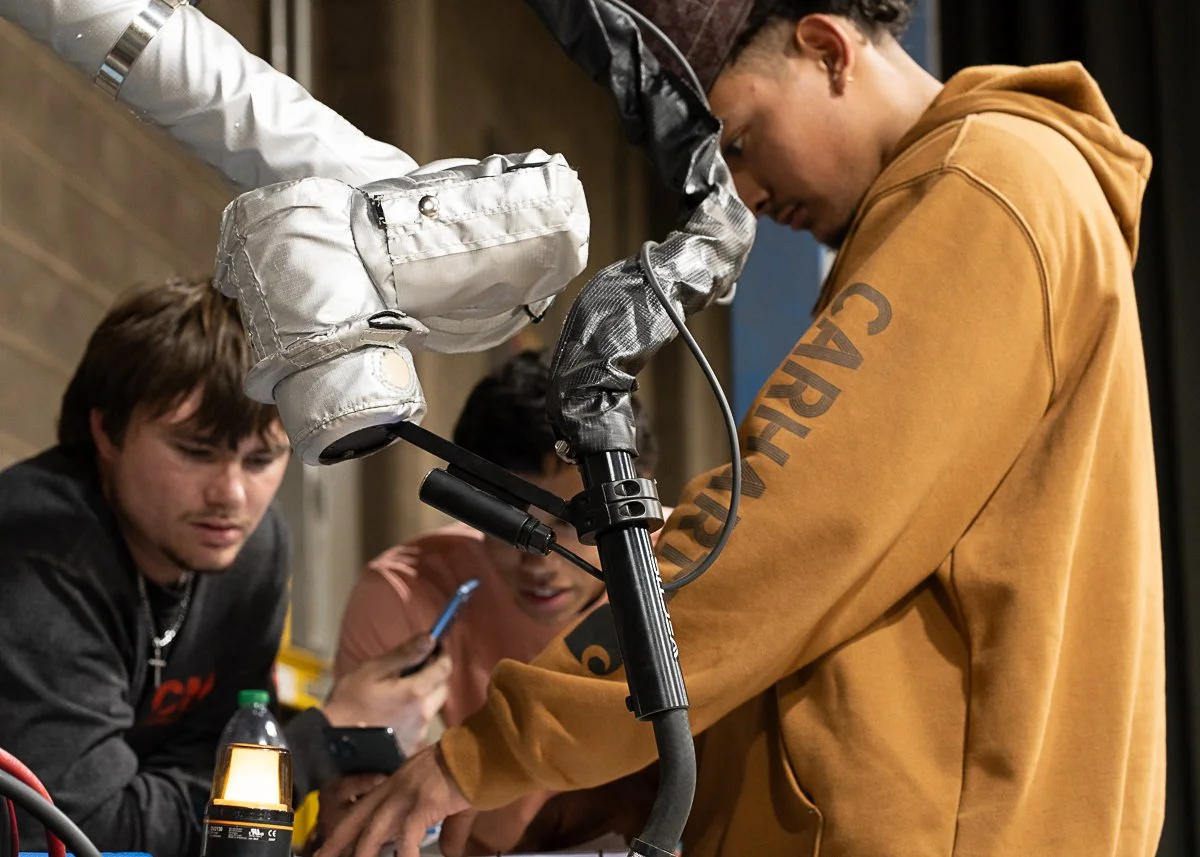
The cobot champions study videos to learn how to operate the Vectis cobot systems within hours.
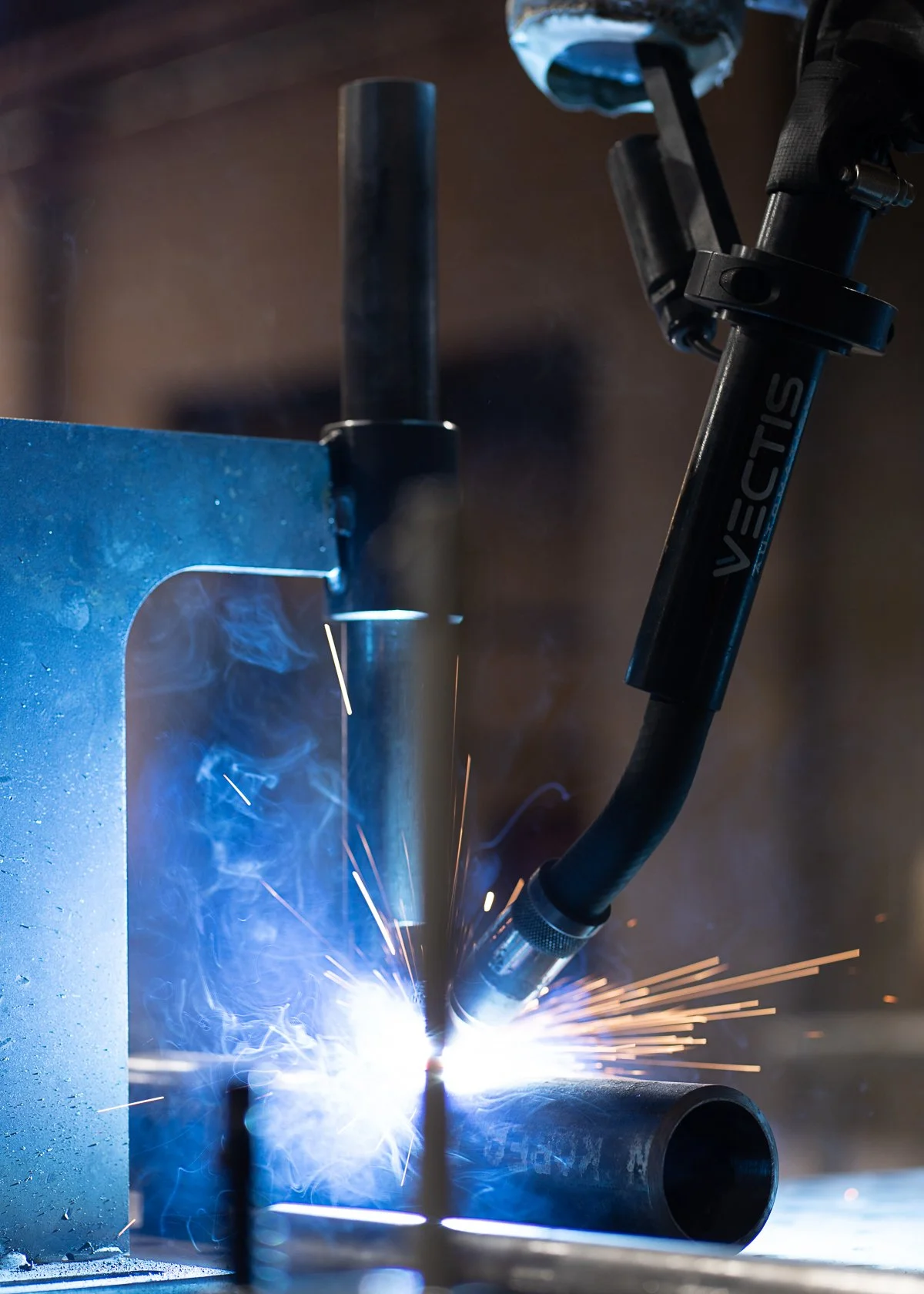
Flexible cobot automation enables fabricators to leverage automation for medium-volume batches and helps to reduce monotony by offloading the “boring” arc-on time.