Creating Employee Buy-In for Automation Success
D&S Manufacturing | Black River Falls, WI
At a Glance
MANUFACTURER TYPE

Custom Metal Fabrication
CHALLENGE

Implement cobot automation in a way that creates long-term operator buy-in, ownership, and adoption across the shop floor.
APPROACH
Involved operators from the beginning of the evaluation process, developed internal Cobot Champions, and used automation as an opportunity to upskill welders.
OUTCOME

• Built a sustainable pipeline of Cobot Champions across multiple shifts
• Better allocation of work across manual, cobot, and traditional automation systems
• Increased productivity by 25-40% or more on key applications
• Improved weld consistency and repeatability on challenging parts
WHY IT MATTERS

Successful automation depends on people as much as technology. By creating ownership from day one, D&S built the internal expertise to successfully implement cobot automation.
Like many manufacturers, D&S Manufacturing was looking for ways to increase capacity and address ongoing labor constraints without sacrificing quality.
The leadership team at D&S saw opportunities where cobot welding could support production, but recognized that successful implementation would depend on more than technology alone. Long-term success would require buy-in and ownership from the people using it every day.
By involving operators early in the evaluation process, developing structured training programs, and positioning automation as an opportunity for employee upskilling, D&S created a group of internal Cobot Champions who continue to drive automation success throughout the organization years later.
“When [the future cobot operators] are part of the decision and feel like they have a voice, they want to see it succeed when it’s on the shop floor.”
Joe Lane (Continuous Improvement Manager, D&S Manufacturing)
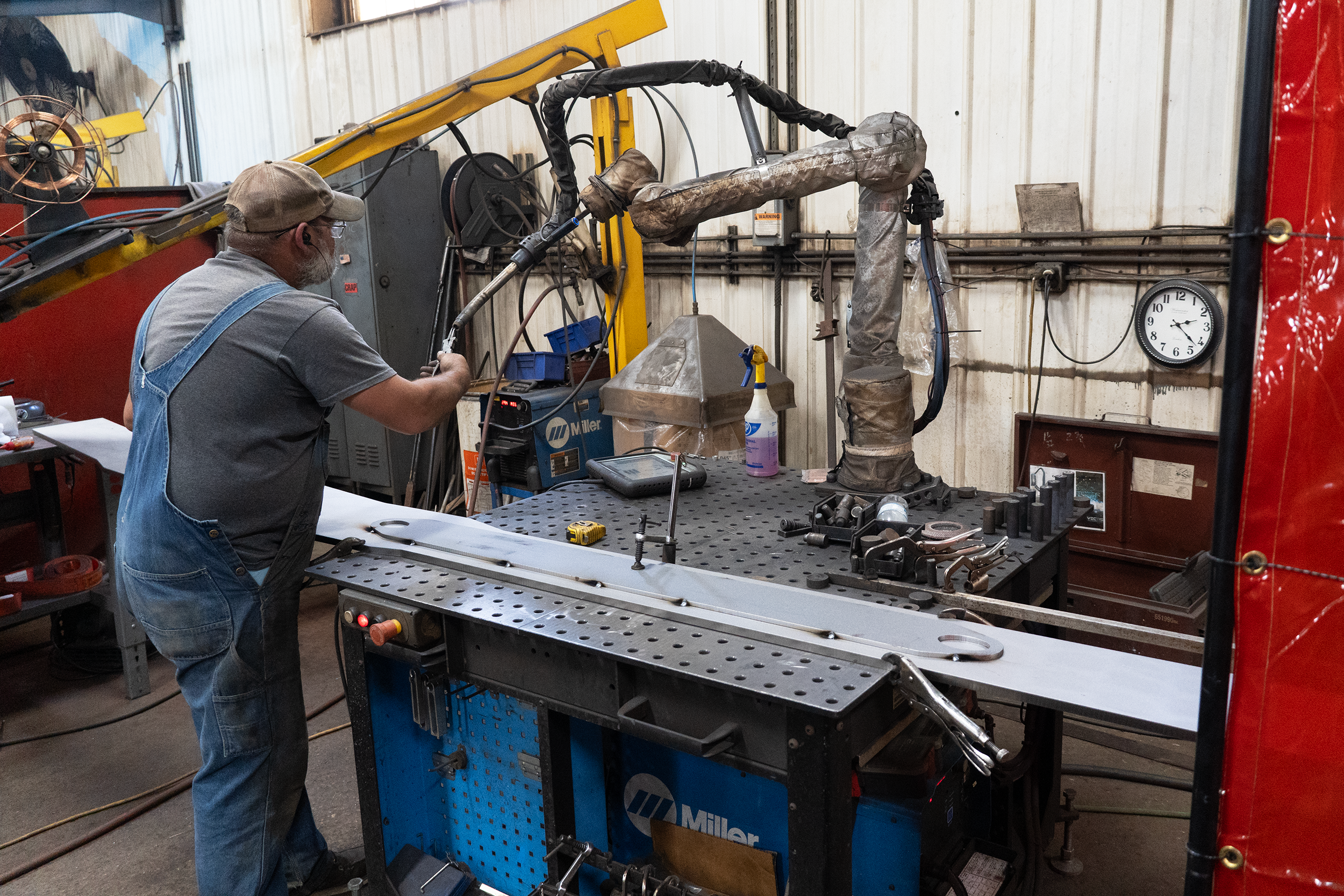
A Foundation for Automation Success
Already experienced as a company with traditional automation, D&S first began evaluating cobot welding as a way to increase capacity while improving production flexibility. They recognized that cobot technology had matured, and had already identified several applications where collaborative automation appeared to be a strong fit.
At the same time, the team had seen examples of automation that failed to deliver long-term value because the implementation side had been overlooked.
"We were worried up front that cobots were being pushed to solve the labor shortage issue without a whole lot of thought into the application and how it would be implemented in the shop," explains Joe Lane, Continuous Improvement Manager at D&S.
To avoid those pitfalls, the team carefully evaluated potential integrator partners, while also determining how the technology would fit into existing production workflows and how operators would interact with it on a daily basis.
D&S believed successful adoption would require input from everyone involved in the process, especially the people who would ultimately use the technology every day.
Building Cobot Champions from Day One
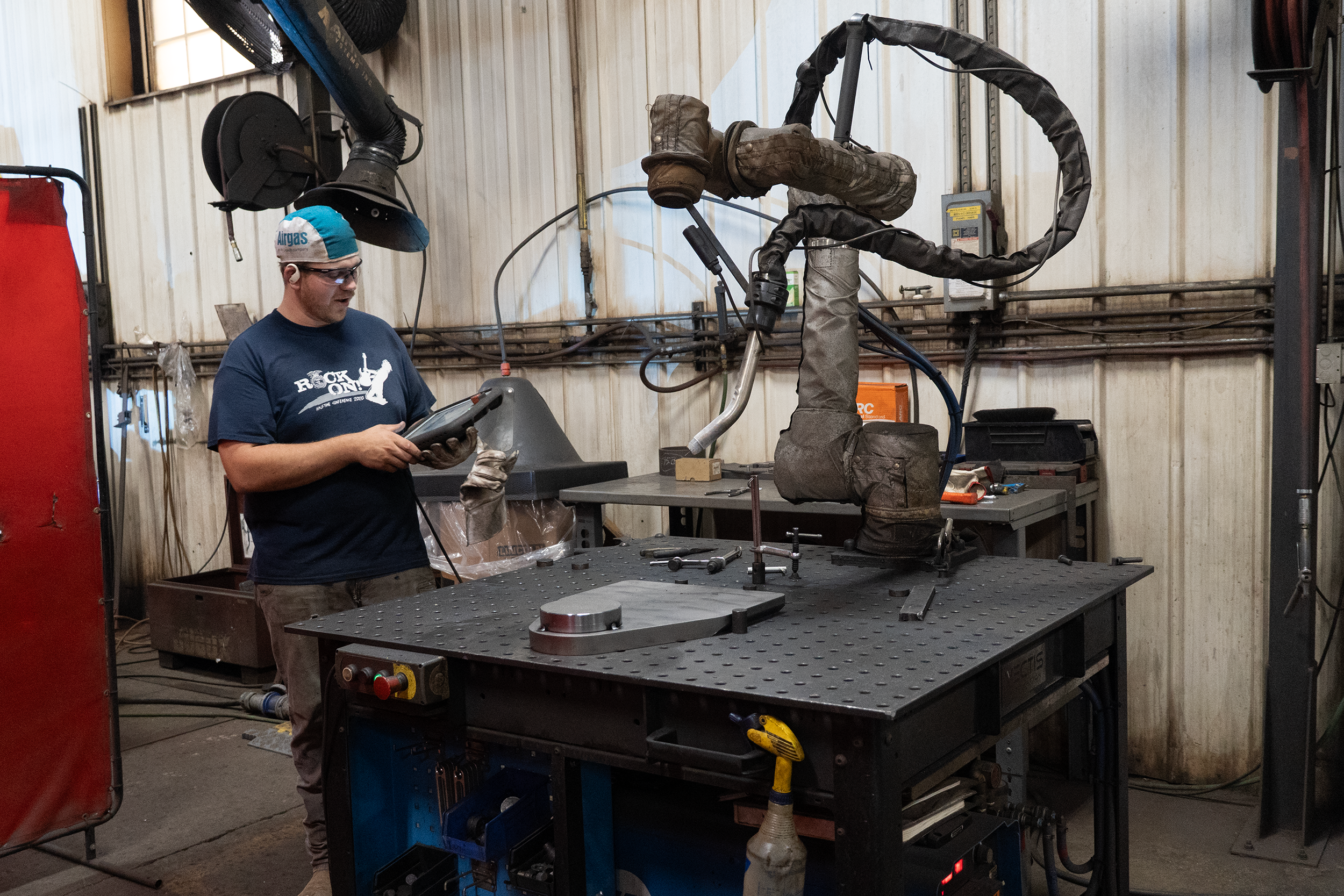
To support employee buy-in from the very start, D&S assembled an evaluation team that included everyone from management to maintenance. Joe Lane believes ownership begins when employees feel they have a voice in the decision-making process.
"The best way to get buy-in is to make sure everyone feels they have a part in the decision. Otherwise, you're telling them, 'Hey, look, we just bought you a new tool. Now figure it out.'"
With that team in place, D&S evaluated multiple cobot platforms and integrators. The team developed a detailed decision matrix that scored each option on factors such as technical support, advanced welding features, safety, ease of use, and company maturity, eventually selecting a Vectis Automation system.
"We made sure we had interested operational employees on the initial team that spec’d out the cobot," recalls Joe.
"When they're part of the decision and feel like they have a voice, they want to see it succeed when it's on the shop floor."
Years later, many of those same employees are still driving automation success in the company. "A lot of them were interested in the idea of automation and spoke up on their own," says Dominik Goyette, Manufacturing Engineer at D&S. Others were intentionally selected because they demonstrated problem-solving ability and an interest in learning something new.
How D&S Developed Cobot Champions Across Skill Levels
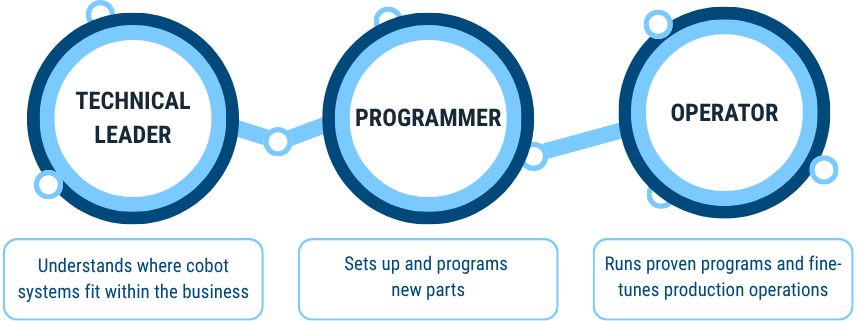
As more applications were brought onto the systems, D&S developed a practical framework for supporting automation efficiency throughout the organization. Rather than relying on a single automation expert, the team thinks of cobot operation in three tiers.
The first consists of technical leaders who understand where the systems fit within the broader operation, help evaluate applications, and guide automation strategy.
The second tier consists of programmer-operators who introduce new parts to the system, create programs, troubleshoot applications, and help expand the role of automation on the shop floor.
The third tier includes operators who run established programs and make adjustments as needed to keep production moving across shifts.
This structure distributes automation knowledge throughout the organization while creating clear opportunities for employees at different experience levels to contribute.
Today, multiple operators across different shifts regularly use the systems, helping create a sustainable foundation for continued growth.
Three Tiers of Cobot Champions at D&S
Automation as an Opportunity to Upskill Workers
From the beginning, D&S approached automation as an opportunity to upskill existing workers rather than reduce their role in the welding process.
"When we discussed implementing the first system, we explained it as an upscale for existing welders instead of downscaling to a button pusher," Joe explains. Because cobots are designed to work alongside people, operators remain active contributors to the welding process rather than serving only as machine attendants.
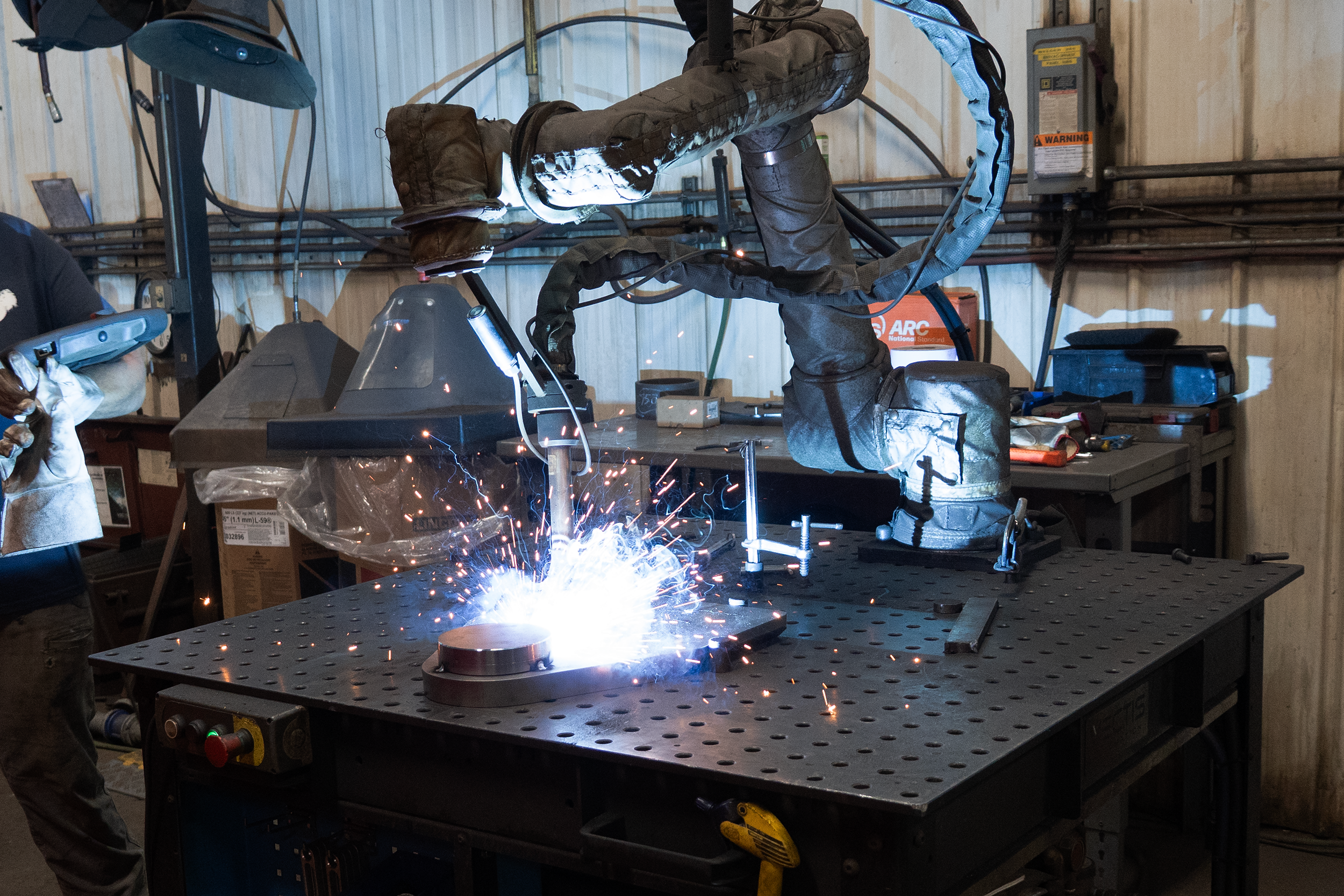
D&S's cobot operators are still welders and fabricators first. They continue fitting, tacking, and inspecting parts, while using the cobot to automate repetitive work and focus more of their time on higher-skill welding throughout the shop.
Ownership mentality is the key. Operators are encouraged to view the system as their machine and take responsibility for its success. That mindset has helped create engagement while also giving employees the confidence to continue developing their automation skills.
According to Welding Supervisor Mike Feaster, while not a requirement, welding experience plays an important role in leveraging the system to its fullest capability.
"The hand welder is going to pick up on that stuff easier," says Mike. "They're going to recognize the angles and what the weld should look like before they even strike an arc."
When training new operators, D&S relies on Vectis Training Academy curriculum, and supports these resources with internal documentation and hands-on training with Dominik or other experienced operators. To further support repeatability, D&S has also developed standardized setup documentation and work instructions that help maintain consistency across operators, shifts, and future production runs.
Turning Ownership Into Results
The benefits of D&S's approach became apparent quickly. After installing the first system, the team saw enough value that a second cobot was ordered less than a month later.
"We were less than a month in and saw the advantages of it, and we had the second system ordered," recalls Joe.
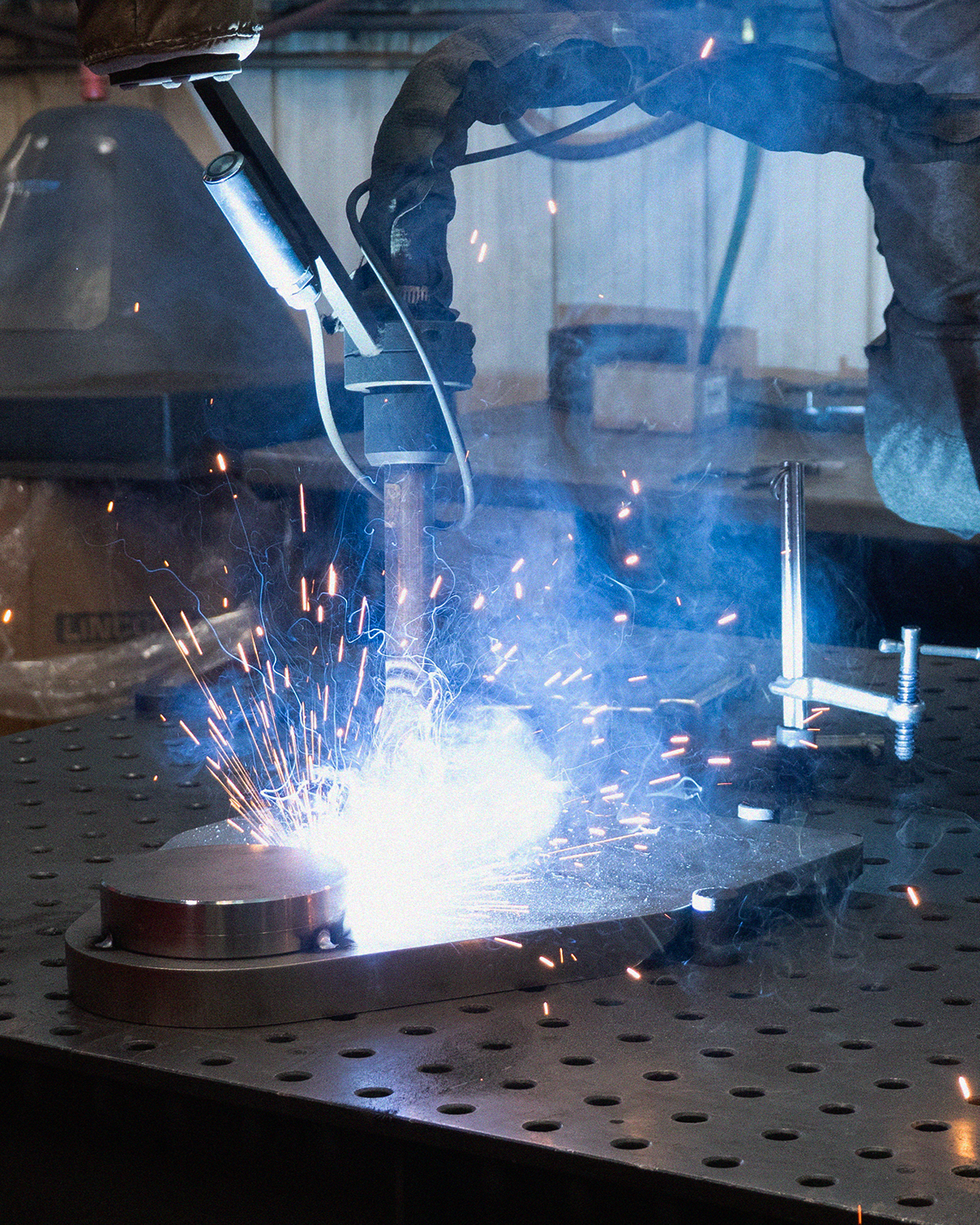
As D&S gained experience, their Vectis cobots became another resource that could be used alongside the company's traditional robotic welding systems, helping shift work away from heavily burdened cells and providing the fabrication team with additional flexibility.
"As a manufacturing engineer, it's another lever to pull in the whole machine of getting stuff through efficiently," says Dominik.
The productivity gains were significant. On the right applications, D&S reduced operation times by 25-40 percent, with some applications achieving even greater improvements.
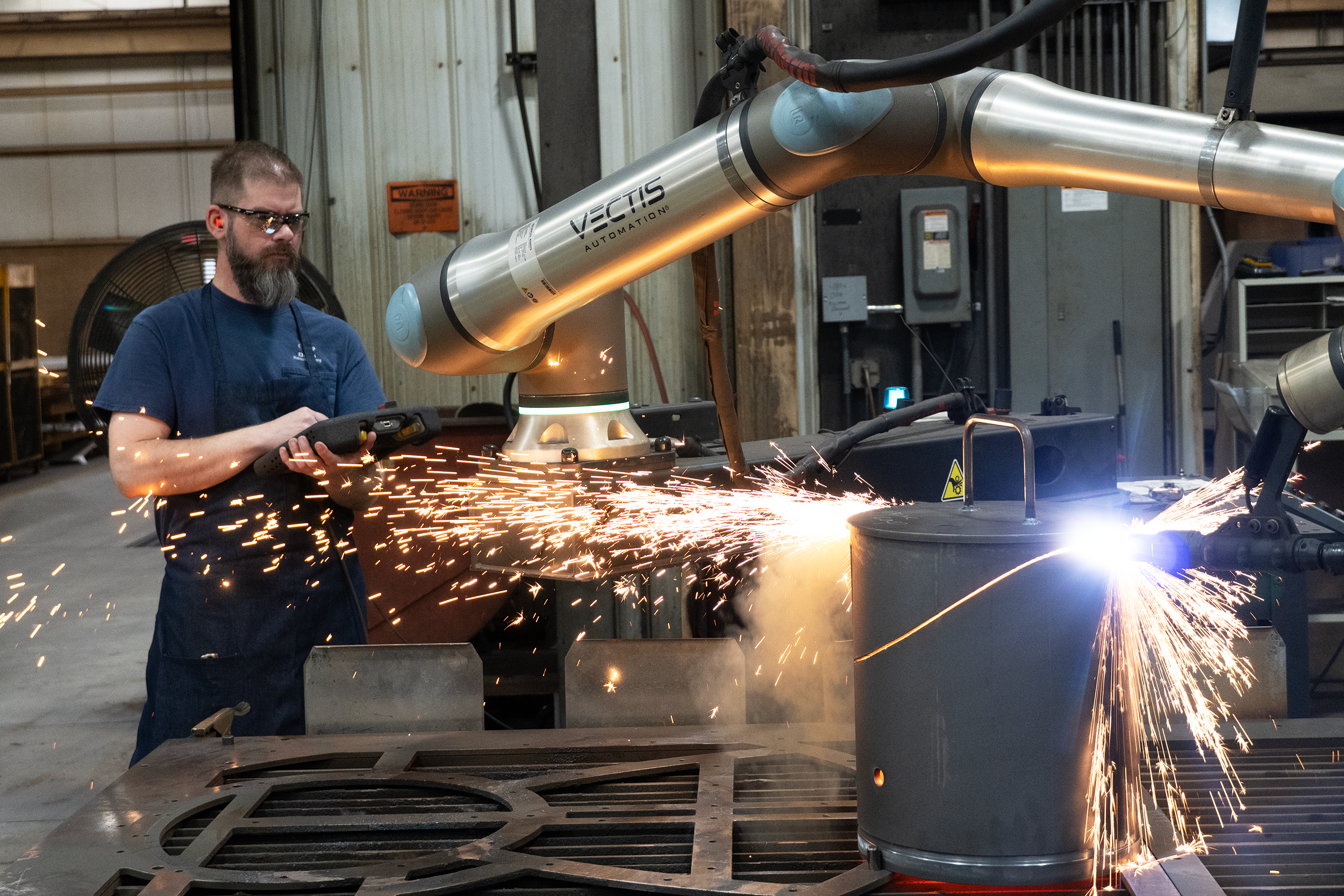
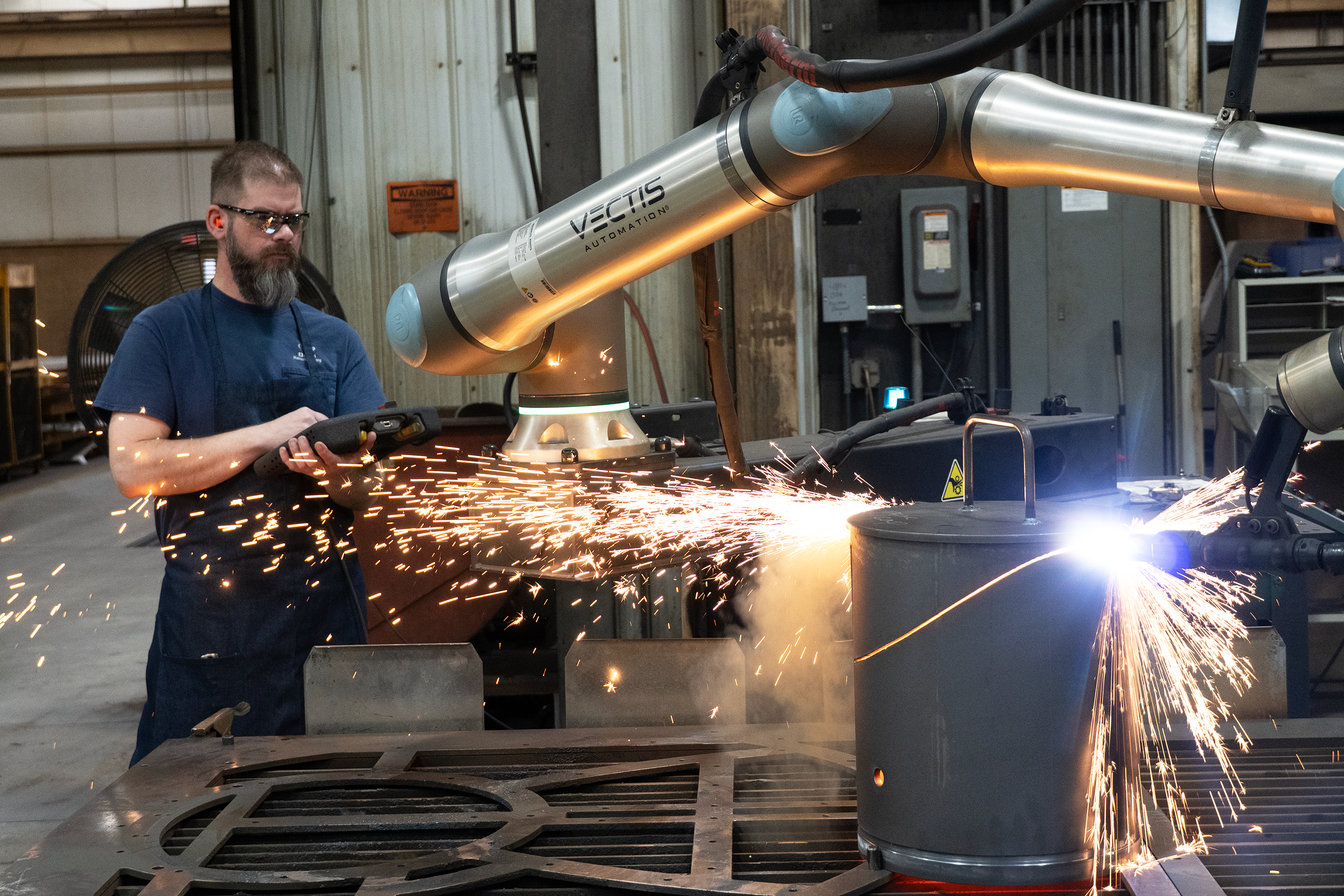
Cobot plasma cutting at D&S
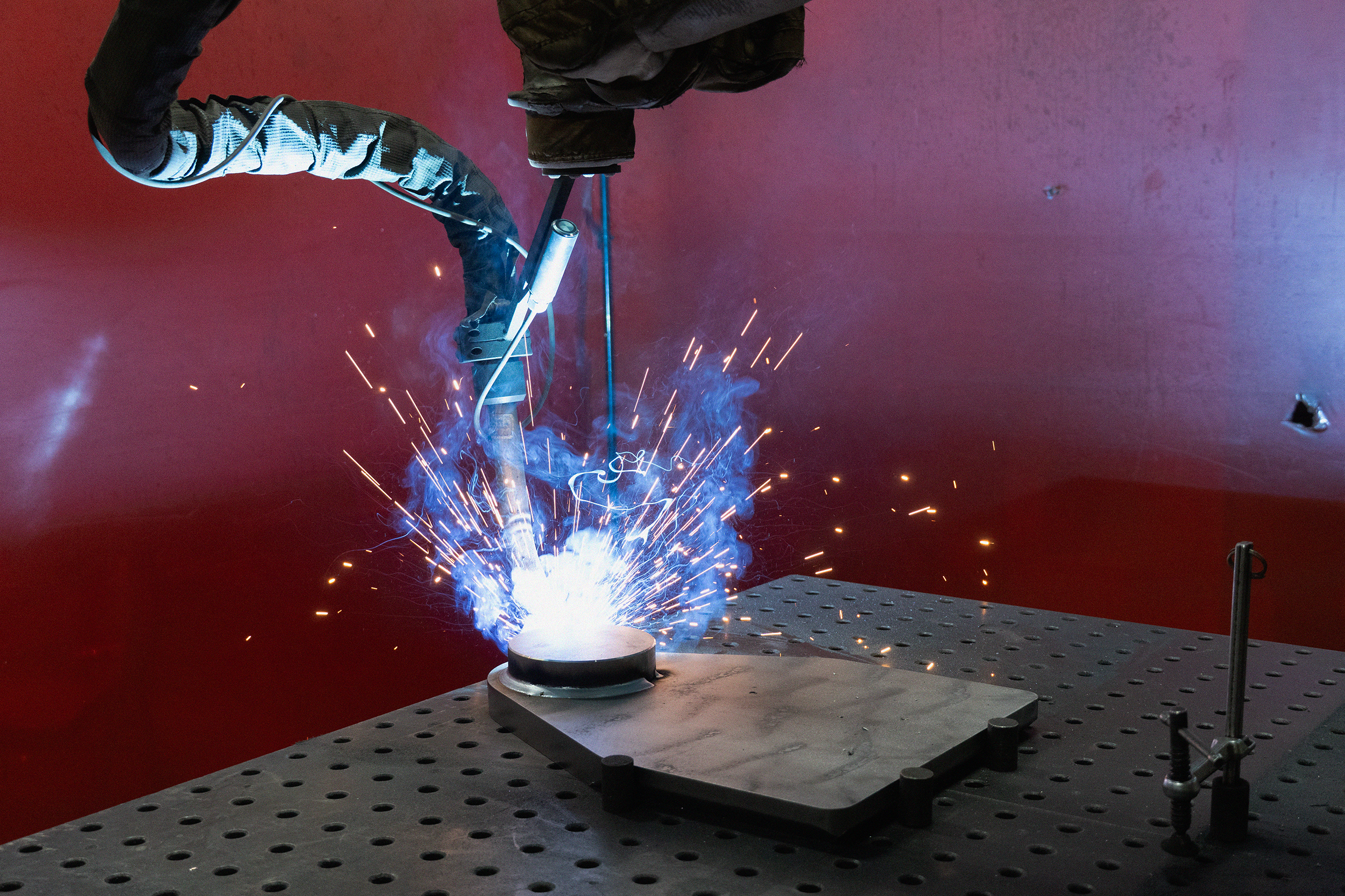
Equally important were the gains in consistency and repeatability. Whether controlling deformation through weld sequencing or producing small, difficult-to-repeat welds, the cobot delivered the same results every time.
The success with their welding systems has given D&S the confidence to expand into robotic plasma cutting. Having already built internal expertise and trust in both the technology and implementation process, a Vectis Plasma Cutting Tool became a natural extension of what had already proven successful, and has become another valuable tool in their toolbelt.
Dominik recalls an early plasma cutting project that showcased the newfound cutting consistency at the team’s disposal.
“We were repeatedly warned by a customer, ‘You’ll never be able to robotically weld this part.’ But with the consistency of cutting those features with the plasma system, sure enough, we were able to robotically weld it.”
A Practical Model for Scaling Automation
Looking back, both Joe and Dominik point to the same factor as the biggest contributor to their continued automation success: employee involvement.
"For me, it's involvement from day one," says Joe. "Make sure everybody has a seat at the table."
Dominik shares a similar view.
"The biggest factor of this being a success was having the guys that are working with the tool day-in and day-out involved from the beginning, having that ownership, having that skin in the game."
Today, D&S's cobots are used in everyday production to support increased capacity and consistency throughout the operation. As Dominik puts it, "our machines are not shiny anymore. They're well used and loved."
For manufacturers evaluating automation, D&S's experience offers a valuable reminder: purchasing the right equipment is important, but equally important for long term success is the right mentality. By involving operators early, creating ownership, and developing internal Cobot Champions, manufacturers can build the expertise needed to leverage automation for long term, sustainable business growth.